

REBUILD Bundle
The REBUILD Bundle is a three-vial tissue-repair research stack: the BPC-157 / TB-500 blend (5 mg + 5 mg), a full BPC-157 10 mg vial and GHK-Cu 50 mg — at 10% off the individual vial prices.
BPC-157 is a stable gastric pentadecapeptide studied in tendon-healing models, where it promoted fibroblast outgrowth, survival and migration[1]. TB-500 is synthetic full-length thymosin beta-4, an actin-regulating peptide that promoted cell migration and repair signalling in preclinical studies[6]. GHK-Cu is the copper complex of a naturally occurring tripeptide studied as a modulator of multiple cellular pathways in skin-regeneration research[7].
Each vial is supplied as a lyophilized powder for reconstitution, and each compound has its own lot-specific third-party certificate of analysis, available on request. Findings above come from preclinical (animal and cell-based) research on these molecules and are provided as scientific reference for laboratory research only.
Couldn't load pickup availability
Out of stock — get notified
Leave your email and we’ll let you know the moment it’s available again.
Need reconstitution solution? Don’t forget to add Bacteriostatic Water before checkout.
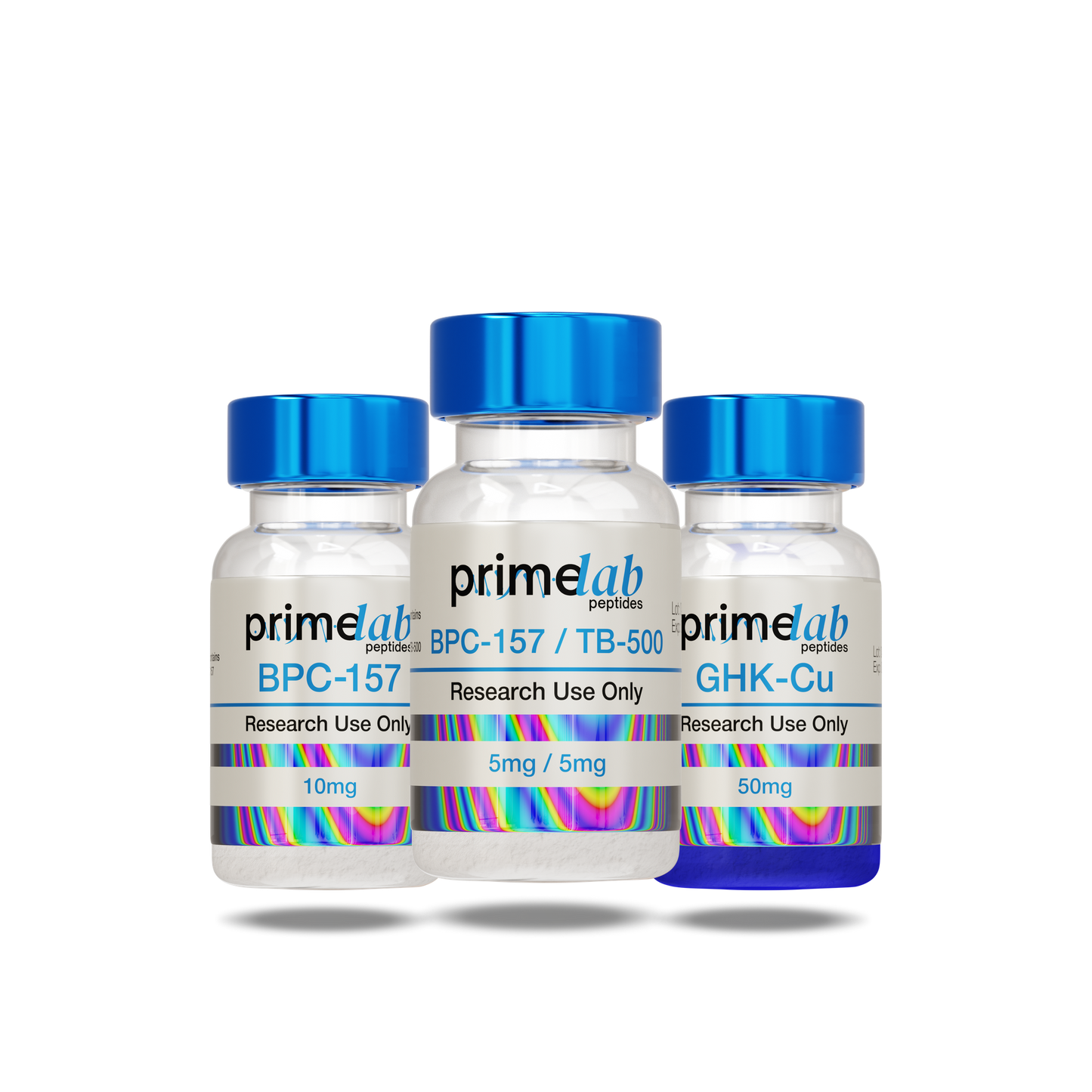
Tissue-Repair Research Stack
Three Vials, One Research Focus
The REBUILD Bundle concentrates on a single research theme: tissue repair. The BPC-157 / TB-500 blend pairs two repair-oriented peptides in one vial, backed by a second full-dose BPC-157 vial — a pentadecapeptide documented in tendon-healing models[1] and in angiogenesis models, with pro-angiogenic activity associated with VEGFR2 activation[3]. GHK-Cu adds the dermatological angle: the copper complex of a naturally occurring tripeptide studied as a modulator of multiple cellular pathways in skin-regeneration research[7].
- One focused research theme across three vials
- BPC-157 — tendon-healing and angiogenesis models
- TB-500 — full-length thymosin beta-4 (43 aa)
- GHK-Cu — copper tripeptide, skin and remodelling research
- Lot-specific third-party COA for each compound
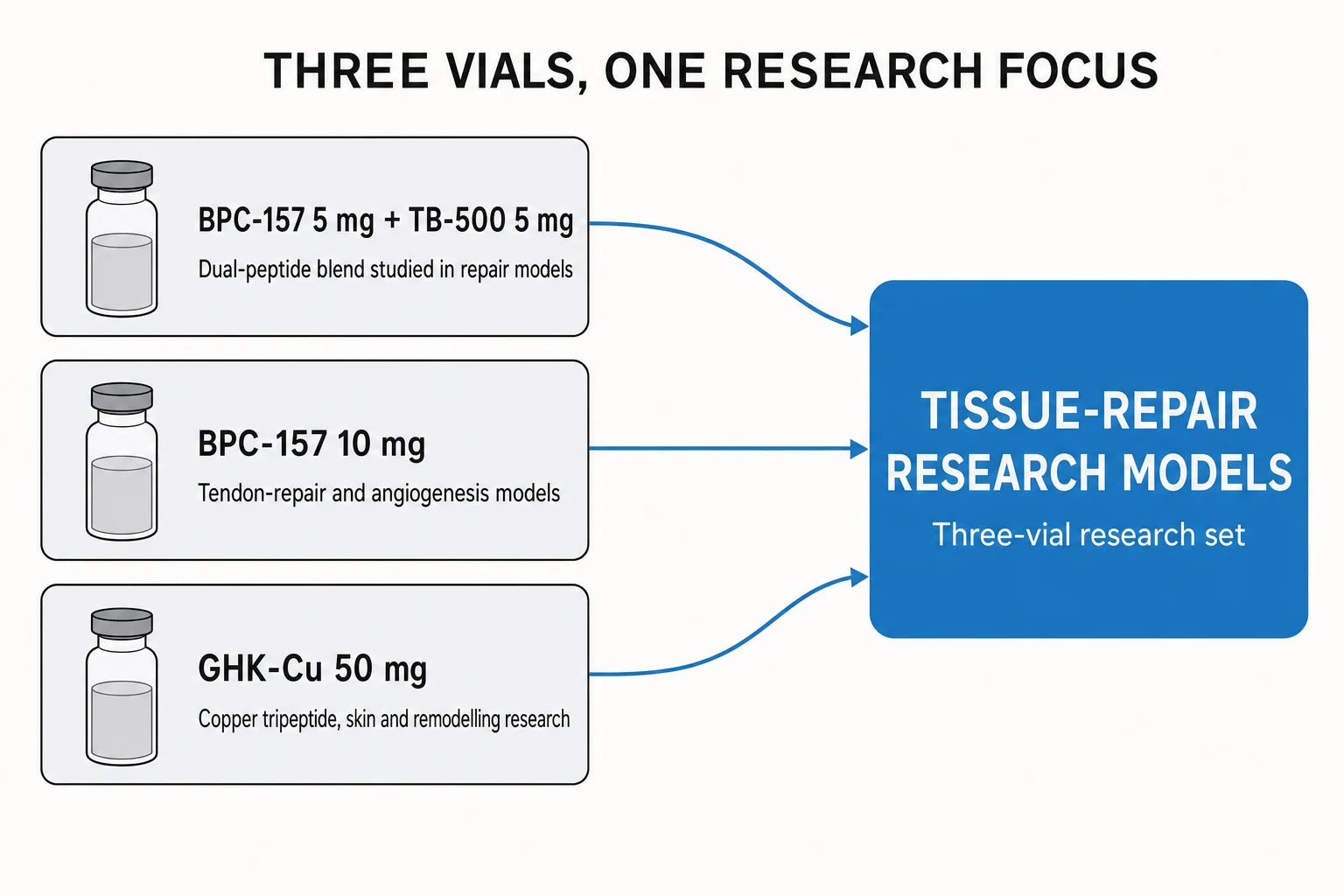
Inside the Bundle
What's in the Stack
The bundle ships as three separate lyophilized vials: the BPC-157 / TB-500 blend (5 mg + 5 mg), BPC-157 10 mg and GHK-Cu 50 mg. In preclinical models, BPC-157 has been studied on fibroblast migration[1], while thymosin beta-4 — supplied as TB-500 — has been characterised in actin dynamics[5]. GHK-Cu adds a copper-peptide mechanism studied in skin and connective-tissue research[7].
- BPC-157 / TB-500 — 5 mg + 5 mg blend vial
- BPC-157 — 10 mg lyophilized vial
- GHK-Cu — 50 mg lyophilized vial
- Peptide repair signalling + copper-peptide chemistry
- 10% saving versus buying the three vials separately
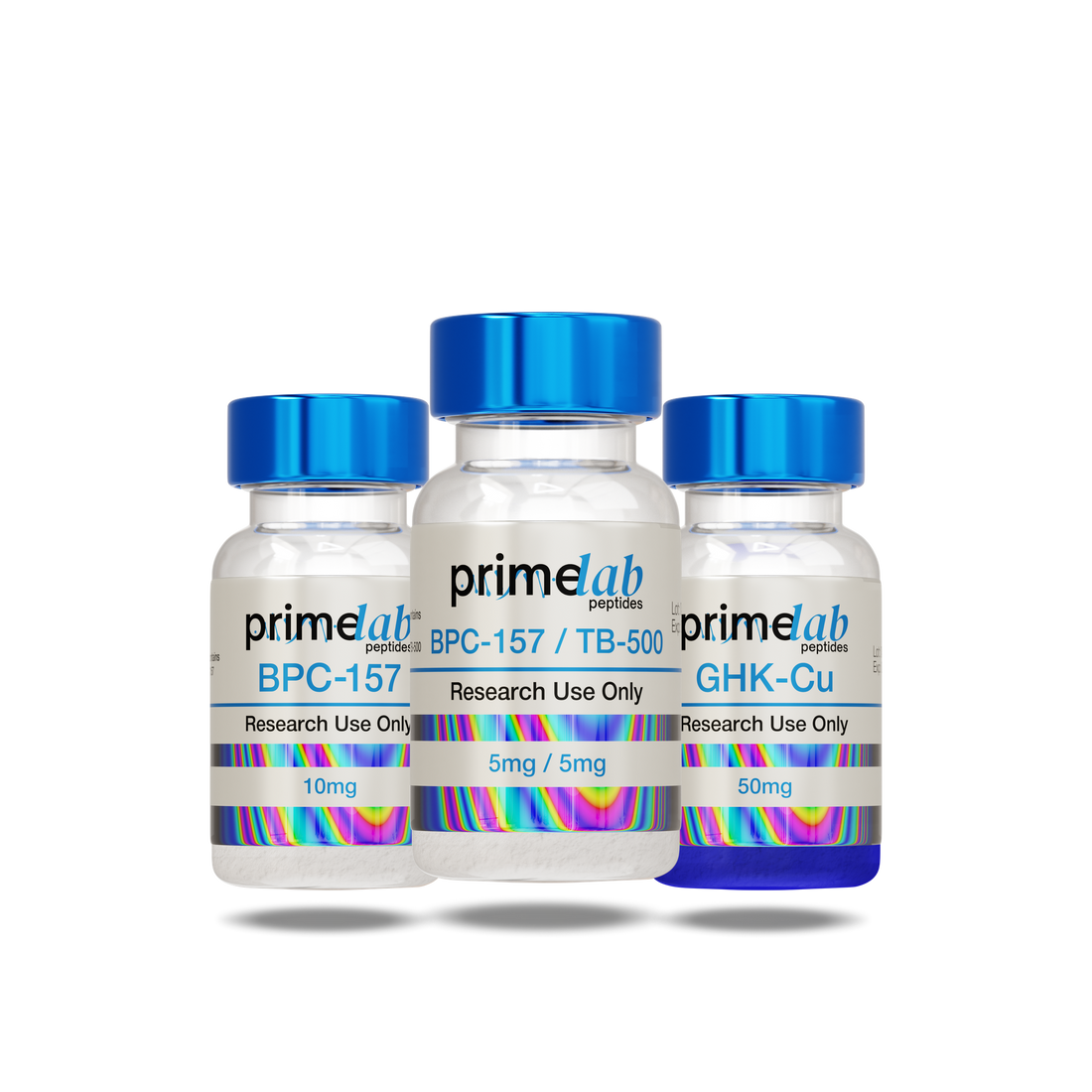
Research Applications
Areas of Scientific Investigation
Each compound has been studied separately in repair-oriented research: in a rat model, BPC-157 accelerated healing of the transected Achilles tendon[2]; thymosin beta-4 — the molecule supplied as TB-500 — activated integrin-linked kinase and promoted cardiac cell migration, survival and repair[6]; and GHK-Cu transiently improved healing outcome in a rat model of ACL reconstruction[8]. No published study evaluates the three vials in combination; researchers using them side by side are combining independent lines of evidence.
- Tendon, ligament and muscle injury models
- Wound-healing and angiogenesis assays
- Skin-regeneration and remodelling research
- Actin dynamics and cytoskeletal research

Understanding the Rebuild Stack: Mechanism of Action
BPC-157 is a 15-amino-acid fragment of the Body Protection Compound found in gastric juice. In preclinical models it has been reported to promote tissue-repair signalling through several converging mechanisms: promotion of tendon-fibroblast outgrowth and migration, likely via the FAK–paxillin pathway[1], accelerated healing of transected tendon in a rat study[2], pro-angiogenic activity associated with VEGFR2 activation[3], and a documented relationship with the nitric-oxide system[4]. The bundle carries it twice: inside the blend and as a full 10 mg vial.
TB-500, the second half of the blend, is synthetic full-length thymosin beta-4 (43 amino acids), identified as a principal G-actin-sequestering peptide. Thymosin beta-4 binds monomeric G-actin and regulates its polymerisation[5] — the machinery cells use to move. In a 2004 Nature study, thymosin beta-4 activated integrin-linked kinase and promoted cardiac cell migration and survival after injury[6].
GHK-Cu is the copper complex of glycyl-L-histidyl-L-lysine, a tripeptide naturally present in human plasma. It has been studied as a modulator of multiple cellular pathways in skin regeneration — collagen synthesis, remodelling and antioxidant defence[7] — and, in a rat model of ACL reconstruction, transiently improved healing outcome[8].
Together, the three vials give researchers a repair-focused toolkit: peptide-driven repair signalling (BPC-157, thymosin beta-4) alongside copper-peptide chemistry (GHK-Cu). Each pathway is supported by its own line of preclinical evidence; no published study evaluates the combination itself. These materials are supplied strictly for laboratory research use.
Scientific Literature
- Chang CH, Tsai WC, Lin MS, Hsu YH, Pang JH. The promoting effect of pentadecapeptide BPC 157 on tendon healing involves tendon outgrowth, cell survival, and cell migration. J Appl Physiol (1985). 2011;110(3):774-80.
- Staresinic M, Sebecic B, Patrlj L, et al. Gastric pentadecapeptide BPC 157 accelerates healing of transected rat Achilles tendon and in vitro stimulates tendocytes growth. J Orthop Res. 2003;21(6):976-83.
- Hsieh MJ, Liu HT, Wang CN, et al. Therapeutic potential of pro-angiogenic BPC157 is associated with VEGFR2 activation and up-regulation. J Mol Med (Berl). 2017;95(3):323-333.
- Sikiric P, Seiwerth S, Rucman R, et al. Stable gastric pentadecapeptide BPC 157-NO-system relation. Curr Pharm Des. 2014;20(7):1126-35.
- Safer D, Elzinga M, Nachmias VT. Thymosin beta 4 and Fx, an actin-sequestering peptide, are indistinguishable. J Biol Chem. 1991;266(7):4029-32.
- Bock-Marquette I, Saxena A, White MD, Dimaio JM, Srivastava D. Thymosin beta4 activates integrin-linked kinase and promotes cardiac cell migration, survival and cardiac repair. Nature. 2004;432(7016):466-72.
- Pickart L, Vasquez-Soltero JM, Margolina A. GHK Peptide as a Natural Modulator of Multiple Cellular Pathways in Skin Regeneration. Biomed Res Int. 2015;2015:648108.
- Fu SC, Cheuk YC, Chiu WY, Yung SH, Rolf CG, Chan KM. Tripeptide-copper complex GHK-Cu (II) transiently improved healing outcome in a rat model of ACL reconstruction. J Orthop Res. 2015;33(7):1024-1033.
Packaged with care, shipped fast.
We’re a passionate team obsessed with quality, not margins.
- Company
- Price
- Purity
- Quantity
- Shipping
-

REBUILD Bundle
-
Prime
Lab PeptidesTypical
Competitor -
$180.00$325.00
- ≥99%96%
- 3 vials3 vials
- Free 2-Day Shipping3-10 Business Day
-


