

RESILIENCE Bundle
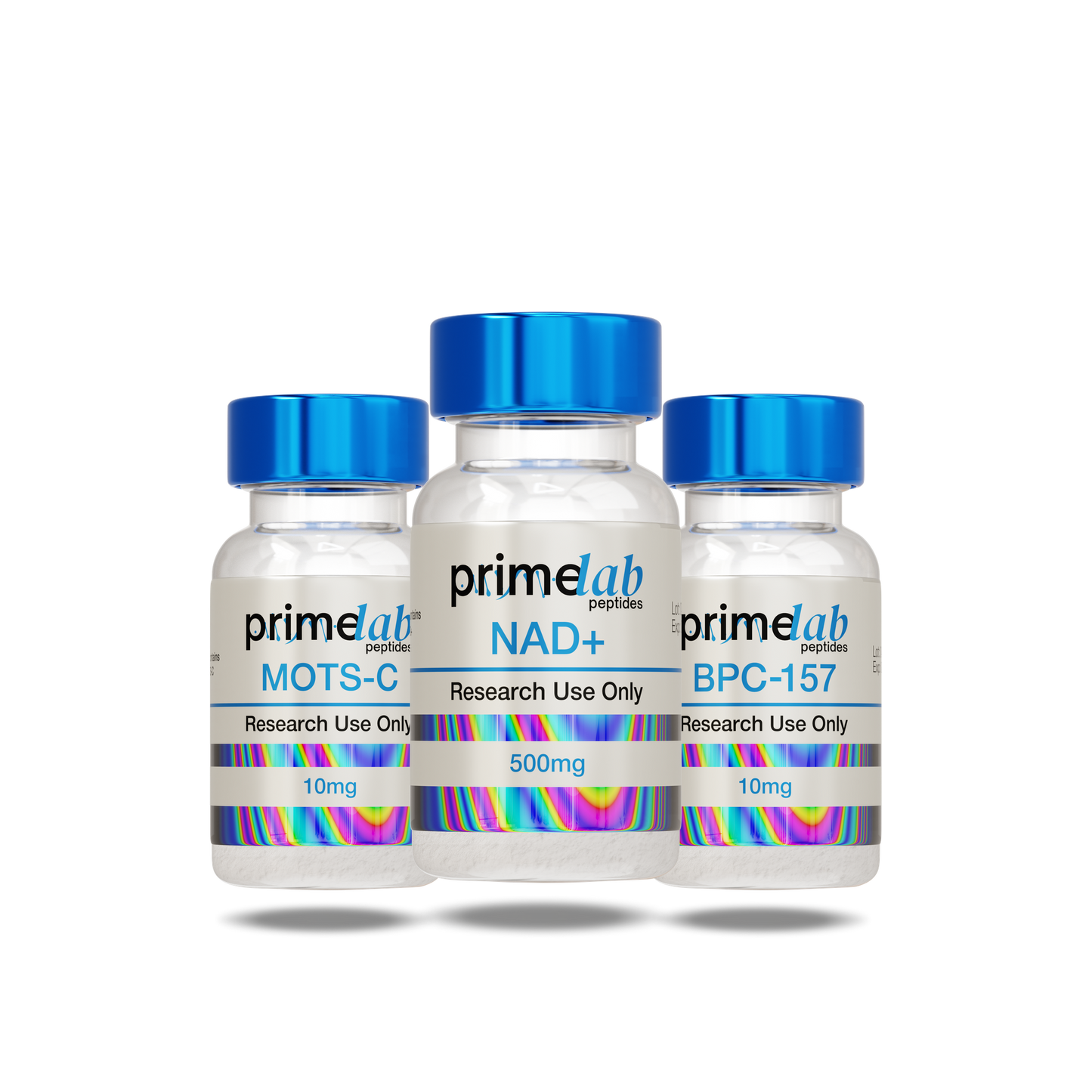
The RESILIENCE Bundle is a three-vial cellular-resilience research stack: NAD+ 500 mg, MOTS-C 10 mg and BPC-157 10 mg — at 10% off the individual vial prices.
NAD+ is a coenzyme central to cellular energy metabolism, whose roles during ageing have been comprehensively reviewed[1]. MOTS-C is a mitochondrial-derived peptide that promoted metabolic homeostasis in mouse models[3]. BPC-157 is a stable gastric pentadecapeptide studied in tendon-healing models[5].
Each vial is supplied as a lyophilized powder for reconstitution, and each compound has its own lot-specific third-party certificate of analysis, available on request. Findings above come from preclinical (animal and cell-based) research and review literature on these molecules and are provided as scientific reference for laboratory research only.
Couldn't load pickup availability
Need reconstitution solution? Don’t forget to add Bacteriostatic Water before checkout.
Cellular Resilience Stack
Three Vials, One Research Focus
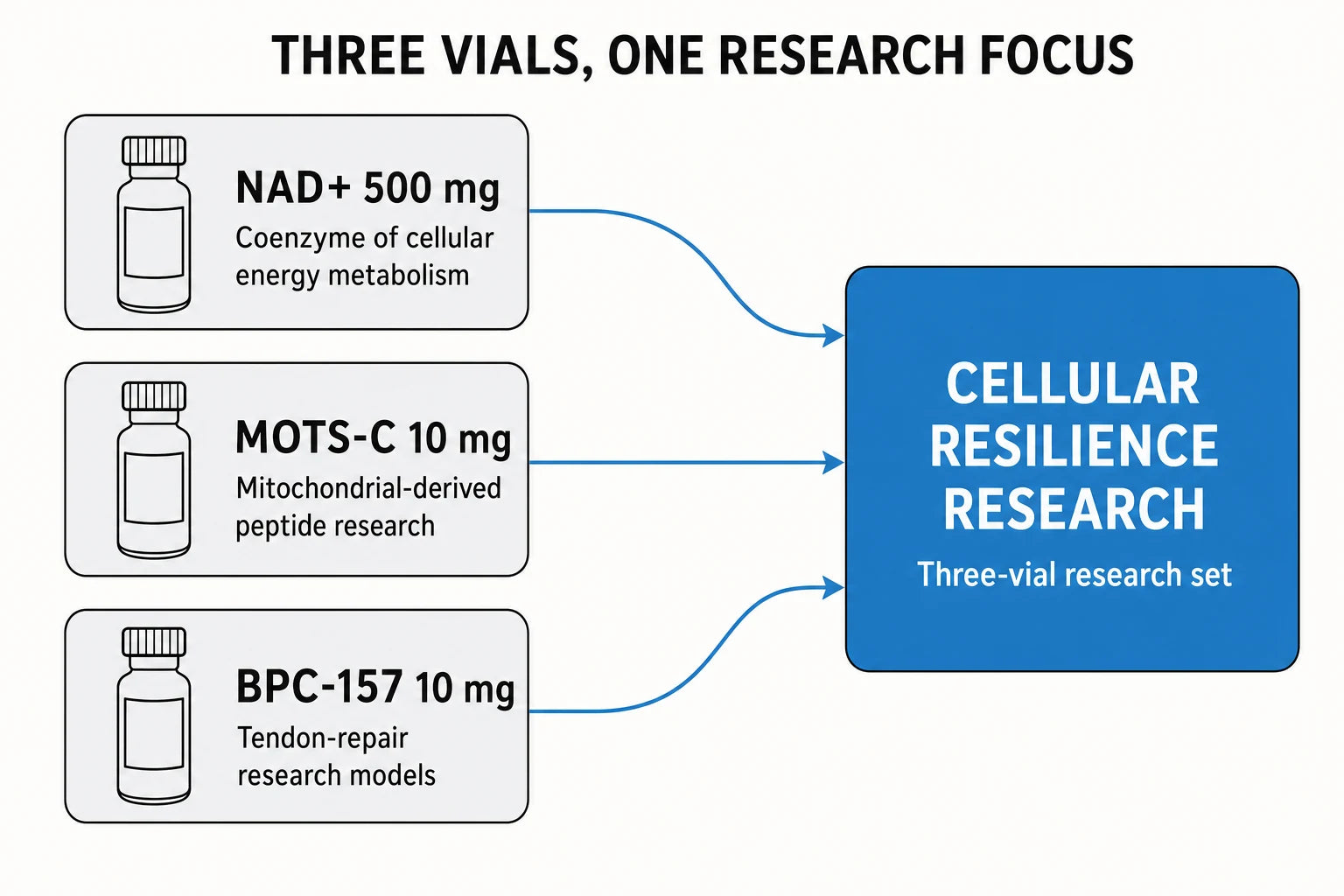
The RESILIENCE Bundle is built around cellular-resilience research. NAD+ is the coenzyme at the centre of cellular energy metabolism, whose roles during ageing have been comprehensively reviewed[1]. MOTS-C is a mitochondrial-derived peptide that promoted metabolic homeostasis in preclinical models[3]. BPC-157 adds the repair angle: a stable gastric pentadecapeptide documented in tendon-healing models[5].
- Cellular energy, mitochondrial and repair research in one set
- NAD+ — coenzyme of cellular energy metabolism
- MOTS-C — mitochondrial-derived peptide research
- BPC-157 — tendon-healing research models
- Lot-specific third-party COA for each compound
Inside the Bundle
What's in the Stack
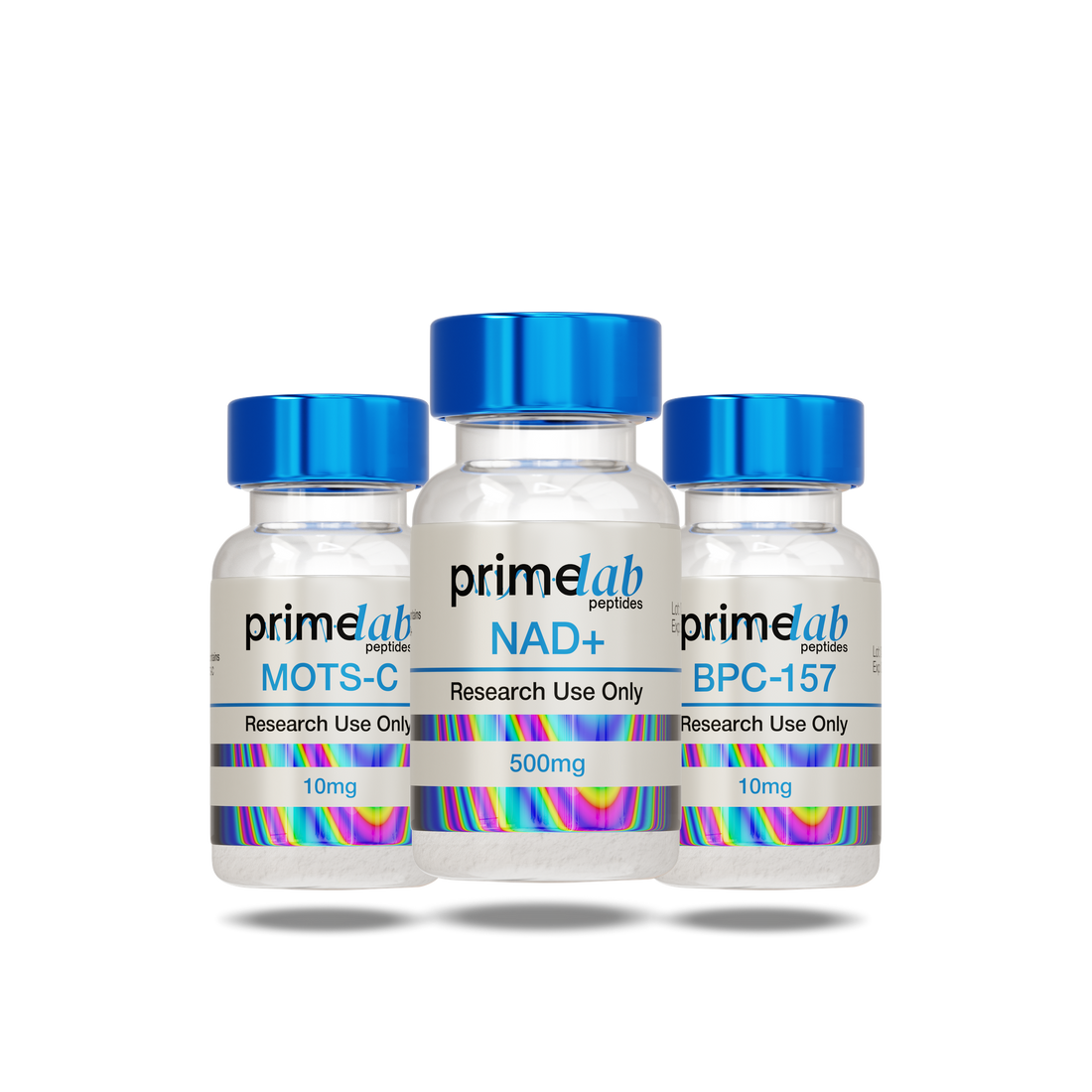
The bundle ships as three separate lyophilized vials: NAD+ 500 mg, MOTS-C 10 mg and BPC-157 10 mg. The three compounds cover complementary layers of cellular research: coenzyme biochemistry — declining NAD+ levels have been studied in ageing and metabolism research[2] — mitochondrial signalling, where MOTS-c was described as an exercise-induced regulator of muscle homeostasis in mice[4], and peptide repair signalling (BPC-157[5]).
- NAD+ — 500 mg lyophilized vial
- MOTS-C — 10 mg lyophilized vial
- BPC-157 — 10 mg lyophilized vial
- Coenzyme + mitochondrial + repair research coverage
- 10% saving versus buying the three vials separately
Research Applications
Areas of Scientific Investigation
Each compound carries its own line of evidence: NAD+ metabolism and its roles during ageing are the subject of a major review literature[1]; in mouse models, MOTS-c promoted metabolic homeostasis and reduced obesity and insulin resistance[3]; and in a rat model, BPC-157 accelerated healing of the transected Achilles tendon[6]. No published study evaluates the three compounds in combination; researchers using them side by side are combining independent lines of evidence.
- Cellular energy and coenzyme metabolism research
- Mitochondrial-peptide signalling studies
- Ageing and metabolic-homeostasis models
- Tendon and tissue-repair research models

Understanding the Resilience Stack: Mechanism of Action
NAD+ (nicotinamide adenine dinucleotide) is a coenzyme central to cellular energy metabolism and a required substrate for sirtuins and PARP enzymes. Its metabolism and roles in cellular processes during ageing have been comprehensively reviewed[1], and declining NAD+ levels have been studied in ageing, metabolism and neurodegeneration research[2].
MOTS-c is a 16-amino-acid peptide encoded within the mitochondrial genome. In preclinical models it promoted metabolic homeostasis and reduced obesity and insulin resistance in mice[3], and was described as an exercise-induced, mitochondrial-encoded regulator of age-dependent physical decline and muscle homeostasis in mice[4].
BPC-157 is a 15-amino-acid fragment of the Body Protection Compound found in gastric juice. In preclinical models it has been reported to promote tissue-repair signalling: it promoted tendon-fibroblast outgrowth and migration, likely via the FAK–paxillin pathway[5], and accelerated healing of transected tendon in a rat study[6].
Together, the three vials give researchers a cellular-resilience toolkit: coenzyme biochemistry (NAD+), mitochondrial-peptide signalling (MOTS-c) and peptide repair signalling (BPC-157). Each is supported by its own line of preclinical evidence; no published study evaluates the combination itself. These materials are supplied strictly for laboratory research use.
Scientific Literature
- Covarrubias AJ, Perrone R, Grozio A, Verdin E. NAD+ metabolism and its roles in cellular processes during ageing. Nat Rev Mol Cell Biol. 2021;22(2):119-141.
- Verdin E. NAD+ in aging, metabolism, and neurodegeneration. Science. 2015;350(6265):1208-13.
- Lee C, Zeng J, Drew BG, et al. The mitochondrial-derived peptide MOTS-c promotes metabolic homeostasis and reduces obesity and insulin resistance. Cell Metab. 2015;21(3):443-454.
- Reynolds JC, Lai RW, Woodhead JST, et al. MOTS-c is an exercise-induced mitochondrial-encoded regulator of age-dependent physical decline and muscle homeostasis. Nat Commun. 2021;12(1):470.
- Chang CH, Tsai WC, Lin MS, Hsu YH, Pang JH. The promoting effect of pentadecapeptide BPC 157 on tendon healing involves tendon outgrowth, cell survival, and cell migration. J Appl Physiol (1985). 2011;110(3):774-80.
- Staresinic M, Sebecic B, Patrlj L, et al. Gastric pentadecapeptide BPC 157 accelerates healing of transected rat Achilles tendon and in vitro stimulates tendocytes growth. J Orthop Res. 2003;21(6):976-83.
Packaged with care, shipped fast.
We’re a passionate team obsessed with quality, not margins.
- Company
- Price
- Purity
- Quantity
- Shipping
-

RESILIENCE Bundle
-
Prime
Lab PeptidesTypical
Competitor -
$189.00$340.00
- ≥99%96%
- 3 vials3 vials
- Free 2-Day Shipping3-10 Business Day
-


