

KLOW MAX Bundle
The KLOW MAX Bundle is a three-vial skin-and-repair research stack: the Klow blend 80 mg (GHK-Cu + BPC-157 + TB-500 + KPV), a full BPC-157 10 mg vial and GHK-Cu 100 mg — at 10% off the individual vial prices.
GHK-Cu is the copper complex of a naturally occurring tripeptide, studied as a modulator of multiple cellular pathways in skin-regeneration research[7]. BPC-157 is a stable gastric pentadecapeptide studied in tendon-healing models, where it promoted fibroblast outgrowth, survival and migration[1]. TB-500, inside the blend, is synthetic full-length thymosin beta-4, an actin-regulating peptide that promoted cell migration and repair signalling in preclinical studies[6]. The blend also carries KPV, the C-terminal tripeptide of alpha-MSH, studied for anti-inflammatory signalling[9].
Each vial is supplied as a lyophilized powder for reconstitution, and each compound has its own lot-specific third-party certificate of analysis, available on request. Findings above come from preclinical (animal and cell-based) research on these molecules and are provided as scientific reference for laboratory research only.
Couldn't load pickup availability
Need reconstitution solution? Don’t forget to add Bacteriostatic Water before checkout.
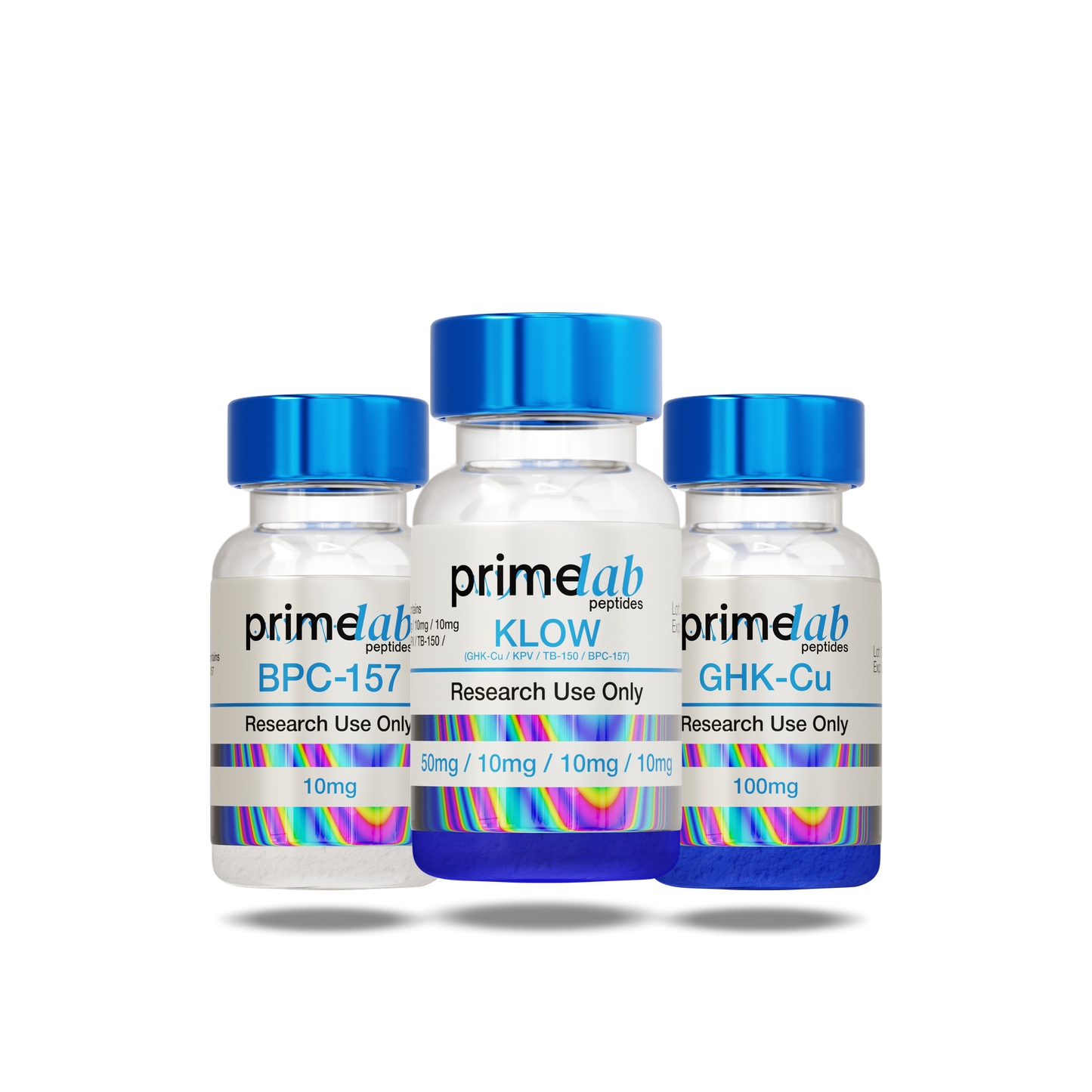
Skin Research Stack
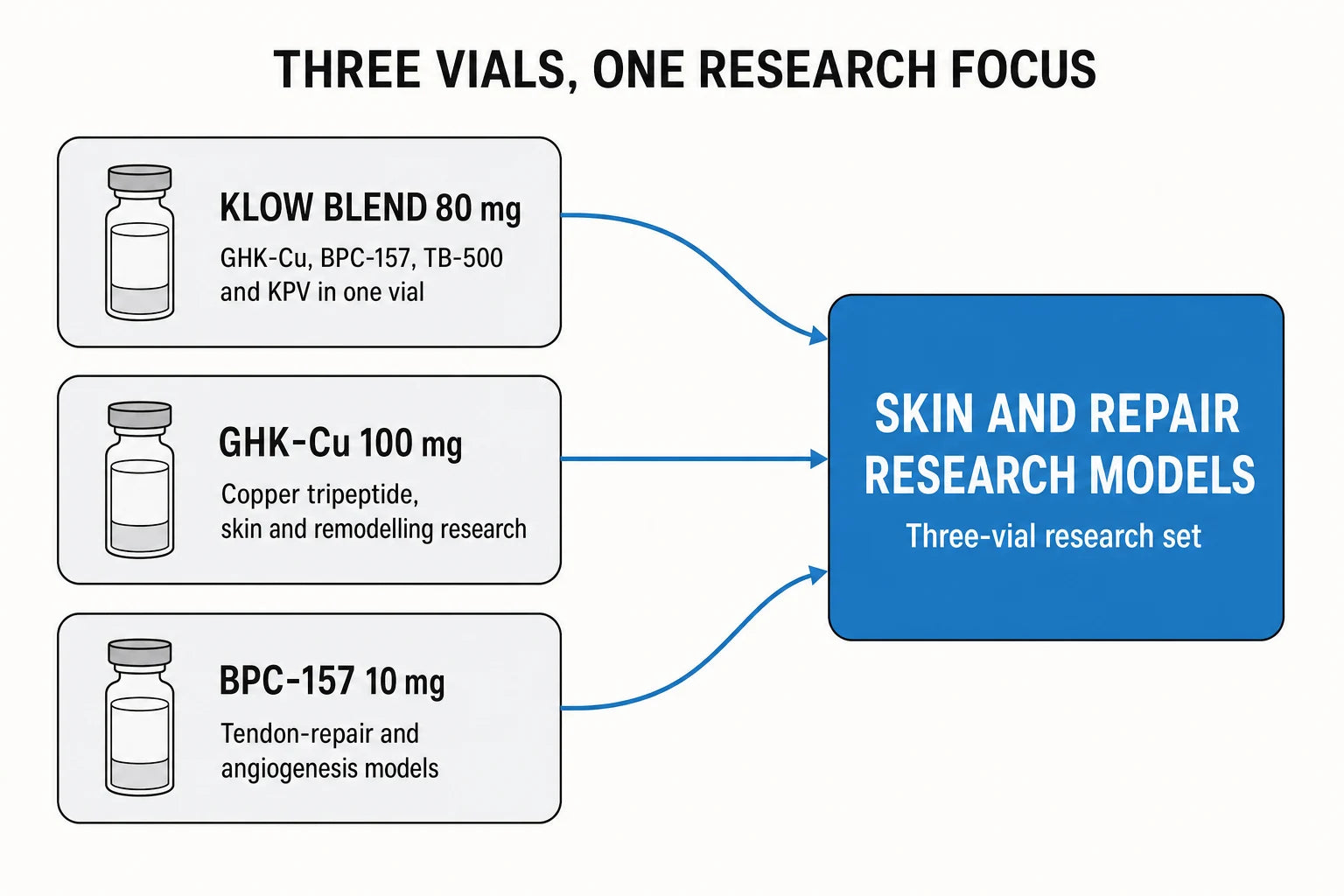
Three Vials, One Research Focus
The KLOW MAX Bundle is built around skin-and-repair research. The Klow blend combines GHK-Cu, BPC-157, TB-500 and the tripeptide KPV in a single 80 mg vial, reinforced by a full-size GHK-Cu 100 mg vial — the copper complex of a naturally occurring tripeptide studied as a modulator of multiple cellular pathways in skin-regeneration research[7] — and a BPC-157 10 mg vial, a pentadecapeptide documented in tendon-healing models[1] and in angiogenesis models, with pro-angiogenic activity associated with VEGFR2 activation[3].
- Skin-and-repair research theme across three vials
- Klow blend — GHK-Cu, BPC-157, TB-500 and KPV in one vial
- GHK-Cu — copper tripeptide, skin and remodelling research
- BPC-157 — tendon-healing and angiogenesis models
- KPV — anti-inflammatory signalling research
- Lot-specific third-party COA for each compound
Inside the Bundle
What's in the Stack
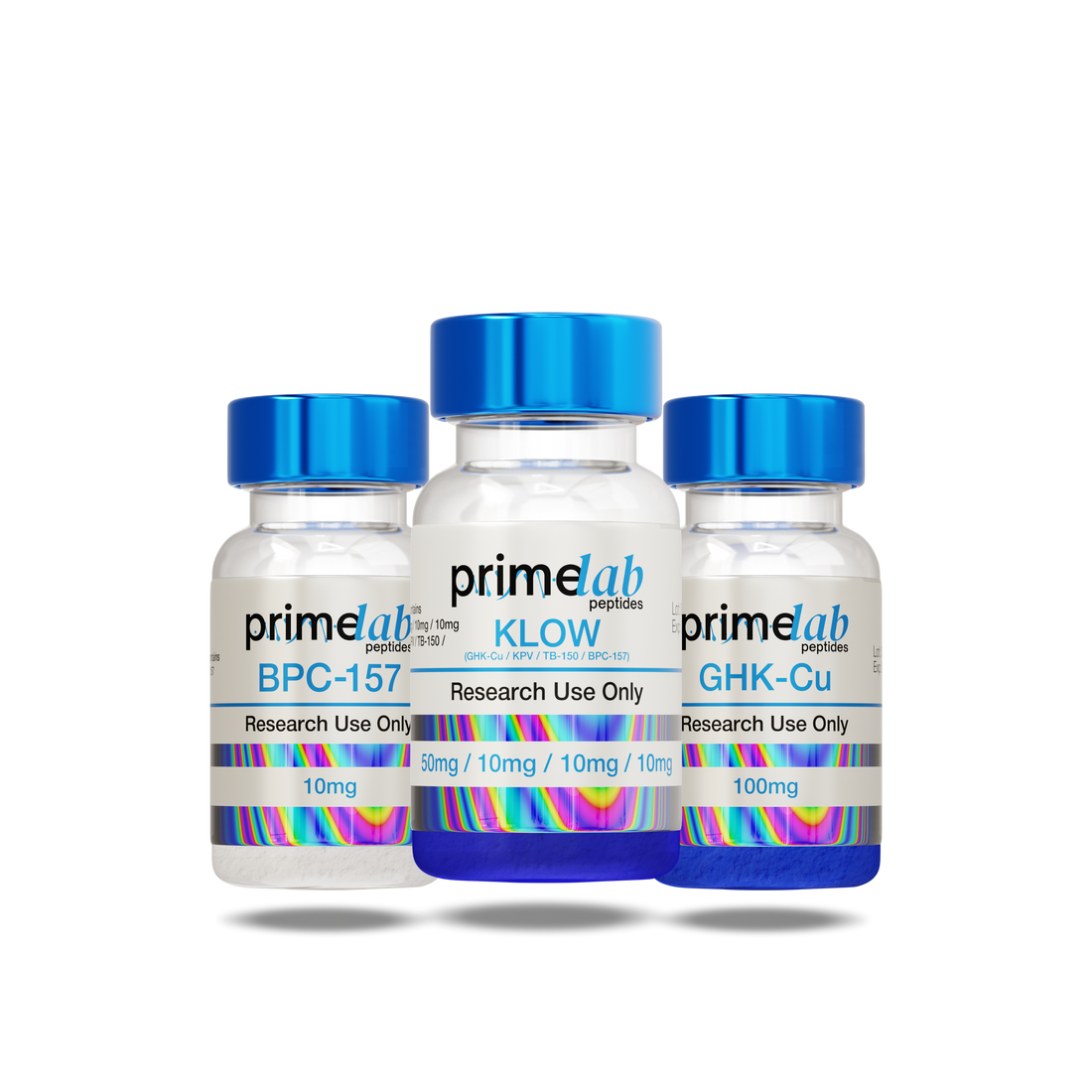
The bundle ships as three separate lyophilized vials: the Klow blend (80 mg), BPC-157 10 mg and GHK-Cu 100 mg. In preclinical models, GHK-Cu has been studied in skin and connective-tissue research[7], BPC-157 on fibroblast migration[1], and thymosin beta-4 — supplied as TB-500 inside the blend — in actin dynamics[5]. The blend adds KPV, the C-terminal tripeptide of alpha-MSH, studied for anti-inflammatory signalling[9].
- Klow blend — 80 mg combination vial (GHK-Cu + BPC-157 + TB-500 + KPV)
- GHK-Cu — 100 mg lyophilized vial
- BPC-157 — 10 mg lyophilized vial
- Copper-peptide chemistry + peptide repair signalling
- 10% saving versus buying the three vials separately
Research Applications
Areas of Scientific Investigation
Each compound has been studied separately: GHK-Cu was described as a modulator of collagen synthesis and remodelling pathways in skin-regeneration research[7] and transiently improved healing outcome in a rat model of ACL reconstruction[8]; in a rat model, BPC-157 accelerated healing of the transected Achilles tendon[2]; and thymosin beta-4 activated integrin-linked kinase and promoted cardiac cell migration, survival and repair[6]. In preclinical models, PepT1-mediated uptake of the tripeptide KPV reduced intestinal inflammation[9]. No published study evaluates the three vials in combination; researchers using them side by side are combining independent lines of evidence.
- Skin-regeneration and remodelling research
- Collagen-synthesis and antioxidant-defence assays
- Wound-healing and angiogenesis assays
- Tendon, ligament and muscle injury models
- Anti-inflammatory signalling research

Understanding the Klow Max Stack: Mechanism of Action
GHK-Cu is the copper complex of glycyl-L-histidyl-L-lysine, a tripeptide naturally present in human plasma whose levels decline with age. It has been studied as a modulator of multiple cellular pathways in skin regeneration — collagen synthesis, extracellular-matrix remodelling and antioxidant defence[7] — and, in a rat model of ACL reconstruction, transiently improved healing outcome[8]. The bundle carries it twice: inside the Klow blend and as a full 100 mg vial.
BPC-157 is a 15-amino-acid fragment of the Body Protection Compound found in gastric juice. In preclinical models it has been reported to promote tissue-repair signalling through several converging mechanisms: promotion of tendon-fibroblast outgrowth and migration, likely via the FAK–paxillin pathway[1], accelerated healing of transected tendon in a rat study[2], pro-angiogenic activity associated with VEGFR2 activation[3], and a documented relationship with the nitric-oxide system[4].
TB-500, the third component of the Klow blend, is synthetic full-length thymosin beta-4 (43 amino acids), identified as a principal G-actin-sequestering peptide. Thymosin beta-4 binds monomeric G-actin and regulates its polymerisation[5]; in a 2004 Nature study, it activated integrin-linked kinase and promoted cardiac cell migration and survival after injury[6].
KPV (Lys-Pro-Val) is the C-terminal tripeptide of alpha-melanocyte-stimulating hormone, the fourth component of the Klow blend. In preclinical models, its PepT1-mediated cellular uptake reduced intestinal inflammation[9], and it is studied as an anti-inflammatory signalling tool alongside skin-research peptides.
Together, the three vials give researchers a skin-and-repair toolkit: copper-peptide chemistry (GHK-Cu, included twice), local repair signalling (BPC-157), actin regulation (thymosin beta-4) and anti-inflammatory signalling (KPV). Each pathway is supported by its own line of preclinical evidence; no published study evaluates the combination itself. These materials are supplied strictly for laboratory research use.
Scientific Literature
- Chang CH, Tsai WC, Lin MS, Hsu YH, Pang JH. The promoting effect of pentadecapeptide BPC 157 on tendon healing involves tendon outgrowth, cell survival, and cell migration. J Appl Physiol (1985). 2011;110(3):774-80.
- Staresinic M, Sebecic B, Patrlj L, et al. Gastric pentadecapeptide BPC 157 accelerates healing of transected rat Achilles tendon and in vitro stimulates tendocytes growth. J Orthop Res. 2003;21(6):976-83.
- Hsieh MJ, Liu HT, Wang CN, et al. Therapeutic potential of pro-angiogenic BPC157 is associated with VEGFR2 activation and up-regulation. J Mol Med (Berl). 2017;95(3):323-333.
- Sikiric P, Seiwerth S, Rucman R, et al. Stable gastric pentadecapeptide BPC 157-NO-system relation. Curr Pharm Des. 2014;20(7):1126-35.
- Safer D, Elzinga M, Nachmias VT. Thymosin beta 4 and Fx, an actin-sequestering peptide, are indistinguishable. J Biol Chem. 1991;266(7):4029-32.
- Bock-Marquette I, Saxena A, White MD, Dimaio JM, Srivastava D. Thymosin beta4 activates integrin-linked kinase and promotes cardiac cell migration, survival and cardiac repair. Nature. 2004;432(7016):466-72.
- Pickart L, Vasquez-Soltero JM, Margolina A. GHK Peptide as a Natural Modulator of Multiple Cellular Pathways in Skin Regeneration. Biomed Res Int. 2015;2015:648108.
- Fu SC, Cheuk YC, Chiu WY, Yung SH, Rolf CG, Chan KM. Tripeptide-copper complex GHK-Cu (II) transiently improved healing outcome in a rat model of ACL reconstruction. J Orthop Res. 2015;33(7):1024-1033.
- Dalmasso G, Charrier-Hisamuddin L, Nguyen HT, Yan Y, Sitaraman S, Merlin D. PepT1-mediated tripeptide KPV uptake reduces intestinal inflammation. Gastroenterology. 2008;134(1):166-78.
Packaged with care, shipped fast.
We’re a passionate team obsessed with quality, not margins.
- Company
- Price
- Purity
- Quantity
- Shipping
-

KLOW MAX Bundle
-
Prime
Lab PeptidesTypical
Competitor -
$288.00$520.00
- ≥99%96%
- 3 vials3 vials
- Free 2-Day Shipping3-10 Business Day
-


