


Glutathione – 1500mg
Certificates of Analysis
Glutathione (GSH) is supplied here as the reduced tripeptide gamma-glutamyl-cysteinyl-glycine, the endogenous intracellular thiol antioxidant. Its defining feature is the free sulfhydryl group of the central cysteine residue, which makes the molecule a substrate for a well-characterized set of enzymes rather than a ligand for a single receptor.
In published work, glutathione is built intracellularly in two ATP-dependent steps by glutamate-cysteine ligase and glutathione synthetase, with cysteine availability normally limiting the rate. Downstream, the GSH/GSSG couple buffers the oxidative state of the cell, glutathione peroxidase 4 consumes GSH to reduce lipid hydroperoxides, the step whose failure defines ferroptosis, and glutathione S-transferases conjugate GSH to electrophiles during phase II detoxification.
Reported human work is comparatively limited. It centers on deficient glutathione synthesis in aging and on supplementation studies using glycine plus N-acetylcysteine as precursors, results that remain tied to the cohorts and designs that produced them. No outcome in humans is claimed or implied here.
Material is intended for controlled laboratory environments and should be handled by qualified personnel following institutional procedures. This product is supplied for laboratory research use only. It is not a drug, food, or cosmetic, and it is not intended for human or veterinary use.
Couldn't load pickup availability
Need reconstitution solution? Don’t forget to add Bacteriostatic Water before checkout.


Endogenous Thiol Tripeptide
The Three-Amino-Acid Peptide at the Center of Cellular Redox Research
Glutathione is the endogenous tripeptide gamma-glutamyl-cysteinyl-glycine and the principal intracellular thiol antioxidant. It is built enzymatically rather than ribosomally, in two ATP-dependent steps: glutamate-cysteine ligase acts first, then glutathione synthetase completes the tripeptide. Published work describes cysteine availability as the usual rate-limiting factor of that pathway, which is why investigators examining glutathione status consider sulfur amino acid supply alongside the peptide itself. The defining chemical feature of the molecule is the free thiol carried by its central cysteine residue, the group that makes glutathione a substrate for a well-characterized set of enzymes rather than a ligand for a single receptor.

Redox Buffering & Lipid Peroxidation
How the GSH/GSSG Couple Sets the Oxidative State of the Cell
The unit examined in redox research is not glutathione alone but the GSH/GSSG couple, the redox pair that buffers cellular oxidative state. Glutathione carries the reduced thiol, GSSG is its oxidized disulfide form, and the balance between the two is what describes the redox condition of a compartment in published work. One enzyme depends directly on that supply: glutathione peroxidase 4 uses GSH to reduce lipid hydroperoxides, and the failure of this step is what defines ferroptosis. Because of that dependence, the availability of reduced glutathione is treated as a variable in in vitro work on lipid peroxidation rather than as a peripheral detail.

Research Applications
From Phase II Conjugation to Precursor Supplementation Studies
Beyond redox buffering, glutathione serves as a conjugating substrate in phase II metabolism: glutathione S-transferases attach GSH to electrophiles, the reaction that underlies phase II detoxification as it is described in the biochemical literature. A separate line of work concerns supply rather than function. Reported human studies cover deficient glutathione synthesis in aging and supplementation with glycine plus N-acetylcysteine as precursors, an approach that follows from cysteine being the rate-limiting input. That human literature is narrow, its results belong to the cohorts and designs that produced them, and glutathione findings are best read with the experimental model attached to each one.
The Science Behind Glutathione: Why the GSH/GSSG Couple Anchors Redox Research
Glutathione occupies an unusual position among research compounds. It is not a receptor-binding analogue but an endogenous metabolite present throughout the cell, and its biology follows from a single chemical feature: the free thiol carried by its cysteine residue. Two ATP-dependent enzymes assemble the tripeptide, glutamate-cysteine ligase and then glutathione synthetase, and published work places cysteine availability at the top of that pathway as the usual bottleneck, which makes precursor supply a variable in experimental design.
Two downstream roles dominate the mechanistic literature. The GSH/GSSG couple buffers cellular oxidative state, the reduced and oxidized forms together describing the redox condition of a compartment. And glutathione peroxidase 4 consumes GSH to reduce lipid hydroperoxides, the step whose failure defines ferroptosis. Alongside these, glutathione S-transferases conjugate GSH to electrophilic compounds in phase II detoxification.
Human data are narrower than the mechanistic literature. Reported work covers deficient synthesis in aging and supplementation studies using glycine plus N-acetylcysteine as precursors; these describe biochemical observations in defined cohorts, not outcomes that can be generalized beyond them. Researchers evaluating glutathione should keep the experimental model attached to every reported result and treat the mechanistic and human literatures as separate levels of evidence.
Scientific Literature
- Lu SC. Glutathione synthesis. Biochim Biophys Acta. 2013;1830(5):3143-3153.
- Bansal A, Simon MC. Glutathione metabolism in cancer progression and treatment resistance. J Cell Biol. 2018;217(7):2291-2298.
- Ursini F, Maiorino M. Lipid peroxidation and ferroptosis: The role of GSH and GPx4. Free Radic Biol Med. 2020;152:175-185.
- Sekhar RV, et al. Deficient synthesis of glutathione underlies oxidative stress in aging and can be corrected by dietary cysteine and glycine supplementation. Am J Clin Nutr. 2011;94(3):847-853.
- Kumar P, et al. Supplementing glycine and N-acetylcysteine (GlyNAC) in older adults improves glutathione deficiency, oxidative stress, mitochondrial dysfunction, inflammation, physical function, and aging hallmarks: a randomized clinical trial. J Gerontol A Biol Sci Med Sci. 2023;78(1):75-89.
- Richie JP, et al. Randomized controlled trial of oral glutathione supplementation on body stores of glutathione. Eur J Nutr. 2015;54(2):251-263.
Packaged with care, shipped fast.
We’re a passionate team obsessed with quality, not margins.
- Company
- Price
- Purity
- Quantity
- Shipping
-
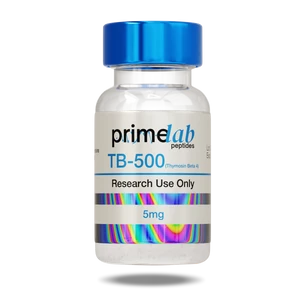
TB-500 – 5mg
-
Prime
Lab PeptidesTypical
Competitor -
$45.00$80.00
- ≥99%97%
- 5mg5mg
- Free 2-Day Shipping3-10 Business Day
-


