All product descriptions and articles provided on this website are intended strictly for informational and educational purposes. Our products are designed exclusively for in-vitro research (i.e., experiments conducted outside of a living organism, typically in glassware such as test tubes or petri dishes). These compounds are not approved by the FDA for use in humans or animals. They are not medications, nor are they intended to diagnose, treat, prevent, or cure any disease or medical condition. Any bodily administration-human or animal-is strictly prohibited by law. Our products are not for human consumption under any circumstances.

Short answer: retatrutide's glucagon arm is not there to lower blood sugar — it is there to raise energy expenditure and push the liver to burn its own fat. Glucagon alone would drive glucose up; the GLP-1 and GIP arms of the same molecule offset that, which is why HbA1c still falls while fat mass drops.
That is the design choice separating retatrutide from dual GLP-1/GIP agonists such as tirzepatide, which carry no glucagon receptor activity at all. The clearest read-out of the glucagon arm is hepatic rather than glycemic: in the phase 2a MASLD trial published in Nature Medicine, relative liver fat fell by roughly 80–82% at the higher doses, and more than 85% of participants on those doses reached normal liver fat (<5%) by week 48. Treat that as a proxy for glucagon receptor engagement, not a direct measurement of it.
What follows covers three things: what the glucagon receptor adds that a dual agonist cannot deliver, why the effect only becomes visible at the higher dose levels rather than the starting ones, and which liver markers get watched once glucagon signaling is switched on. Every figure below is taken from the published trials themselves, never from a press release.
How Does Retatrutide-Driven Glucagon Activation Influence Body Composition?
Retatrutide alters body composition in metabolic disease models by preferentially decreasing fat mass while preserving a favorable balance between adipose and lean tissue. Data from controlled Phase 2 trials show that engagement of the glucagon receptor (GCGR) enhances lipolysis and hepatic fat clearance, particularly when synergistic with the GIP and GLP-1 incretin pathways.
Recent clinical evaluations in obesity and type 2 diabetes research report several key metabolic outcomes:
-
Dose-Responsive Weight Reduction: Total body weight loss reached 17.5% at 24 weeks and increased to 24.2% by 48 weeks at the 12 mg dose, with adipose tissue accounting for most of the reduction.
-
Improvement in Hepatic Steatosis: Among participants with Metabolically Dysfunctional-Associated Steatotic Liver Disease (MASLD) [4], retatrutide reduced relative liver fat content by 80–82%. By week 48, more than 85% of individuals receiving higher doses achieved normalized hepatic fat levels (<5%).
- Decreased Visceral Fat Accumulation: Significant reductions in visceral adipose tissue (VAT) were observed, which directly aligned with enhanced insulin sensitivity and lower systemic inflammatory markers.
These outcomes are driven by glucagon-mediated elevations in energy expenditure and fatty acid oxidation. Unlike single-pathway GLP-1 agents, retatrutide’s triple-agonist configuration more aggressively targets liver–adipose signaling dynamics. This results in accelerated metabolic adjustment and substantial lipid mobilization without triggering the hyperglycemia typically associated with isolated glucagon activation, as glucose balance is maintained through GLP-1 and GIP signaling.
How Does Retatrutide Compare With Other Approaches in Modulating Glucagon Pathways?
Comparative assessments demonstrate that retatrutide outperforms conventional incretin-based therapies by effectively leveraging glucagon signaling without compromising glycemic control. A review of recent metabolic research, summarized in Biomolecules [3] identifies several distinguishing characteristics.
1. Increased Fat Oxidation
Higher-dose retatrutide protocols yield significantly greater reductions in fat mass than GLP-1–only agents. This effect reflects direct glucagon receptor–mediated lipid mobilization and enhanced hepatic fat utilization.
2. Maintained Glycemic Stability
Despite active glucagon signaling, HbA1c reductions exceed those observed with comparators such as dulaglutide. Balanced GLP-1 engagement suppresses excessive hepatic glucose output, preserving glycemic equilibrium in experimental diabetes models.
3. Faster Metabolic Response
Both clinical participants and preclinical models reach clinically relevant weight-loss thresholds more rapidly than with comparator treatments. This accelerated response supports retatrutide’s value in research settings requiring timely metabolic adaptation.

What Do Phase 2 Studies Reveal About Glucagon-Related Glycemic Performance?
Phase 2 investigations confirm that retatrutide enhances glycemic regulation while actively engaging glucagon signaling pathways. According to findings published in The New England Journal of Medicine [2], higher-dose regimens achieved up to 17.5% weight reduction at 24 weeks and surpassed 24% by week 48, alongside consistent HbA1c improvement.
Critically, these data demonstrate that glucagon receptor activation does not counteract glycemic benefits when combined with GLP-1 and GIP agonism. Instead, this integrated signaling framework enhances metabolic efficiency by increasing fat utilization and reducing insulin resistance. For research applications, these results establish retatrutide as a reference compound for examining coordinated glucagon–incretin signaling in metabolic disease models.
What Are the Phase 3 Implications for Glucagon Pathway Research?
Ongoing Phase 3 investigations build on earlier findings by evaluating long-term metabolic stability and cardiovascular outcomes associated with glucagon-inclusive therapies. Reviews indexed in PubMed Central [3] suggest that sustained engagement of the glucagon pathway may support durable weight loss and improved cardiometabolic profiles.
Key research considerations include:
-
Glycemic durability: Persistent HbA1c reductions without rebound hyperglycemia
-
Cardiovascular signaling: Improvements in lipid parameters and blood pressure, indicating systemic metabolic benefits
- High-risk populations: Variable responses among individuals with elevated BMI and insulin resistance, offering insight into personalized metabolic research approaches
Collectively, Phase 3 evidence positions retatrutide as a valuable tool for expanding the understanding of glucagon signaling beyond its traditional role in glucose regulation.
Advance Glucagon-Focused Metabolic Research With Prime Lab Peptides
Researchers investigating metabolic and peptide-based pathways frequently encounter challenges, including inconsistent material quality, limited reproducibility, and unreliable sourcing. These factors can delay progress and complicate data interpretation. As research increasingly explores multi-hormonal signaling networks, access to well-characterized, high-purity peptides is essential for generating reliable, reproducible results.
Prime Lab Peptide addresses these research demands by providing premium, research-grade compounds, including Retatrutide, for controlled laboratory applications. Our focus on consistency, clear documentation, and responsible sourcing minimizes experimental variability and supports robust metabolic study design. We strive to deliver reliable research tools alongside responsive scientific support for complex experimental work. For specialized support or product access, please contact us today.

Retatrutide Compounds Referenced in This Article
The glucagon arm described above belongs to retatrutide alone; tirzepatide is listed as the dual GLP-1/GIP contrast, with no glucagon receptor activity. All items below are supplied for research use only.
- Retatrutide – 6mg — lower-content vial, used where a dose-response series across the glucagon arm is the point.
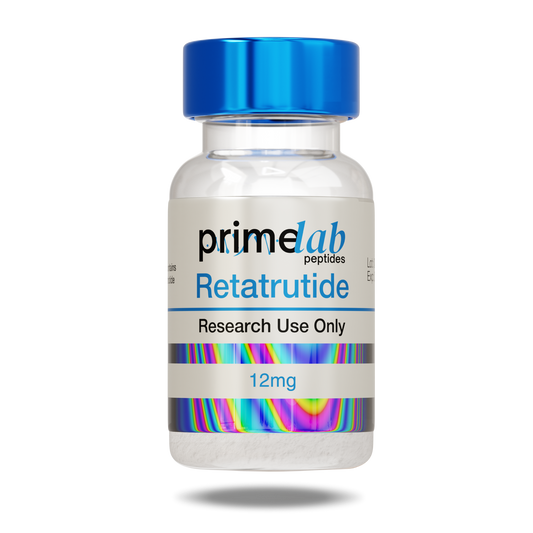
- Retatrutide – 12mg — the dose level that carries most of the 48-week phase 2 data cited above.
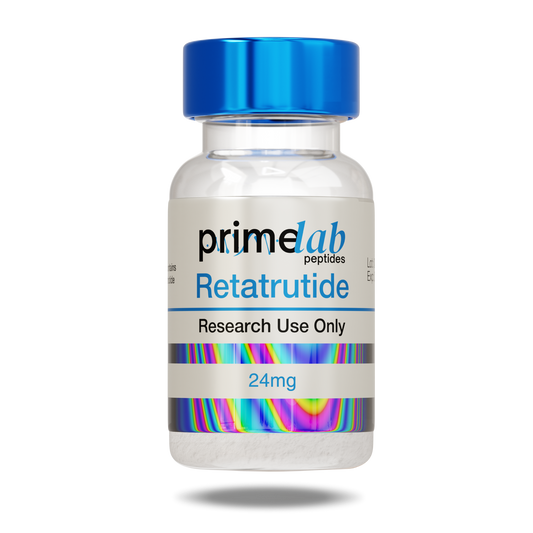
- Retatrutide – 24mg — highest-content retatrutide vial in the catalog.
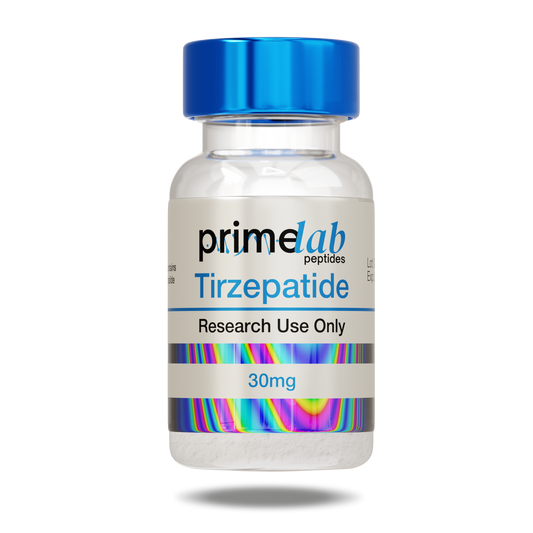
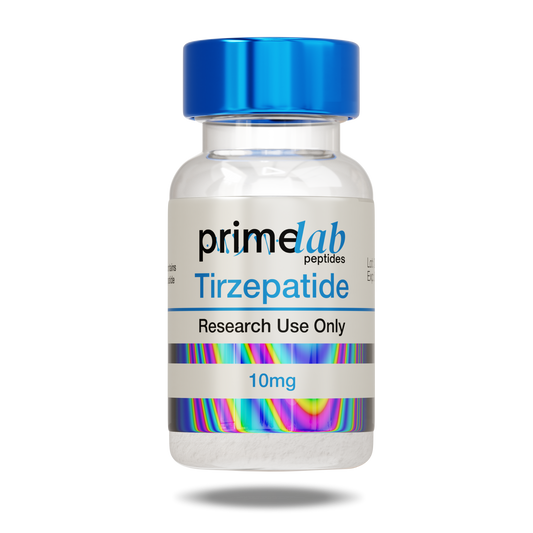
- Tirzepatide – 10mg — dual GLP-1/GIP agonist, the comparator without a glucagon receptor component.
What Did the Phase 2 Type 2 Diabetes Trial Show Against Dulaglutide?
In the phase 2 trial run specifically in people with type 2 diabetes, retatrutide lowered HbA1c more than placebo at every dose above 0.5 mg, but it separated statistically from the active comparator dulaglutide in only two of its six dose arms. That trial, reported by Rosenstock and colleagues in The Lancet (2023) and registered as NCT04867785, randomized 281 adults across 42 US centers, all with HbA1c between 7.0% and 10.5% and BMI between 25 and 50, managed with diet and exercise alone or on a stable dose of metformin.
Least-squares mean change in HbA1c from baseline at 24 weeks, the primary endpoint:
- Retatrutide 12 mg: −2.02%
- Retatrutide 8 mg (two escalation schemes): −1.99% and −1.88%
- Retatrutide 4 mg (two schemes): −1.39% and −1.30%
- Retatrutide 0.5 mg: −0.43%
- Dulaglutide 1.5 mg: −1.41%
- Placebo: −0.01%
The nuance matters more than the headline. Every retatrutide arm except 0.5 mg beat placebo, but superiority over dulaglutide reached statistical significance in just two arms, the 8 mg slow-escalation group and the 12 mg group. The 4 mg arms landed alongside dulaglutide rather than above it, and the pattern held at 36 weeks. For a question built around the glucagon arm, that is the load-bearing observation: adding glucagon receptor agonism to GIP and GLP-1 did not cost glycemic control in this population, and it produced additional HbA1c lowering only at the higher dose levels.
How Does Weight Change in the Diabetes Trial Compare With the Obesity Trial?
Weight reduction reported in participants with type 2 diabetes is smaller than the figure most often quoted for retatrutide, and the two numbers come from separate trials that cannot be read as a head-to-head. In the type 2 diabetes trial, body weight at 36 weeks fell 16.94% in the 12 mg group, 16.81% and 16.34% in the two 8 mg groups, 10.37% and 7.92% in the 4 mg groups, and 3.19% at 0.5 mg, against 3.00% with placebo and 2.02% with dulaglutide 1.5 mg. From 4 mg upward, reductions were significantly greater than both placebo and dulaglutide.
The obesity trial published in the New England Journal of Medicine is a different study in 338 participants, and it reported 17.5% at 24 weeks and 24.2% at 48 weeks in its 12 mg group.
Three things separate those datasets: the diabetes readout is at 36 weeks and the obesity readout at 48, the enrolled populations differ in baseline glycemic status, and no trial has compared the two groups directly. The 16.94% versus 24.2% gap therefore cannot be attributed to diabetes status alone, however tempting the arithmetic looks. The practical consequence for study design is that a glucagon-arm protocol modeled on the obesity dataset should not assume the same magnitude of weight change when the model carries diabetic metabolism.
What Side Effects and Dropout Were Reported in the Diabetes Trial?
Adverse events recorded in the type 2 diabetes trial were predominantly gastrointestinal and dose-related, and the overall rate matched the active comparator rather than exceeding it. Mild-to-moderate gastrointestinal events, including nausea, diarrhea, vomiting and constipation, were reported in 35% of participants across the retatrutide groups, against 13% with placebo and 35% with dulaglutide 1.5 mg. Within retatrutide, the spread by arm was wide, from 13% in the 0.5 mg group to 50% in the 8 mg fast-escalation group, and the slower-escalation arms recorded fewer events than the faster ones at the same target dose.
On retention, 84% of the 281 randomized participants completed the study and 79% completed study treatment. The investigators reported no episodes of severe hypoglycemia and no deaths during the trial. Separately, the phase 2 obesity trial recorded dose-dependent heart rate increases that peaked around 24 weeks and declined thereafter.
What these numbers do not establish deserves equal weight. A 281-participant trial running 36 weeks is not powered to detect uncommon events, and neither dataset speaks to exposure beyond roughly a year. Any tolerability reading drawn from them stays provisional and bounded by the populations and durations actually studied.
Which Comparators Does the Phase 3 Diabetes Program Use?
The phase 3 program in type 2 diabetes dropped dulaglutide and moved to placebo and semaglutide, which changes what the next readouts are able to demonstrate. Four registered designs frame the diabetes question:
- TRANSCEND-T2D-1: retatrutide against placebo in 537 adults whose diabetes is managed with diet and exercise alone; listed on ClinicalTrials.gov as completed.
- TRANSCEND-T2D-2: the head-to-head, comparing retatrutide with once-weekly semaglutide in 1,250 adults inadequately controlled on metformin with or without an SGLT2 inhibitor. It is open-label, a genuine limitation on any subjective endpoint, and is listed as active and no longer recruiting.
- NCT06297603: extends the question to 320 participants with moderate or severe renal impairment on basal insulin, a population phase 2 never covered.
- NCT06383390: an event-driven study in roughly 10,000 participants with BMI at or above 27 and established atherosclerotic cardiovascular or chronic kidney disease, with major adverse cardiovascular and kidney events as endpoints.
The comparator choice is the story here. A semaglutide arm is the first design capable of showing whether the glucagon component adds anything over an established GLP-1 receptor agonist in diabetes, rather than over placebo or an older comparator.
FAQs:
What Do Research Findings Indicate About Retatrutide?
Research findings indicate that retatrutide demonstrates pronounced glycemic and weight-related effects under controlled experimental conditions. These results reflect measurable metabolic changes across multiple endpoints. In addition, the data underscore its growing importance in multi-agonist research on obesity and diabetes.
How Does Retatrutide Affect Metabolic Biomarkers?
Retatrutide affects metabolic biomarkers by lowering HbA1c, enhancing insulin sensitivity, and reducing fasting glucose levels. These changes enable researchers to assess coordinated metabolic pathway responses. Moreover, the findings offer valuable insight for studies focused on advanced hormonal modulation.
Why Is Retatrutide Valuable in Obesity Research?
Retatrutide holds value in obesity research due to its ability to significantly reduce fat mass while maintaining lean tissue. These effects support further exploration of mechanisms underlying energy expenditure. Additionally, researchers gain greater clarity into the multi-agonist regulation of fat metabolism.
How Does Retatrutide Perform Compared With Other Agonists?
Compared with other agonists, retatrutide exhibits more pronounced glycemic and weight-related outcomes. These distinctions allow for clearer benchmarking across therapeutic categories. As a result, researchers can more effectively differentiate metabolic effects in multi-hormone study designs.
References:
4. Sanyal AJ, Hartman ML, Aronne LJ, et al. Triple hormone receptor agonist retatrutide for metabolic dysfunction-associated steatotic liver disease: a randomized phase 2a trial. Nature Medicine. 2024;30(7):1914-1923. doi:10.1038/s41591-024-03018-2