All product descriptions and articles provided on this website are intended strictly for informational and educational purposes. Our products are designed exclusively for in-vitro research (i.e., experiments conducted outside of a living organism, typically in glassware such as test tubes or petri dishes). These compounds are not approved by the FDA for use in humans or animals. They are not medications, nor are they intended to diagnose, treat, prevent, or cure any disease or medical condition. Any bodily administration-human or animal-is strictly prohibited by law. Our products are not for human consumption under any circumstances.

Short answer: no — tirzepatide does not raise metabolic rate. In the 18-week randomized trial run at Pennington Biomedical (NCT04081337, published in Cell Metabolism 2025), 24-hour energy expenditure measured inside a whole-room calorimeter fell by roughly 300 kcal/day in both arms — −300 kcal/day on tirzepatide 15 mg versus −297 kcal/day on placebo, after adjusting for the change in fat and fat-free mass. Sleeping metabolic rate fell in both groups as well. The metabolic slowdown that follows weight loss was not blocked.
What did change is which fuel gets burned. 24-hour respiratory quotient dropped by 0.030 on tirzepatide versus +0.005 on placebo; adjusted fat oxidation rose about 13 g/day while carbohydrate oxidation fell about 22 g/day; and participants spent roughly 250 extra minutes per day below an RQ of 0.80, the cut-off used for high lipid oxidation (p = 0.0004). The second change was intake: at an ad libitum test meal, calories eaten fell by about 915 kcal on tirzepatide against 59 kcal on placebo.
The mouse arm of the same paper points the other way — in calorie-restricted obese mice, tirzepatide blunted the drop in energy expenditure that hit vehicle-treated and pair-fed controls. That protection did not carry over to people, which is exactly why “tirzepatide speeds up your metabolism” is rodent data being read as human data. Weight still came off (−16.7 kg versus −8.3 kg over 18 weeks, both arms on the same calorie-restricted regimen), but through eating less and oxidizing more fat, not through burning more energy at rest. Tirzepatide is supplied for research use only.
How Much Does Metabolic Rate Actually Change?
Clinical research programs evaluating tirzepatide demonstrate coordinated metabolic effects that extend beyond glucose regulation. Investigators report improvements in body composition, insulin responsiveness, and metabolic flexibility, suggesting that tirzepatide may influence the allocation of nutrients to energy production or storage pathways.
Findings from the SURPASS clinical trial program show that tirzepatide significantly improves metabolic markers associated with substrate utilization and body-weight regulation [1]. Several physiological responses illustrate potential nutrient-partitioning mechanisms:
- Improved Metabolic Flexibility: Studies suggest that incretin-based signaling enhances the body’s ability to shift between carbohydrate and lipid oxidation depending on energy availability, allowing metabolic tissues to adapt fuel utilization efficiently across changing nutritional states.
- Reduced Ectopic Lipid Accumulation: Imaging analyses indicate decreased liver and visceral fat, suggesting altered lipid distribution across metabolic tissues and reduced deposition of excess lipids in non-adipose metabolic organs [2].
- Enhanced Insulin-Mediated Nutrient Uptake: Improved insulin signaling may direct circulating nutrients toward skeletal muscle metabolism rather than excess storage, supporting greater utilization of glucose and other substrates for cellular energy production.
These responses suggest that tirzepatide influences the balance between nutrient utilization and storage across multiple metabolic systems, contributing to coordinated regulation of energy metabolism and substrate allocation.
Carbohydrate Oxidation: How Much Glucose Burning Drops
Tirzepatide influences glucose utilization pathways by enhancing insulin-dependent glucose uptake and regulating hepatic glucose metabolism. Dual activation of the incretin receptors stimulates insulin secretion while simultaneously reducing inappropriate glucagon signaling, helping maintain balanced glucose availability for cellular energy production. Clinical investigations published in the New England Journal of Medicine demonstrate significant improvements in glycemic regulation and metabolic efficiency during tirzepatide treatment [3].
Key glucose-utilization responses observed in metabolic research include:
- Enhanced Peripheral Glucose Uptake: Skeletal muscle tissue demonstrates improved glucose uptake for energy metabolism, enabling efficient utilization of circulating glucose for cellular respiration and sustained metabolic activity.
- Regulation of Hepatic Glucose Output: Reduced hepatic glucose production helps maintain metabolic stability during fasting and postprandial states by preventing excessive release of glucose into the bloodstream.
- Improved Cellular Energy Conversion: Efficient glucose oxidation supports ATP generation, which is necessary for cellular metabolic processes and maintaining essential physiological functions across metabolically active tissues.
Together, these mechanisms highlight how incretin signaling contributes to the distribution of glucose toward tissues that utilize it for energy production while supporting balanced metabolic regulation.
Fat Oxidation vs Resting Energy Expenditure
Tirzepatide affects lipid oxidation and fat utilization by influencing metabolic pathways that regulate fatty acid mobilization and mitochondrial energy production. These processes determine whether lipids are stored in adipose tissue or oxidized to generate energy. Research examining metabolic outcomes in individuals receiving tirzepatide demonstrates reductions in circulating triglycerides and improvements in lipid metabolism markers [4].
Several lipid-utilization mechanisms help explain these findings:
- Enhanced Fatty Acid Oxidation: Increased mitochondrial oxidation of fatty acids supports energy production during periods of caloric demand by converting stored lipids into usable metabolic fuel.
- Improved Lipid Transport Regulation: Reduced circulating lipid levels may reflect more efficient distribution of fatty acids to metabolic tissues, where they can be utilized for energy metabolism.
- Reduced Visceral Fat Deposition: Clinical imaging studies show decreased visceral adiposity, suggesting altered lipid partitioning among metabolic compartments and reduced fat accumulation in abdominal organs.
These metabolic adaptations illustrate how tirzepatide may influence the balance between lipid storage and lipid utilization across multiple metabolic tissues and energy pathways.

Does Losing Lean Mass Slow Metabolism?
Skeletal muscle plays a major role in whole-body energy utilization because it represents one of the largest metabolically active tissues in the body. Improvements in insulin sensitivity and substrate utilization within muscle tissue can significantly influence overall metabolic efficiency. Metabolic studies indicate that incretin signaling pathways influence skeletal muscle energy metabolism by regulating nutrient uptake and mitochondrial activity.
Observed metabolic responses in skeletal muscle include:
- Improved Glucose Uptake: Muscle cells absorb circulating glucose more efficiently for energy production.
- Enhanced Mitochondrial Function: Increased mitochondrial activity supports improved oxidative metabolism and energy output.
- Balanced Substrate Utilization: Muscles adaptively utilize both glucose and fatty acids depending on metabolic demand.
These mechanisms highlight the importance of skeletal muscle metabolism in determining how nutrients are utilized throughout the body.
How Long Do These Metabolic Changes Last?
Changes in nutrient partitioning and energy utilization influence the broader metabolic environment by coordinating multiple physiological systems. Hormonal signaling, tissue metabolism, and nutrient distribution interact to determine whether energy substrates are used immediately or stored for later use.
Recent comprehensive reviews of clinical evidence suggest that incretin-based metabolic signaling influences several interconnected processes related to energy metabolism and substrate handling. Researchers emphasize that the integration of these pathways is what drives sustained improvements in cardiometabolic health [5].
Key integration mechanisms include:
- Substrate Switching Efficiency: Metabolic systems adapt to changing nutrient availability by switching between carbohydrate and lipid energy sources.
- Hormonal Coordination: Insulin and other metabolic hormones guide the distribution of nutrients toward active metabolic tissues.
- Energy Balance Regulation: Coordinated metabolic signaling helps maintain equilibrium between energy intake, utilization, and storage.
Sourcing Tirzepatide for Metabolic Rate Research
Research examining metabolic energy pathways requires highly characterized experimental compounds to ensure reproducible results. Variability in peptide purity, synthesis methods, or analytical documentation may introduce inconsistencies that complicate the interpretation of metabolic outcomes.
Prime Lab Peptides supports metabolic research by providing rigorously synthesized research peptides such as Tirzepatide, validated through comprehensive analytical testing and strict quality-control procedures. These standards enable laboratories to conduct controlled investigations into complex metabolic pathways, including energy metabolism, substrate utilization, and nutrient partitioning.
For investigators studying metabolic physiology, nutrient allocation pathways, and energy-utilization mechanisms, reliable peptide sourcing remains essential for generating reproducible experimental data. Laboratories seeking dependable peptide materials aligned with advanced metabolic research objectives are encouraged to contact us for additional information.

Research compounds discussed in this article
- Tirzepatide – 5mg — smallest vial, matching the lowest dose arm of the SURPASS-3 MRI substudy.
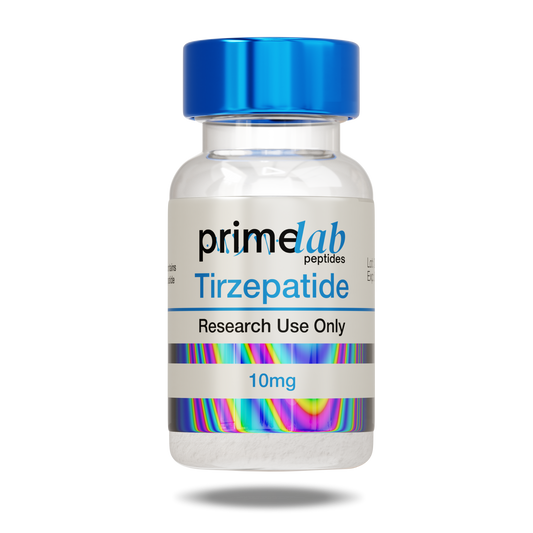
- Tirzepatide – 10mg — the 10 mg and 15 mg data were pooled for the liver-fat and abdominal-fat endpoints of that substudy.
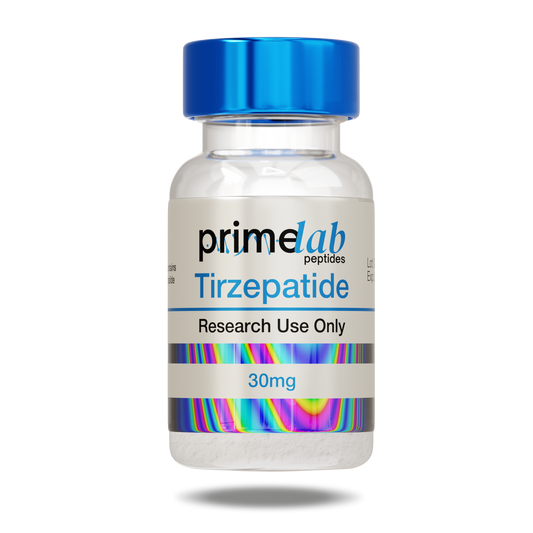
- Tirzepatide – 30mg — multi-dose vial for longer calorimetry or body-composition protocols.
Which of These Effects Are Weight-Independent?
Answer first: part of the insulin-sensitizing effect does appear to persist when weight loss is taken out of the equation, but the clean demonstration of that is in mice, not in people.
In obese mice lacking a functional GLP-1 receptor — a model in which tirzepatide produces little of its usual weight loss — tirzepatide still improved insulin sensitivity, mainly by increasing glucose disposal into white adipose tissue. A long-acting GIP receptor agonist reproduced the same effect, which is why the authors attribute this component to GIP receptor signalling rather than to eating less (Samms et al., Journal of Clinical Investigation, 2021, 10.1172/JCI146353). The same work reported lower circulating branched-chain amino acids and ketoacids, alongside upregulation of genes involved in glucose, lipid and BCAA catabolism in brown adipose tissue. The wording matters here: gene expression was measured, not oxidation rates. Reading that result as « tirzepatide burns more fat and more amino acids in brown fat » claims more than the paper reports.
Human data cannot settle the same question yet, and the reason is a design one. In a 28-week phase 1 trial (NCT03951753), insulin sensitivity was measured directly by hyperinsulinaemic-euglycaemic clamp: the M value was higher on tirzepatide than on the semaglutide comparator, with an estimated treatment difference of 1.52 mg/min/kg (Heise et al., Lancet Diabetes & Endocrinology, 2022, 10.1016/S2213-8587(22)00085-7). No arm was weight-matched, so the direct effect of the compound and the effect of the weight that came off cannot be separated. The SURPASS-2 post hoc analysis carries the same limit: HOMA2-IR fell by 15.5–24.0 % across the tirzepatide arms versus 5.1 % on the comparator at week 40, but HOMA2-IR is a fasting model index, and those arms also lost more weight.
At this stage, then, weight-independent describes a preclinical finding with a mechanistic rationale carried over to humans — not a quantified human result.
What Are Researchers Combining Tirzepatide With Next?
Answer first: the most active line of combination research targets exactly the question this article opens with — where the lost mass comes from. Registered trials now pair tirzepatide with a muscle-targeting antibody or with resistance training, and none of them has reported a final result.
- Bimagrumab plus tirzepatide — a phase 2 trial in 252 adults with obesity or overweight without type 2 diabetes tests each compound alone and in combination (NCT06643728). Its secondary endpoints are the partitioning question in registry form: percent change in total body fat mass, in total body lean mass by DXA, and in visceral adipose tissue. Primary completion is listed for January 2026, with no results posted.
- Apitegromab plus tirzepatide — a phase 2 study in overweight and obese adults (NCT06445075) completed in March 2025; no results are posted on the registry.
- Investigator-led body-composition work — a trial at Massachusetts General Hospital examines tirzepatide and bimagrumab on body composition, insulin sensitivity and bone (NCT05933499), with completion listed for 2028.
- Training and protein alongside the compound — LEAN-PREP tests resistance exercise and protein intake during semaglutide or tirzepatide in 232 participants (NCT06885736), completion listed for 2029; a study at Pennington Biomedical, the same centre that ran the calorimetry trial discussed above, looks at muscle and skeletal outcomes in 50 participants (NCT07154719).
One trial extends the question beyond body composition: a phase 4 study in 198 participants with overweight or obesity and PCOS-related ovarian dysfunction (NCT07326111), currently recruiting, with completion listed for 2028.
Registry entries describe intent and design, not outcomes. Until results are posted or published, none of these studies supports a statement about what the combinations actually do to the fat-versus-lean split.
FAQs
What Is Tirzepatide?
Tirzepatide is a synthetic peptide that functions as a dual agonist of glucose-dependent insulinotropic polypeptide (GIP) and glucagon-like peptide-1 (GLP-1) receptors. Researchers investigate tirzepatide because it influences metabolic signaling pathways involved in glucose regulation, energy balance, and nutrient utilization across multiple metabolic tissues.
How Does Tirzepatide Influence Nutrient Partitioning?
Tirzepatide influences nutrient partitioning by improving insulin signaling and metabolic flexibility. These changes may alter how nutrients are distributed among tissues, directing glucose toward energy-producing pathways, improving lipid metabolism, and reducing excess fat accumulation in metabolic organs.
Does Tirzepatide Affect Energy Utilization in Metabolic Tissues?
Research indicates that tirzepatide may influence energy utilization by enhancing glucose uptake in skeletal muscle, improving lipid oxidation, and supporting metabolic flexibility. These effects allow metabolic tissues to adjust their energy production pathways in response to nutrient availability and physiological demand.
Which Research Models Study Nutrient Utilization with Tirzepatide?
Scientists study nutrient utilization with tirzepatide through randomized clinical trials, metabolic chamber experiments, tracer-based metabolic studies, and body-composition imaging techniques that evaluate substrate metabolism and energy expenditure in controlled research settings.