


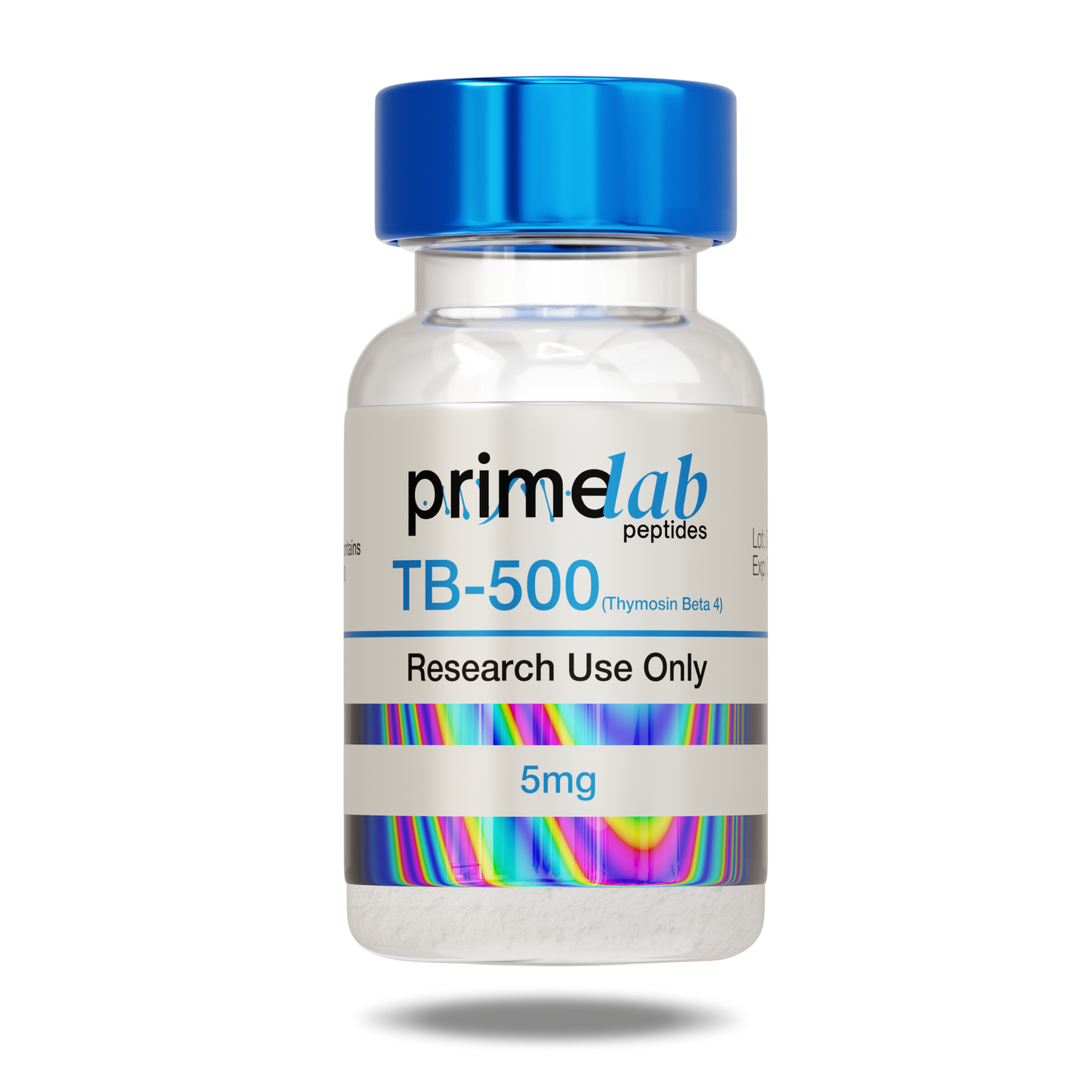
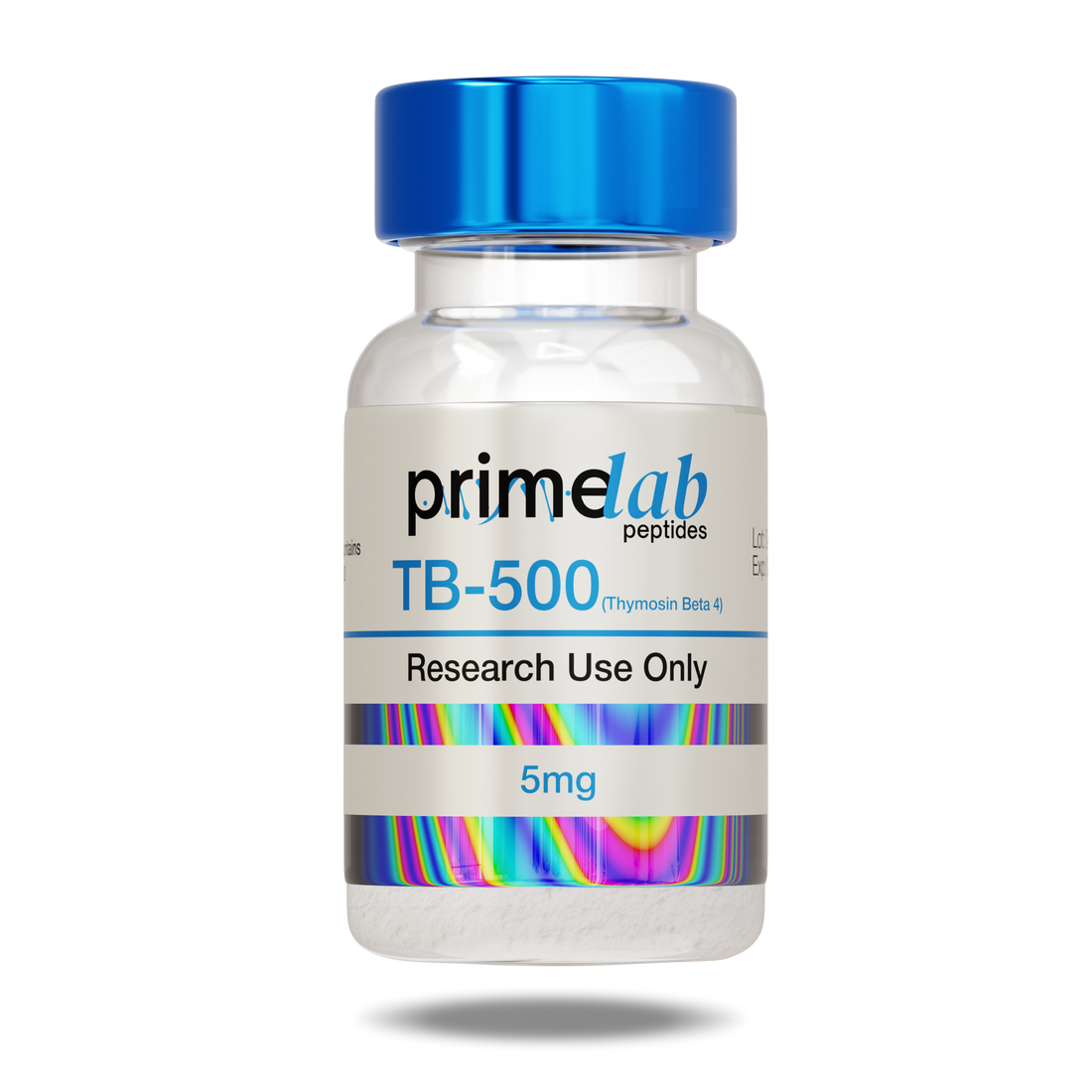
TB-500 – 5mg
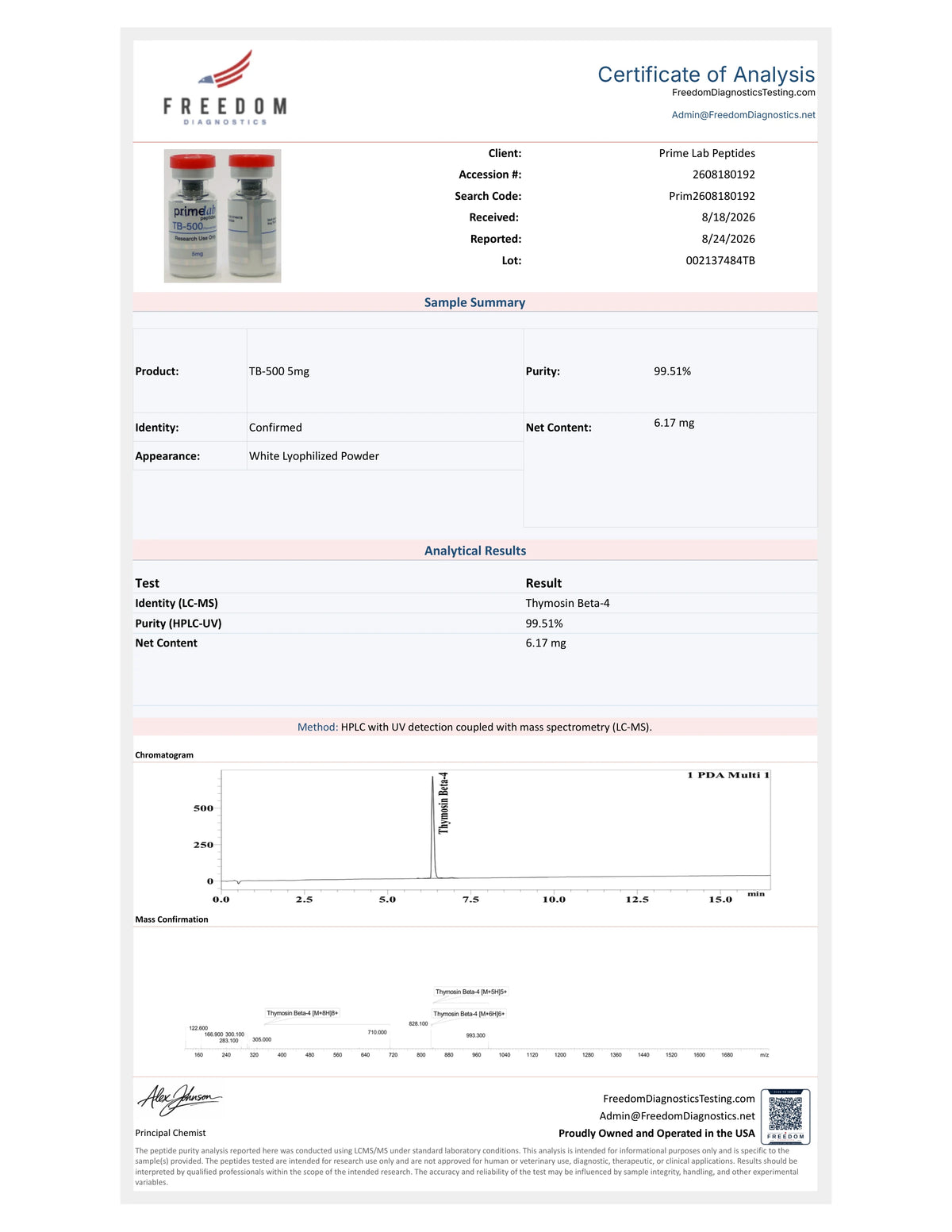
Certificates of Analysis
TB-500 is the full 43-amino-acid thymosin β4 peptide — a naturally occurring actin-regulating protein central to cell migration and tissue repair.
In preclinical research, thymosin β4 acted as a potent chemoattractant, accelerating endothelial-cell migration four- to six-fold and promoting angiogenesis[1].
In rodent models it promoted angiogenesis and wound repair in both young and aged animals, alongside effects on hair-follicle development[2].
Supplied as a lyophilized powder for reconstitution. Findings above come from preclinical (animal and cell-based) research on these molecules and are provided as scientific reference for laboratory research only.
Couldn't load pickup availability
Need reconstitution solution? Don’t forget to add Bacteriostatic Water before checkout.
Full-Length Thymosin Beta-4
The Complete 43-Amino-Acid Peptide for Tissue Regeneration Research
TB-500 is a synthetic 43-amino-acid peptide corresponding to the full sequence of Thymosin Beta-4 (Tβ4) — a naturally occurring protein central to tissue repair and regeneration. Unlike shorter fragments, this complete sequence retains all active regions responsible for actin binding, cell migration, and angiogenesis, making it the definitive tool for comprehensive regenerative research.
- Full 43-amino-acid Thymosin Beta-4 sequence
- Naturally occurring protein involved in tissue repair
- Actin-binding and cell migration properties
- Promotes angiogenesis and wound healing
- High purity for reliable research outcomes
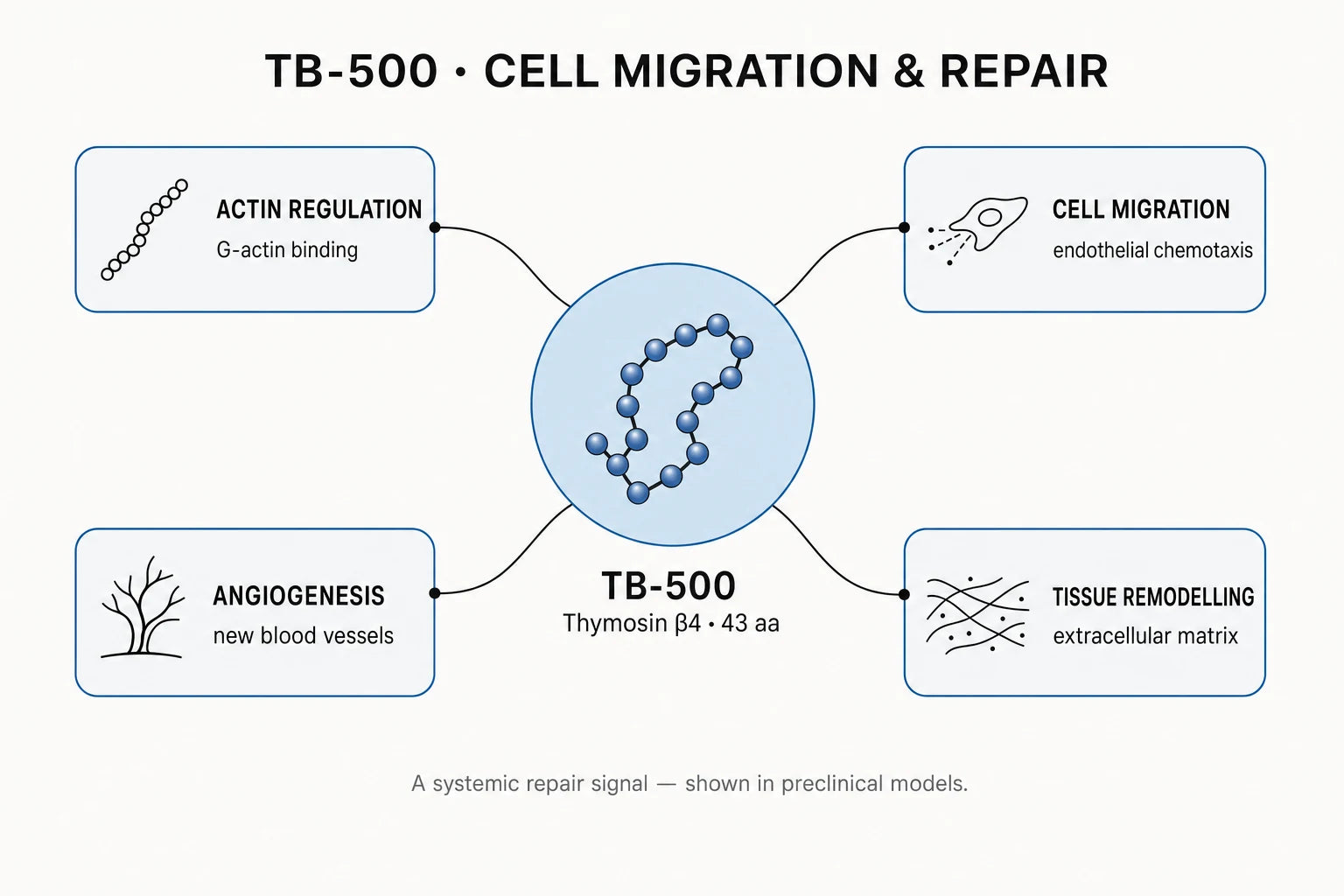
Actin Regulation & Cell Migration
How TB-500 Drives Tissue Repair at the Cellular Level
TB-500 functions primarily through its interaction with G-actin — a key protein that forms the cellular cytoskeleton. By binding to actin, TB-500 promotes cytoskeletal remodeling, enabling cells to migrate toward injury sites. This mechanism drives angiogenesis (new blood vessel formation), accelerates wound closure, and recruits stem and progenitor cells to damaged tissue areas.
- Binds G-actin to promote cytoskeletal remodeling
- Enhances cell migration toward injury sites
- Stimulates angiogenesis and new vessel formation
- Recruits stem and progenitor cells to damaged tissue
- Reduces fibrotic scarring through organized healing
Research Applications
From Musculoskeletal Repair to Cardiac Regeneration Studies
TB-500 has become a cornerstone compound for researchers investigating tissue regeneration across multiple systems. Its established role in angiogenesis and cell migration makes it particularly valuable for musculoskeletal, cardiovascular, and soft tissue research — areas where enhanced healing and reduced fibrosis are primary endpoints.
- Musculoskeletal injury and repair modeling
- Tendon, ligament, and muscle regeneration studies
- Cardiac tissue repair and cardioprotection research
- Wound healing and re-epithelialization studies
- Anti-fibrotic mechanism investigations
- Inflammatory response modulation research

The Science Behind Thymosin Beta-4: Why TB-500 Leads Regenerative Research
TB-500 (Thymosin Beta-4) is a 43-amino-acid peptide that plays a fundamental role in tissue repair and regeneration. Originally identified in the thymus gland, this protein is now known to be expressed in virtually all cell types — functioning as a key regulator of actin dynamics, cell migration, and wound healing processes.
The peptide's mechanism centers on its interaction with G-actin, the monomeric form of the cytoskeletal protein actin. By sequestering G-actin, TB-500 promotes cytoskeletal reorganization — enabling cells to change shape, migrate, and respond to tissue damage. This property is particularly important in angiogenesis, where endothelial cells must migrate and proliferate to form new blood vessels.
Preclinical research has demonstrated TB-500's effects across multiple tissue systems. In wound healing models, it accelerates closure, enhances collagen deposition, and reduces granulation tissue formation. In cardiac models, it shows cardioprotective effects — reducing oxidative damage and supporting tissue regeneration following injury. These diverse applications reflect Thymosin Beta-4's fundamental role in the body's repair processes.
For research teams investigating tissue regeneration, wound healing, or anti-fibrotic mechanisms, TB-500 provides a well-characterized tool with extensive preclinical literature supporting its biological activity across musculoskeletal, cardiovascular, and soft tissue models.
For research use only. Not for human consumption.
Scientific Literature
- Safer D, Elzinga M, Nachmias VT. Thymosin beta 4 and Fx, an actin-sequestering peptide, are indistinguishable. J Biol Chem. 1991;266(7):4029-32.
- Bock-Marquette I, Saxena A, White MD, Dimaio JM, Srivastava D. Thymosin beta4 activates integrin-linked kinase and promotes cardiac cell migration, survival and cardiac repair. Nature. 2004;432(7016):466-72.
- Guarnera G, De Rosa A, Camerini R. Thymosin beta-4 and venous ulcers: clinical remarks on a European prospective, randomized study on safety, tolerability, and enhancement on healing. Ann N Y Acad Sci. 2007;1112:407-12.
- Sosne G, Ousler GW. Thymosin beta 4 ophthalmic solution for dry eye: a randomized, placebo-controlled, Phase II clinical trial conducted using the controlled adverse environment (CAE) model. Clin Ophthalmol. 2015;9:877-84.
- Mendias CL, Awan TM. Safety and Efficacy of Approved and Unapproved Peptide Therapies for Musculoskeletal Injuries and Athletic Performance. Sports Med. 2026 Apr 12; Epub ahead of print (no volume/pages assigned).
Packaged with care, shipped fast.
We’re a passionate team obsessed with quality, not margins.
- Company
- Price
- Purity
- Quantity
- Shipping
-

TB-500 – 5mg
-
Prime
Lab PeptidesTypical
Competitor -
$45.00$80.00
- ≥99%97%
- 5mg5mg
- Free 2-Day Shipping3-10 Business Day
-


