
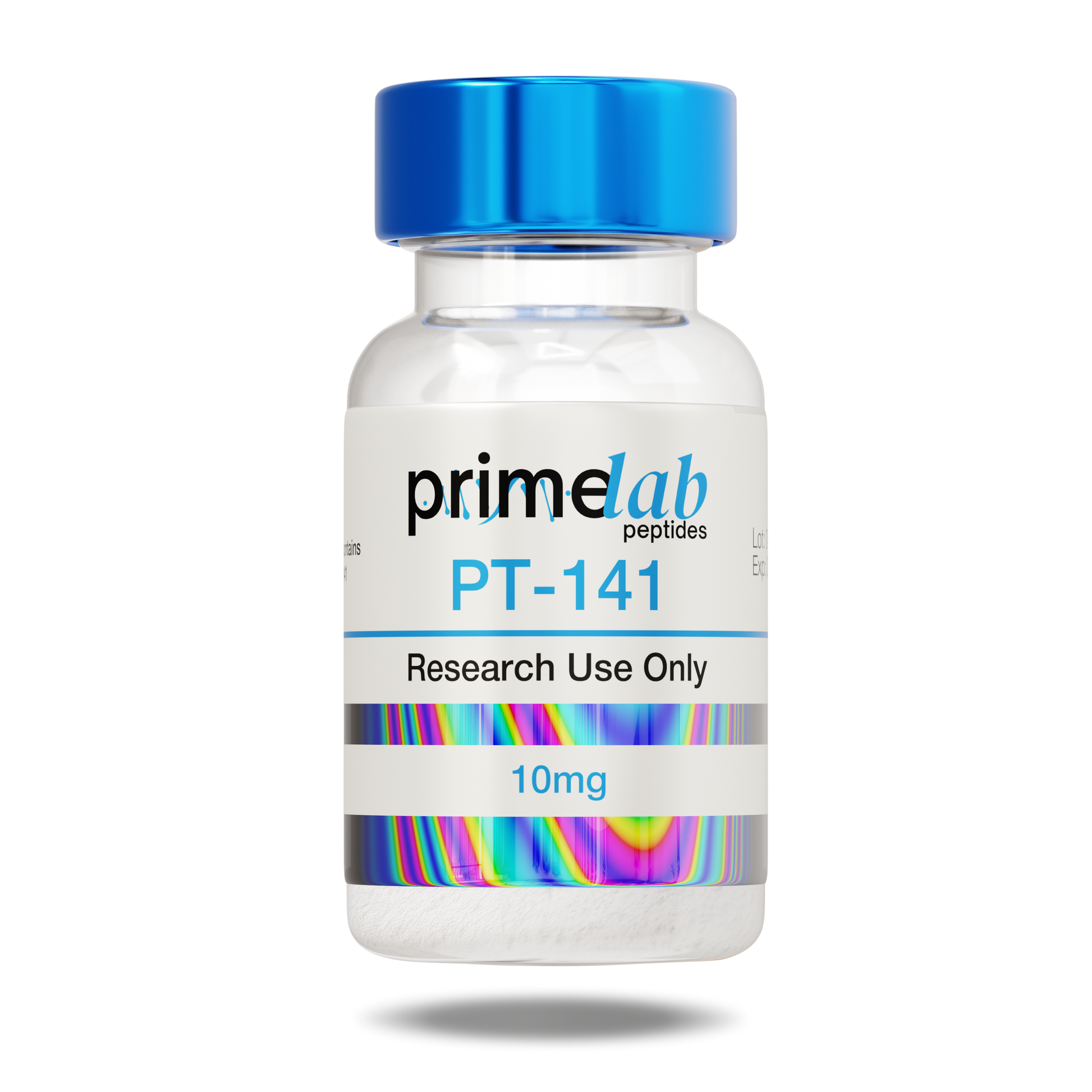

PT-141 – 10mg
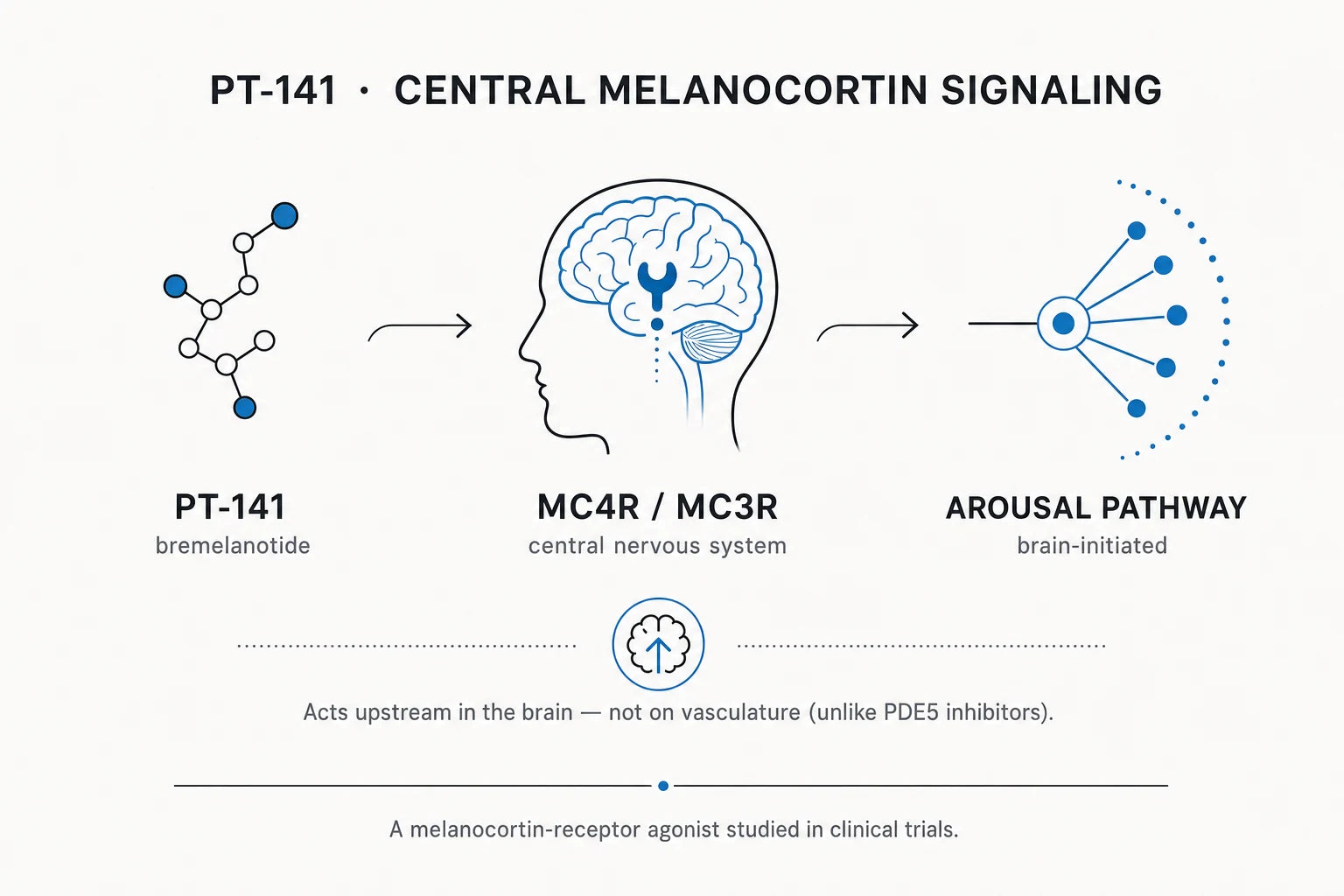
PT-141 (bremelanotide) is a cyclic melanocortin peptide that acts on the MC3R/MC4R receptors in the central nervous system — a mechanism distinct from PDE5 inhibitors like sildenafil, which act on blood flow. It works upstream, on the brain’s arousal pathway.
In two randomized Phase 3 trials (RECONNECT, 1,267 women), bremelanotide significantly improved sexual desire and reduced desire-related distress versus placebo (P<0.001)[1]. Bremelanotide is approved as a prescription medicine (Vyleesi) for premenopausal hypoactive sexual desire disorder; that approval covers the finished drug product and does not carry over to the research material supplied here.
Because it targets central melanocortin signaling rather than vasculature, it is studied for arousal that begins in the CNS. Reported effects include transient nausea, flushing and headache.
Supplied as a lyophilized powder for reconstitution. Figures above summarize published clinical research on this molecule and are provided as scientific reference for laboratory research only.
Couldn't load pickup availability
Need reconstitution solution? Don’t forget to add Bacteriostatic Water before checkout.

Melanocortin Receptor Agonist
Central Arousal Signaling: Where Viagra Cannot Reach
PT-141 (Bremelanotide) is a synthetic cyclic heptapeptide derived from α-MSH that activates melanocortin receptors MC4R and MC1R in the central nervous system. Unlike PDE5 inhibitors (Viagra, Cialis) which work peripherally on blood flow, PT-141 acts directly on hypothalamic arousal circuits — addressing desire at its neurological source. Phase 3 trials demonstrated significant improvements in both desire and distress scores, in premenopausal women with hypoactive sexual desire disorder (HSDD).
- Cyclic heptapeptide: Ac-Nle-c[Asp-His-DPhe-Arg-Trp-Lys]-NH₂
- Activates MC4R (central arousal) and MC1R (immune/repair)
- Works via CNS pathways — not peripheral blood flow
- Effective in sildenafil non-responders (~33% success rate)
- Studied in Phase 3 trials for HSDD
MC4R Pathway Research
How PT-141 Activates Desire and Autonomic Arousal
PT-141 binds to melanocortin-4 receptors (MC4R) in hypothalamic circuits that regulate sexual behavior, appetite, and autonomic function. This receptor system is distinct from the vascular mechanisms targeted by traditional ED medications. In animal models, MC4R activation produces sexual arousal and increased copulation in both males and females. The peptide also influences MC1R, which plays roles in immune function, DNA repair, and tissue protection.
- MC4R: Hypothalamic sexual arousal and desire pathways
- Influences appetite/energy balance (obesity research)
- Autonomic arousal independent of vascular effects
- MC1R: Immune modulation and DNA repair stimulation
- Dual-receptor activity enables multi-system research

Expanding Research Applications
From Sexual Function to Hemorrhage and Oncology
Beyond sexual function, PT-141 research extends into unexpected territories. The peptide's MC1R activity has shown anti-fungal and anti-inflammatory effects in infection models. Modified versions (PL-6983) reached Phase IIb trials for hemorrhagic shock — reducing ischemia and protecting tissues during hypovolemia. MC1R's role in DNA repair pathways makes PT-141 derivatives relevant to cancer prevention research, particularly for skin carcinomas associated with MC1R variants.
- Sexual dysfunction: Both male and female HSDD research
- Hemorrhagic shock: Tissue protection during hypovolemia
- Anti-fungal/anti-inflammatory: MC1R-mediated immune effects
- Cancer research: MC1R stimulates DNA repair pathways
- Obesity: MC4R implicated in ~6% of early-onset cases

The Science Behind Central Arousal: Why PT-141 Opens New Research Frontiers
PT-141 (Bremelanotide) represents a paradigm shift in sexual function research. As a synthetic cyclic heptapeptide derived from Melanotan II, it activates melanocortin receptors in the central nervous system rather than working peripherally on blood flow. This fundamental difference explains why PT-141 can help subjects who don't respond to PDE5 inhibitors like sildenafil — it addresses desire at the neurological level, not just the vascular mechanics of arousal.
The clinical evidence is substantial. Two Phase 3 RECONNECT trials demonstrated statistically significant improvements in both desire and distress scores for premenopausal women with HSDD. In men with erectile dysfunction who failed sildenafil, approximately one-third achieved adequate erection with PT-141 — with strong dose-dependent responses confirming mechanism validity. These outcomes were reported across the Phase 3 clinical program.
The melanocortin receptor system extends far beyond sexual function. MC4R is heavily involved in appetite and energy balance — defective or missing MC4R accounts for up to 6% of early-onset obesity cases. MC1R plays critical roles in immune function, with research showing anti-fungal and anti-inflammatory effects via macrophage M2 polarization. MC1R also stimulates DNA repair pathways, making it relevant to cancer prevention research — people with MC1R variants show increased risk of basal cell and squamous cell carcinomas.
Modified PT-141 derivatives have reached Phase IIb trials for hemorrhagic shock, demonstrating tissue protection and ischemia reduction during hypovolemia. For research teams investigating sexual function, obesity, immune modulation, tissue protection, or cancer biology, PT-141 provides access to a clinically validated, multi-receptor tool with a well-characterized clinical research precedent.
For research use only. Not for human consumption.
Scientific Literature
- Zhang H, Chen LN, Yang D, et al. Structural insights into ligand recognition and activation of the melanocortin-4 receptor. Cell Res. 2021;31(11):1163-1175.
- Pfaus JG, Shadiack A, Van Soest T, Tse M, Molinoff P. Selective facilitation of sexual solicitation in the female rat by a melanocortin receptor agonist. Proc Natl Acad Sci U S A. 2004;101(27):10201-10204.
- Kingsberg SA, Clayton AH, Portman D, et al. Bremelanotide for the Treatment of Hypoactive Sexual Desire Disorder: Two Randomized Phase 3 Trials. Obstet Gynecol. 2019;134(5):899-908.
- Clayton AH, Kingsberg SA, Portman D, et al. Safety Profile of Bremelanotide Across the Clinical Development Program. J Womens Health (Larchmt). 2022;31(2):171-182.
- Pfaus JG, Sadiq A, Spana C, Clayton AH. The neurobiology of bremelanotide for the treatment of hypoactive sexual desire disorder in premenopausal women. CNS Spectr. 2022;27(3):281-289.
Packaged with care, shipped fast.
We’re a passionate team obsessed with quality, not margins.
- Company
- Price
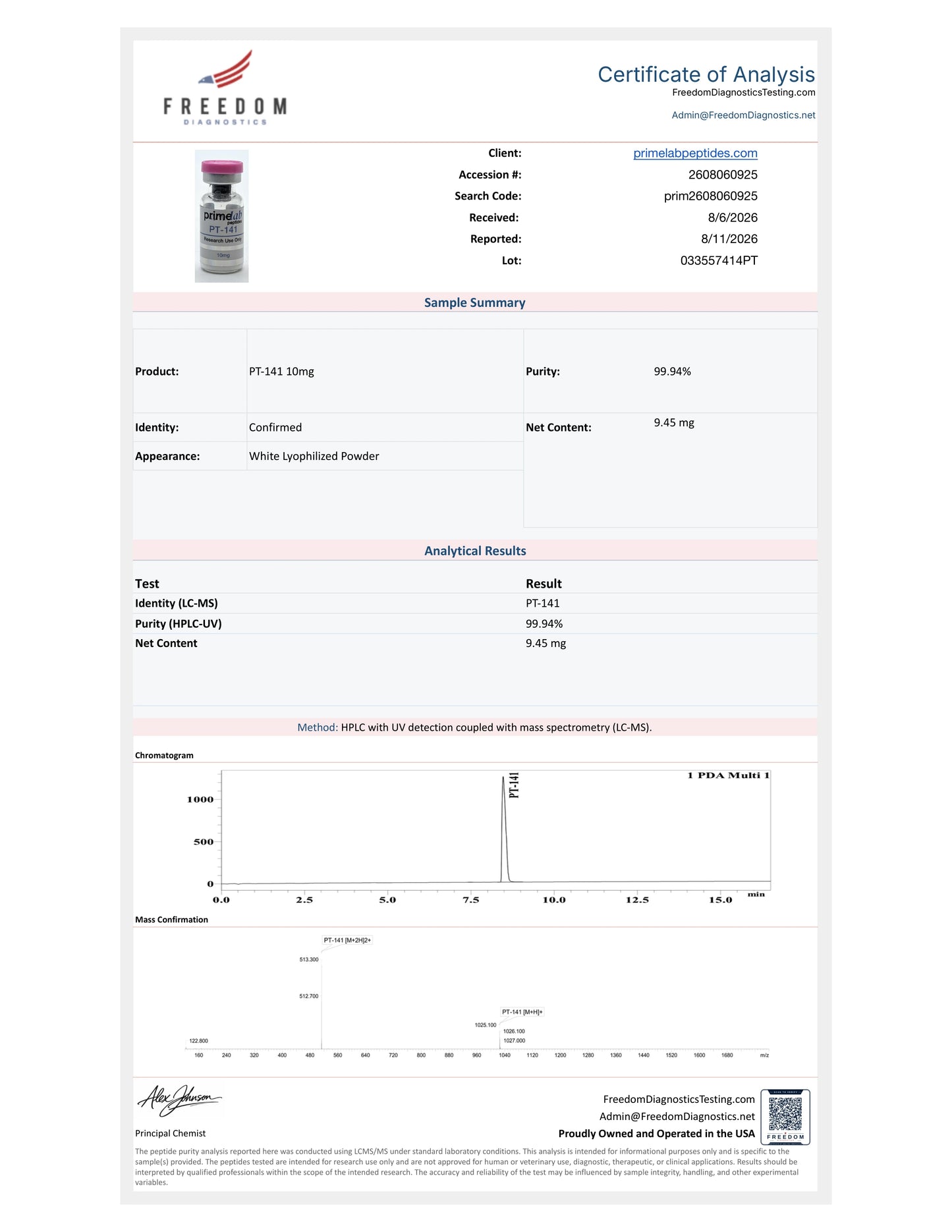
- Purity
- Quantity
- Shipping
-

PT-141 – 10mg
-
Prime
Lab PeptidesTypical
Competitor -
$60.00$110.00
- ≥99%93%
- 10mg10mg
- Free 2-Day Shipping3-10 Business Day
-


