


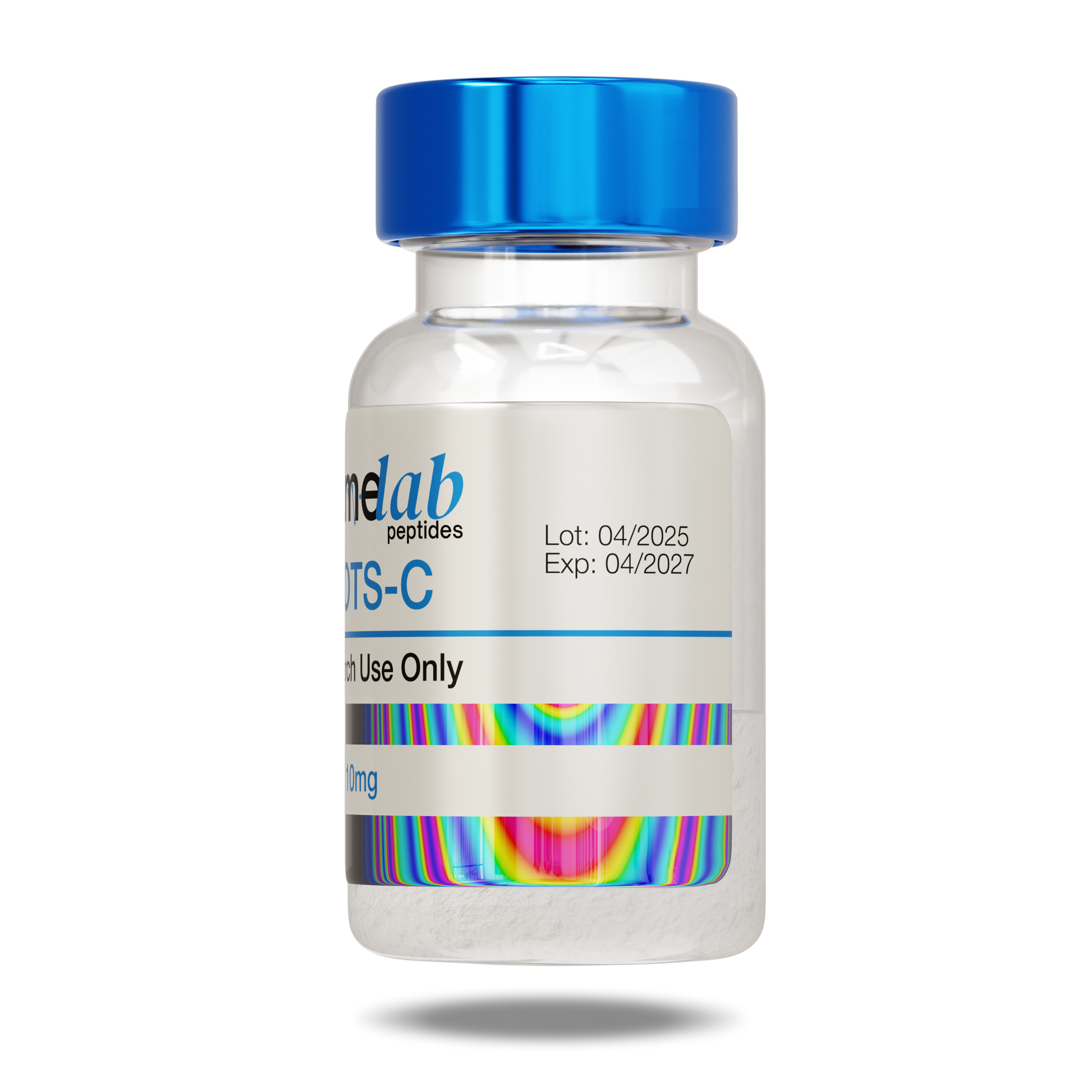
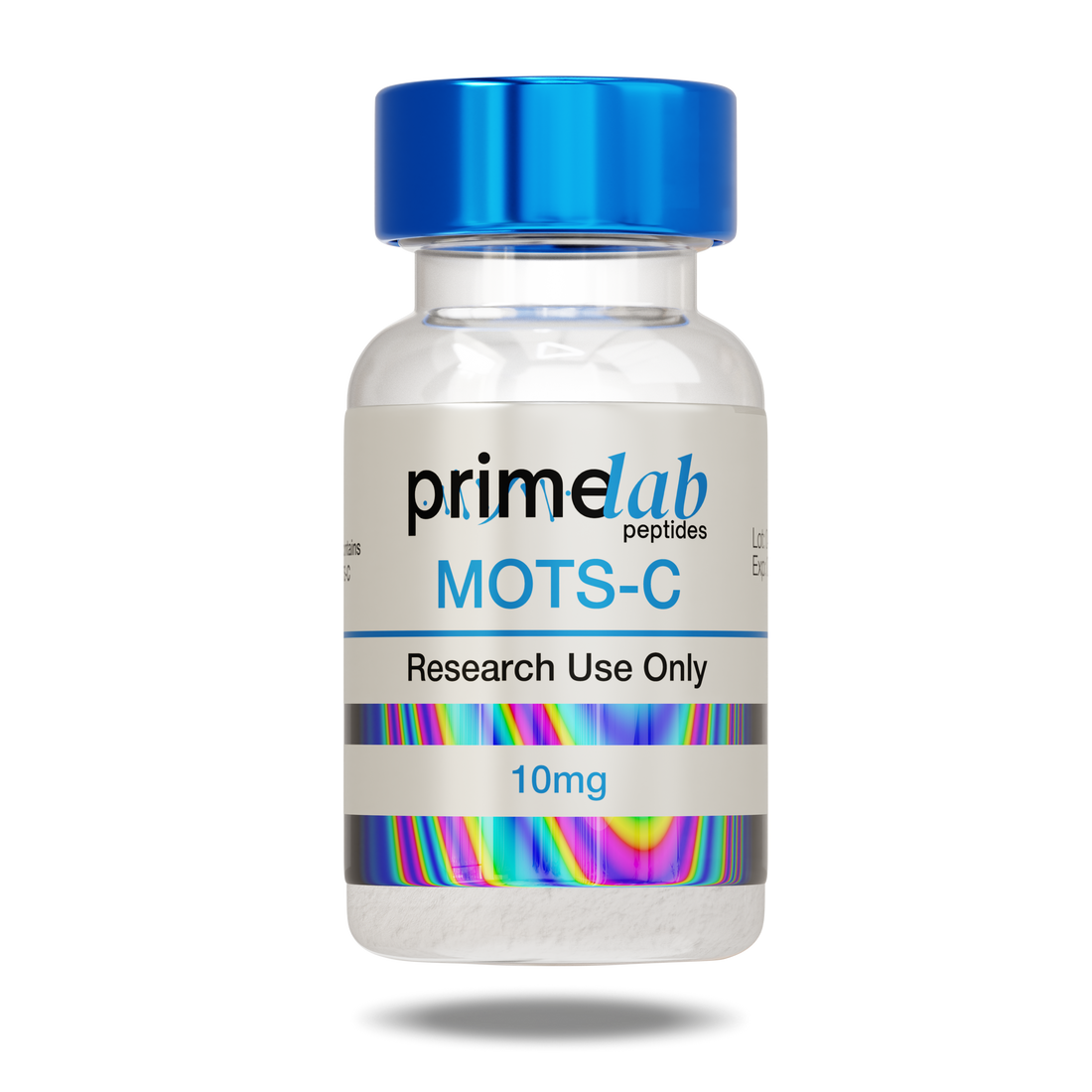
MOTS-C – 10mg
Certificates of Analysis
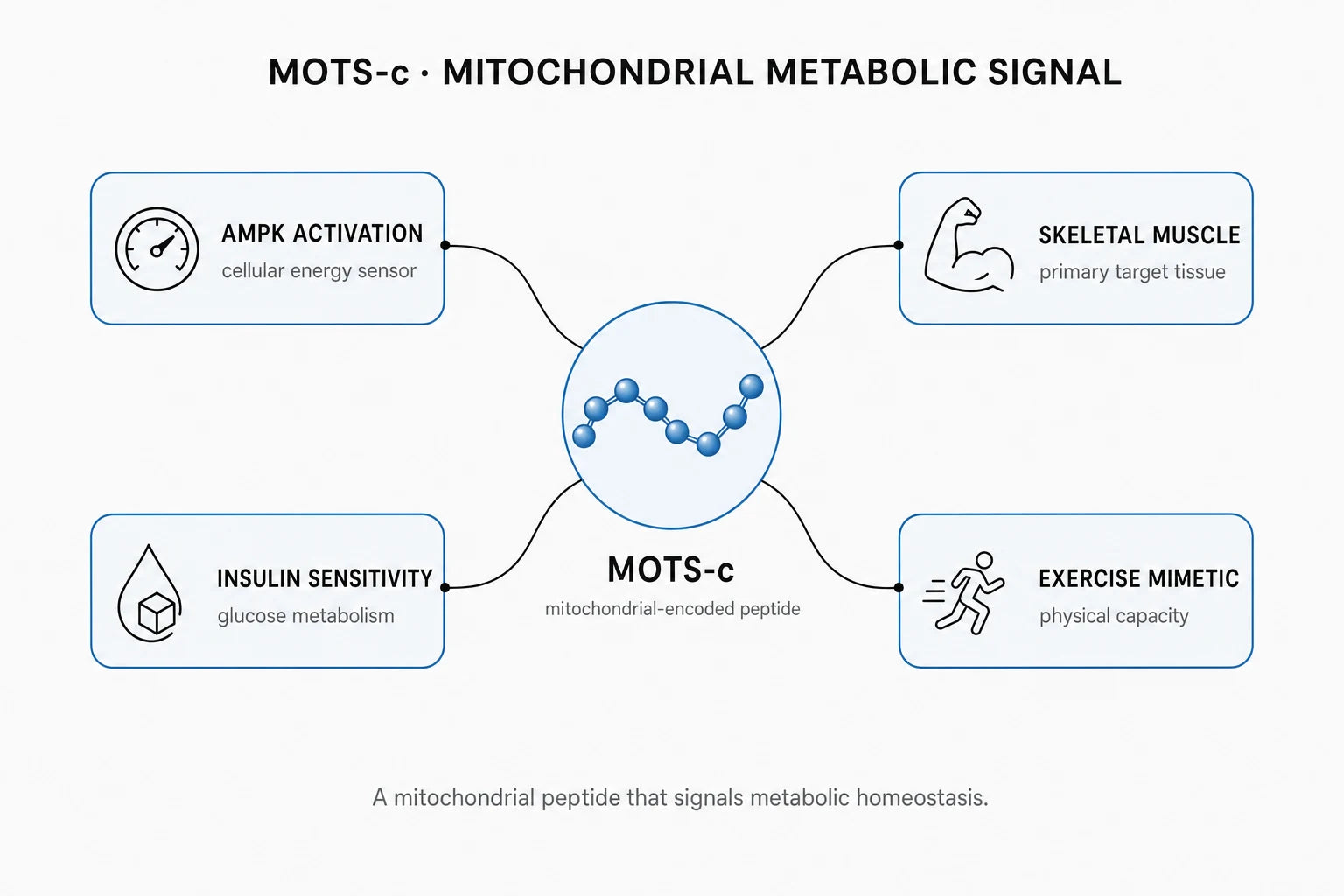
MOTS-c is a 16-amino-acid mitochondrial-derived peptide — encoded inside the mitochondrial genome itself — that acts as a metabolic signal often described as an “exercise mimetic.”
In preclinical research, MOTS-c treatment prevented high-fat-diet-induced obesity and both age- and diet-induced insulin resistance in mice, acting through AMPK activation in skeletal muscle[1].
Exercise raises the body’s own MOTS-c in human muscle and blood; in mice, MOTS-c treatment enhanced physical performance across young, middle-aged and old animals[2] — which is why it is studied for metabolic health and healthspan research.
Supplied as a lyophilized powder for reconstitution. Figures above summarize published preclinical (animal and cell-based) research on this molecule and are provided as scientific reference for laboratory research only.
Couldn't load pickup availability
Need reconstitution solution? Don’t forget to add Bacteriostatic Water before checkout.


Mitochondrial-Derived Peptide
The Exercise Mimetic: A 16-Amino-Acid Metabolic Regulator
MOTS-c is a 16-amino-acid mitochondrial-derived peptide (MDP) encoded in the mitochondrial genome. Unlike traditional peptides, MOTS-c functions as a metabolic "stress signal" — activating AMPK pathways to enhance glucose uptake, fat oxidation, and mitochondrial respiration. Its effects resemble those of exercise and caloric restriction at the cellular level, making it central to longevity and metabolic research.
- 16-amino-acid mitochondrial-derived peptide
- Activates AMPK pathway (energy sensing master switch)
- Enhances glucose uptake and insulin sensitivity
- Promotes fat oxidation and mitochondrial function
- Exercise mimetic effects at cellular level
AMPK Activation & Nuclear Signaling
How MOTS-c Bridges Mitochondria and Nucleus
MOTS-c works primarily through AMPK activation via inhibition of the folate cycle, causing accumulation of AICAR (an AMP analog). Under metabolic stress, MOTS-c can also translocate to the cell nucleus — a remarkable property that allows it to directly upregulate antioxidant and stress-response genes. This retrograde signaling from mitochondria to nucleus represents a new paradigm in metabolic regulation research.
- Inhibits folate cycle → AICAR accumulation → AMPK activation
- Translocates to nucleus under metabolic stress
- Upregulates antioxidant and cytoprotective genes
- Enhances glucose uptake independent of insulin pathway
- Modulates mTOR and inflammatory pathways
Research Applications
From Metabolic Dysfunction to Longevity Research
MOTS-c research spans an extraordinary range of applications. Preclinical studies demonstrate effects on insulin resistance, obesity, exercise capacity, osteoporosis, and cardiovascular function. A specific MOTS-c variant has even been linked to exceptional longevity in Japanese populations. This breadth makes MOTS-c one of the most promising compounds in aging and metabolic research.
- Insulin sensitivity and glucose metabolism research
- Obesity and fat metabolism studies
- Exercise capacity and age-related frailty modeling
- Osteoporosis and bone metabolism research
- Cardiovascular and endothelial function studies
- Longevity and healthspan investigations

The Science Behind Mitochondrial Signaling: Why MOTS-c Is Revolutionizing Aging Research
MOTS-c represents a paradigm shift in our understanding of mitochondrial biology. As a mitochondrial-derived peptide (MDP), it functions as a true hormone — leaving the mitochondria to enter the bloodstream and even translocate to the cell nucleus to regulate gene expression. This discovery has opened entirely new avenues in metabolic and longevity research.
The peptide's primary mechanism centers on AMPK activation — the cell's master energy sensor. By inhibiting the folate cycle and causing AICAR accumulation, MOTS-c shifts cells into an energy-efficient mode: enhanced glucose uptake, increased fatty-acid oxidation, improved mitochondrial respiration, and reduced fat storage. These effects mirror what happens during exercise and caloric restriction — two interventions with proven longevity benefits.
Preclinical research has revealed remarkable breadth. In mouse models, MOTS-c reverses age-related insulin resistance in muscle, prevents diet-induced obesity, and enables old mice to run twice as long on treadmill tests. It promotes osteoblast survival and bone formation through TGF-β/SMAD signaling. It improves endothelial function and cardiovascular markers. A specific genetic variant (m.1382A>C) has been linked to exceptional longevity in Japanese populations.
For research teams investigating metabolic disorders, aging biology, exercise physiology, or age-related disease, MOTS-c provides access to a newly discovered signaling system that may fundamentally change how we understand — and potentially intervene in — the aging process.
For research use only. Not for human consumption.
Scientific Literature
- Lee C, et al. The mitochondrial-derived peptide MOTS-c promotes metabolic homeostasis and reduces obesity and insulin resistance. Cell Metab. 2015;21(3):443-54.
- Kim KH, et al. The Mitochondrial-Encoded Peptide MOTS-c Translocates to the Nucleus to Regulate Nuclear Gene Expression in Response to Metabolic Stress. Cell Metab. 2018;28(3):516-524.e7.
- Reynolds JC, et al. MOTS-c is an exercise-induced mitochondrial-encoded regulator of age-dependent physical decline and muscle homeostasis. Nat Commun. 2021;12(1):470.
- Bolignano D, et al. The Mitochondrial-Derived Peptide MOTS-c May Refine Mortality and Cardiovascular Risk Prediction in Chronic Hemodialysis Patients: A Multicenter Cohort Study. Blood Purif. 2024;53(10):824-837.
- Zheng Y, Wei Z, Wang T. MOTS-c: A promising mitochondrial-derived peptide for therapeutic exploitation. Front Endocrinol (Lausanne). 2023;14:1120533.
Packaged with care, shipped fast.
We’re a passionate team obsessed with quality, not margins.
- Company
- Price
- Purity
- Quantity
- Shipping
-

MOTS-C – 10mg
-
Prime
Lab PeptidesTypical
Competitor -
$50.00$90.00
- ≥99%97%
- 10mg10mg
- Free 2-Day Shipping3-10 Business Day
-


