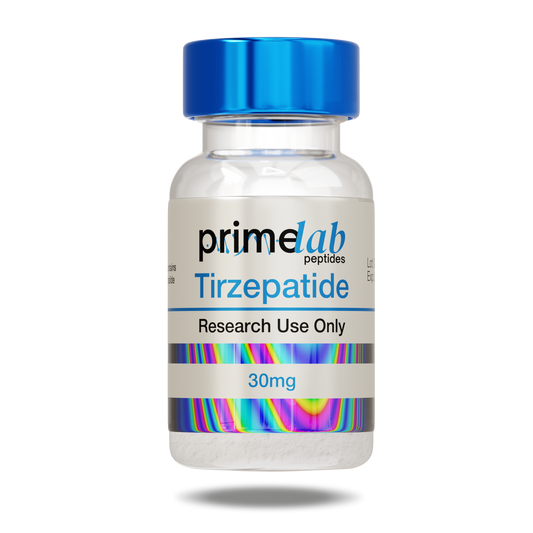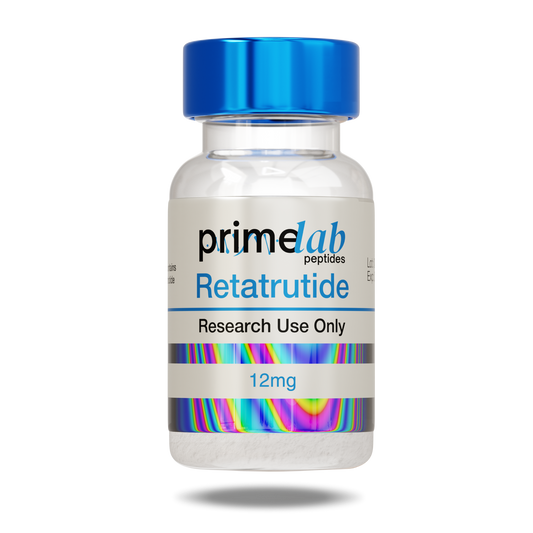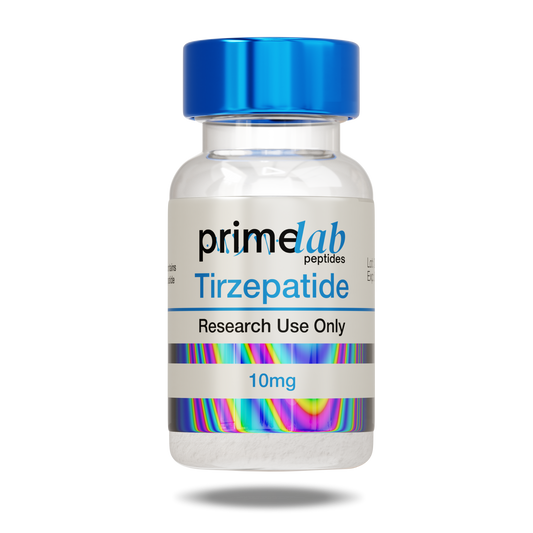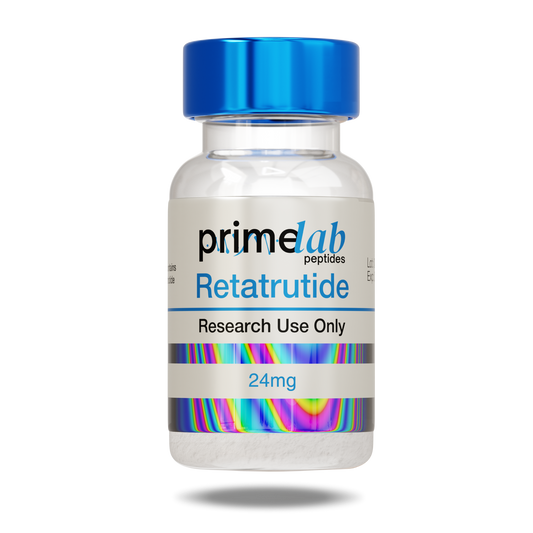


All product descriptions and articles provided on this website are intended strictly for informational and educational purposes. Our products are designed exclusively for in-vitro research (i.e., experiments conducted outside of a living organism, typically in glassware such as test tubes or petri dishes). These compounds are not approved by the FDA for use in humans or animals. They are not medications, nor are they intended to diagnose, treat, prevent, or cure any disease or medical condition. Any bodily administration-human or animal-is strictly prohibited by law. Our products are not for human consumption under any circumstances.

Ipamorelin stands out in peptide research for its unusually narrow and highly selective interaction window at the GHSR-1a receptor. Structural studies increasingly clarify how its binding orientation aligns with defined orthosteric engagement. Moreover, ligand-binding assays demonstrate consistently limited activity outside this pathway. Together, these controlled findings deepen scientific interest in Ipamorelin as a reference tool for evaluating receptor-specific signaling mechanisms.
Prime Lab Peptides supports researchers by providing consistent peptide materials that reduce common experimental challenges. Each batch includes detailed purity information and stable performance characteristics that strengthen study reliability. Moreover, our research-focused approach ensures scientists receive dependable tools suited for mechanistic and receptor-specific investigations.
How Does Ipamorelin Interact Mechanistically With The GHSR-1a Receptor?
Ipamorelin interacts with GHSR-1a by engaging the receptor’s orthosteric site in a competitive manner. This interaction stabilizes inactive receptor conformations and restricts downstream Gq/11 signaling. Moreover, analytical assays illustrate tightly controlled binding dynamics across experimental models.
Key molecular interactions observed in studies include:
- Hydrogen bonding at Arg-183 contributes to receptor-state stabilization.
- Hydrophobic interactions around Phe-279 increase ligand-receptor specificity.
- Low-nanomolar binding affinity supports selective GHSR-1a engagement.
Overall, these mechanistic patterns illustrate a receptor-focused interaction profile. Additionally, docking and binding studies consistently highlight how Ipamorelin structural orientation limits non-target GPCR activation while maintaining predictable receptor behavior across controlled in vitro assays.
What Structural Biology Studies Reveal Ipamorelin Receptor Binding Specificity?
Structural biology studies reveal Ipamorelin receptor binding specificity by illustrating how GHSR-1a adopts distinct conformational states that selectively accommodate peptide secretagogues. These analyses show how structural constraints guide ligand orientation, stabilize defined receptor states, and support selective pathway engagement across controlled experimental systems.
Key structural insights highlighted across recent investigations include:
- Cryo-EM conformational mapping: reveals how GHSR-1a transitions between multiple energy states that influence ligand accessibility. These shifts help clarify why certain peptide scaffolds preferentially stabilize inactive receptor configurations.
- Transmembrane domain modeling: a study published in Molecular Endocrinology[1] shows that conserved residues within the transmembrane domain play essential roles in ligand binding and receptor activation. This evidence supports models in which transmembrane clusters guide peptide alignment within the receptor interface.
- N-terminal binding-domain characterization: shows how flexible loop arrangements create recognition pockets suited for peptide engagement. These pockets support selective accommodation of Ipamorelin-like structures during experimental ligand-binding studies.

What Neuroendocrine Studies Clarify Central Versus Peripheral Receptor Targeting?
Neuroendocrine studies clarify central versus peripheral receptor targeting by mapping GHSR-1a distribution across multiple brain regions. In the central nervous system, the receptor is strongly expressed in hypothalamic nuclei and interconnected neural circuits regulating feeding behavior and hormonal balance. Moreover, ghrelin-driven signaling shapes pathways involved in energy regulation, emphasizing how central receptor pools support distinct neuroendocrine functions across integrated physiological networks.
In contrast, neuroendocrine mapping shows that GHSR-1a is also expressed in peripheral tissues such as pancreatic islets, liver cells, and vagal afferents, where it contributes to metabolic regulation. A study published in the International Journal of Molecular Sciences[2] highlights that these peripheral pathways provide feedback to central circuits. Moreover, this dual-site distribution demonstrates how distinct receptor pools coordinate broader endocrine and physiological responses.
Which In Vivo Research Models Provide Evidence Of Ipamorelin Targeted Selectivity?
In vivo studies provide evidence of Ipamorelin targeted selectivity by demonstrating that its activity aligns with GHSR-1a–dependent pathways. These investigations compare receptor knockout, antagonist, and biased-agonist models to map selective signaling outcomes across controlled experimental systems.
These focused model types clarify selectivity mechanisms effectively:
1. GHSR-1a Knockout Models
A study by PMC[3] demonstrates that GHSR-1a knockout mice help identify receptor-dependent neural functions by revealing altered learning, memory, and fear-conditioning behaviors in the absence of the receptor. These observations clarify how GHSR-1a contributes to specific brain pathways beyond metabolic regulation.
2. Antagonist-Controlled In Vivo Studies
Antagonist models block receptor availability, allowing researchers to observe how inhibition alters downstream signaling. These comparisons reveal the degree to which peptide engagement requires intact receptor pathways. Additionally, they highlight selective suppression patterns that differentiate targeted ligands.
3. Biased-Agonist Comparative Frameworks
Evidence from an NIH[4] study demonstrates that GHSR-1a ligands display distinct, pathway-specific signaling profiles. These findings show how selective activation or inhibition of Gq, Gi/Go, and arrestin pathways shapes ligand behavior and informs receptor-focused interpretations of Ipamorelin activity.
Advance receptor-selectivity studies using research-grade Ipamorelin from Prime Lab Peptides
Researchers often struggle to find peptide materials that remain consistent across experimental conditions. Batch differences and limited structural information frequently make collected data harder to interpret. Moreover, unclear purity metrics create difficulties when examining subtle GHSR-1a–related signaling differences in controlled in vivo or in vitro research models for advanced studies.
Prime Lab Peptides addresses these challenges by supplying research-grade Ipamorelin with documented purity standards. Each batch is supported by validated characterization data and stable consistency for mechanistic research. Moreover, our focus remains on providing reliable materials rather than suggesting therapeutic use. For specifications or collaboration inquiries, researchers are welcome to contact us.

FAQs
What Defines Ipamorelin Receptor Selectivity Profile?
Ipamorelin’s receptor selectivity profile is defined by its preferential interaction with GHSR-1a. This pattern is supported by structural and functional assays that highlight limited engagement with non-target pathways. Moreover, comparative studies help distinguish its focused signaling behavior from broader peptide responses.
How Is Ipamorelin Characterized In Research Studies?
Ipamorelin is characterized in research studies through structural analyses, receptor-binding assays, and functional signaling evaluations. These methods document their interaction patterns, stability, and selectivity. Additionally, comparative models help clarify how its behavior aligns with controlled GHSR-1a–dependent mechanisms across experimental settings.
Which Methods Assess GHSR-1a Binding Accuracy?
GHSR-1a binding accuracy is assessed through radioligand assays, saturation binding studies, and computational modeling. These approaches quantify affinity, map binding domains, and predict ligand orientation. Moreover, combined datasets help confirm selective receptor engagement across controlled in vitro experiments.
What Factors Influence In Vivo Selectivity Outcomes?
In vivo selectivity outcomes are influenced by receptor distribution, ligand affinity, and tissue-specific signaling environments. These factors shape how peptides engage target pathways under controlled conditions. Moreover, model design and experimental variables further determine observed selectivity patterns across studies.
References