All product descriptions and articles provided on this website are intended strictly for informational and educational purposes. Our products are designed exclusively for in-vitro research (i.e., experiments conducted outside of a living organism, typically in glassware such as test tubes or petri dishes). These compounds are not approved by the FDA for use in humans or animals. They are not medications, nor are they intended to diagnose, treat, prevent, or cure any disease or medical condition. Any bodily administration-human or animal-is strictly prohibited by law. Our products are not for human consumption under any circumstances.

Retatrutide, a triple agonist targeting Retatrutide pathways, is being investigated for its influence on central appetite regulation and metabolic signaling. Although it is primarily studied in obesity and type 2 diabetes, its combined activation of GLP-1, GIP, and glucagon receptors offers a mechanistic framework relevant to neuroendocrine dysregulation seen in binge eating disorder (BED). According to findings published in The New England Journal of Medicine [1], Retatrutide produces profound appetite suppression and sustained weight reduction, reflecting strong central satiety signaling.
Researchers recognize that BED involves disrupted hypothalamic signaling, altered reward processing, and impaired satiety feedback. Additionally, incretin-based therapies have been shown to affect food intake, hedonic eating, and dopaminergic modulation in translational studies. These observations suggest that Retatrutide’s multi-receptor profile may provide a valuable model for examining coordinated neuroendocrine appetite correction under controlled research conditions.
Prime Lab Peptide supports researchers by providing high-purity peptides designed specifically for controlled scientific use. We recognize the challenges researchers face with consistency, reliability, and timely access, and therefore focus on high-quality, dependable service. As a result, we offer solutions that streamline experimentation and help research teams work with confidence.
What Are The Clinical And Translational Findings Linking Incretin Pathways to Binge Eating Regulation?
Incretin-based modulation has a measurable effect on appetite control and reward-driven feeding behavior. Clinical and translational data show that GLP-1 receptor agonism reduces hyperphagia and hedonic eating patterns. Additionally, these findings extend to neural circuits implicated in compulsive overeating.
Key Research Highlights:
- Reduced caloric intake and food craving signals in GLP-1 based intervention trials.
- Modulation of mesolimbic dopamine pathways associated with reward sensitivity.
- Improved satiety hormone signaling and decreased meal size frequency.
These observations are supported by neurobiological studies published in Nature Reviews Endocrinology [2], which describe GLP-1 receptor activity in hypothalamic and brainstem nuclei that regulate appetite. Furthermore, early metabolic psychiatry research suggests that incretin therapies may attenuate binge-like feeding behavior in experimental models. Together, these translational findings strengthen the rationale for investigating multi-receptor agonism in BED-related neuroendocrine dysregulation.
How does Retatrutide mechanistically influence neuroendocrine appetite pathways?
Retatrutide influences neuroendocrine appetite pathways through coordinated receptor activation, affecting central and peripheral satiety networks. Its triagonist design integrates GLP-1–mediated satiety, GIP-related metabolic signaling, and glucagon-driven energy expenditure. Additionally, these combined actions may recalibrate disrupted appetite feedback loops implicated in BED.
Together, these mechanisms create targeted neuroendocrine shifts explained through the following key actions:
1. GLP-1 receptor activation: It enhances hypothalamic proopiomelanocortin (POMC) signaling, suppresses neuropeptide Y (NPY) activity, and slows gastric emptying. These effects collectively strengthen satiety perception and reduce impulsive food intake under controlled experimental conditions.
2. GIP receptor modulation: It influences insulin secretion and may affect adipose-brain communication pathways. Emerging evidence suggests that GIP signaling contributes to energy balance and nutrient sensing, thereby providing an additional regulatory layer within appetite circuits.
3. Glucagon receptor engagement: It increases hepatic fatty acid oxidation and energy expenditure. This shift may counterbalance metabolic adaptations often associated with repeated binge cycles, thereby supporting systemic metabolic stability.

What Evidence Defines the Safety and Tolerability Profile of Retatrutide in Human Studies?
Retatrutide’s safety and tolerability profile is characterized primarily by dose-dependent gastrointestinal effects. In the phase 2 obesity trial reported in The New England Journal of Medicine [1], nausea, vomiting, and diarrhea were the most frequently observed events. These effects were generally mild to moderate and occurred most commonly during dose escalation.
Importantly, no significant hepatotoxicity was observed during extended follow-up. Additionally, cardiovascular monitoring showed a dose-related increase in heart rate that stabilized over time. Data published in The Lancet [3] examining metabolic outcomes further confirmed consistent laboratory stability across treatment groups. These findings support a predictable tolerability framework that is consistent with that of other incretin-based therapies.
For researchers studying BED, safety considerations remain especially important due to potential psychiatric comorbidities. Therefore, careful assessment of mood, impulse regulation, and neuropsychiatric endpoints would be essential in future targeted investigations.
What Are Retatrutide’s Potential Effects On Reward Circuitry And Compulsive Eating Behavior?
Retatrutide may influence reward circuitry through GLP-1–mediated signaling within the mesolimbic dopamine system. GLP-1 receptors are expressed in the ventral tegmental area (VTA) and nucleus accumbens (NAc), regions central to reward-driven feeding. According to translational findings of Frontiers in Neurosciences [4], GLP-1 receptor activation can reduce food-motivated behavior and attenuate binge-like intake in preclinical models.
Recent clinical data from Diabetes, Obesity, and Metabolism [5] in 2025 explicitly confirms these neurobehavioral shifts in humans:
- Reduced Hedonic Drive: Retatrutide demonstrates a dose-dependent reduction in food cravings specifically for high-fat and sweet foods. This suggests that GLP-1 signaling attenuates dopamine-mediated reward responses to highly palatable foods, potentially reducing episodes of compulsive overeating in controlled settings.
- Stabilized Satiety Feedback: Enhanced peripheral-central hormone communication improves meal termination signals. The 2025 Phase 2 data showed a significant reduction in "Disinhibition" (a clinical marker of loss of control during eating). Consequently, satiety becomes more physiologically regulated rather than reward-driven.
- Improved Metabolic-Neuroendocrine Integration: By combining glucagon-driven energy expenditure with incretin-based appetite suppression, Retatrutide may help correct metabolic imbalances, such as insulin resistance and leptin-signaling disruptions, that often reinforce and perpetuate binge cycles.
While direct clinical trials for Binge Eating Disorder (BED) are pending, the reduction in "Disinhibition" and "Prospective Food Consumption" scores in the 2025 Retatrutide trials provides a coherent scientific basis for its potential efficacy in treating neuroendocrine appetite dysregulation.
Advance Your Research Confidence with Trusted Peptide Solutions from Prime Lab Peptide
Researchers studying neuroendocrine appetite disorders often face challenges, including inconsistent peptide purity, variability across experimental batches, and delays that disrupt behavioral protocols. These limitations can compromise reproducibility, particularly in studies that require precise dosing and tightly controlled metabolic monitoring. Additionally, interdisciplinary research at the intersection of endocrinology and psychiatry requires reliable biochemical tools.
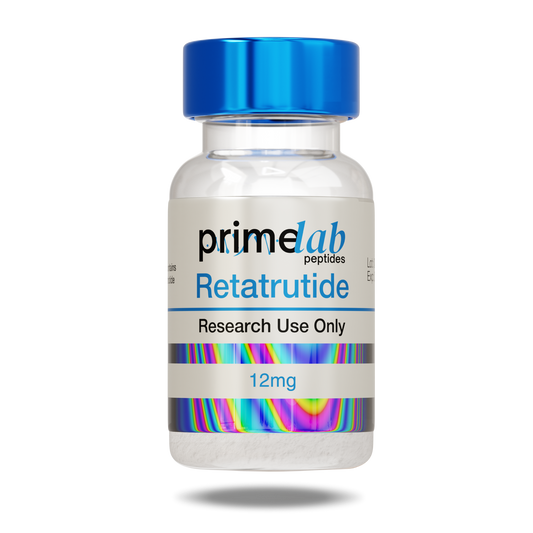
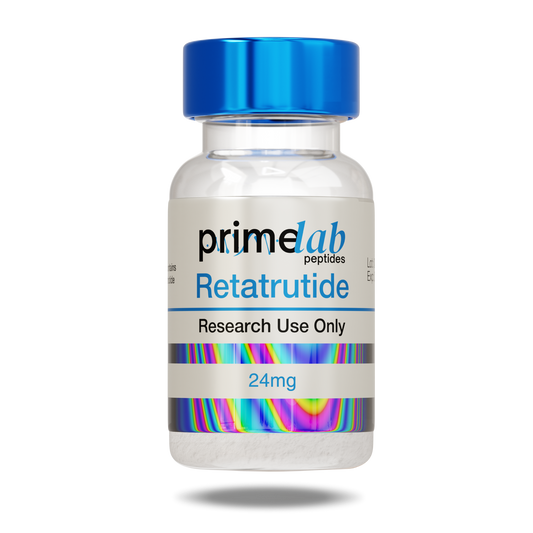
Prime Lab Peptide provides research-grade Retatrutide designed for precise, controlled laboratory investigations. We maintain strict purity standards to ensure consistent, reproducible data. Moreover, our documentation and technical responsiveness streamline complex experimental workflows. For tailored research support or inquiries, contact us at any time.

FAQs:
How Does Retatrutide Influence Central Appetite Regulation?
Retatrutide influences central appetite regulation by activating GLP-1 receptors in the hypothalamus and brainstem while modulating mesolimbic reward circuits. These coordinated neuroendocrine effects suppress hunger signaling, enhance satiety perception, and reduce food-driven reward responses under controlled metabolic research conditions.
Is Retatrutide Currently Approved for Binge Eating Disorder?
Retatrutide is not approved for binge eating disorder. Current clinical investigations focus on obesity and metabolic disease. However, its multi-receptor agonism and documented appetite-suppressing effects provide a mechanistic rationale for further research in neuroendocrine dysregulation associated with binge eating behaviors.
Which Neural Circuits Are Most Relevant to BED Research?
The hypothalamus, dorsal vagal complex, and mesolimbic dopamine system are central to research on BED. These interconnected circuits regulate hunger, satiety, reward valuation, and impulse control. Incretin receptor signaling directly interacts with these pathways, offering translational insights into the regulation of appetite and compulsive eating.
What Biomarkers Could Be Monitored in BED-Focused Trials?
BED-focused trials may monitor fasting insulin, leptin, ghrelin, cortisol, inflammatory cytokines, and HOMA-IR as metabolic and neuroendocrine markers. Additionally, validated behavioral scales assessing binge frequency, craving intensity, and impulsivity would provide clinically relevant endpoints for translational studies of appetite regulation.
How Does Multi-Receptor Agonism Differ from Single GLP-1 Therapy?
Multi-receptor agonism simultaneously targets GLP-1, GIP, and glucagon pathways, integrating satiety enhancement with increased energy expenditure and metabolic modulation. In contrast, single GLP-1 therapy primarily suppresses appetite, providing a narrower regulatory effect on complex neuroendocrine feeding mechanisms.
References:
2. Müller, T. D., et al. (2019). Glucagon-like peptide 1 (GLP-1). Molecular Metabolism, 30, 72–130.