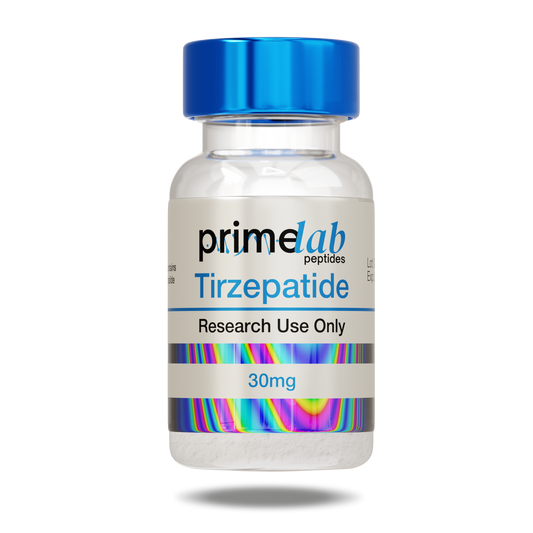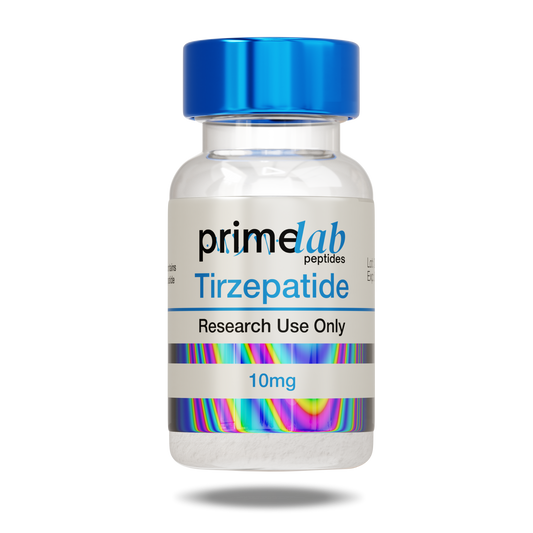
All product descriptions and articles provided on this website are intended strictly for informational and educational purposes. Our products are designed exclusively for in-vitro research (i.e., experiments conducted outside of a living organism, typically in glassware such as test tubes or petri dishes). These compounds are not approved by the FDA for use in humans or animals. They are not medications, nor are they intended to diagnose, treat, prevent, or cure any disease or medical condition. Any bodily administration-human or animal-is strictly prohibited by law. Our products are not for human consumption under any circumstances.

Tirzepatide is a dual agonist targeting both the glucose-dependent insulinotropic polypeptide (GIP) receptor and the glucagon-like peptide-1 (GLP-1) receptor. Clinical research trials investigating tirzepatide demonstrate that its pharmacologic profile extends beyond glucose regulation to include broad improvements across cardiometabolic biomarkers associated with cardiovascular and metabolic risk.
Experimental analyses show that tirzepatide modulates interconnected pathways that regulate glucose metabolism, lipid handling, inflammatory signaling, and adipose tissue physiology. These integrated responses suggest that dual incretin activation affects multiple metabolic networks simultaneously rather than modifying a single endocrine pathway.
At Prime Lab Peptides, we assist research laboratories by supplying high-purity tirzepatide and other research peptides for controlled experimental investigations. Our commitment to rigorous analytical verification, batch consistency, and laboratory-grade peptide standards supports reproducible metabolic research and enables investigators to examine complex cardiometabolic signaling mechanisms with greater confidence.
How Does Tirzepatide Improve Glycemic Regulation and Insulin Sensitivity Biomarkers?
Tirzepatide improves glycemic regulation by activating both GIP and GLP-1 receptor pathways that influence pancreatic hormone secretion, hepatic glucose output, and peripheral glucose utilization. These mechanisms collectively enhance insulin responsiveness and stabilize glucose homeostasis.
Clinical trials published in the New England Journal of Medicine demonstrate that tirzepatide produces substantial reductions in hemoglobin A1c and fasting glucose levels across multiple dosing cohorts [1].
Key glycemic biomarker changes observed in clinical studies include:
- HbA1c Reduction: Average reductions often exceed 2% in clinical trials, indicating substantial improvement in long-term glycemic control.
- Fasting Plasma Glucose Decline: Improved hepatic insulin sensitivity contributes to lower baseline glucose concentrations.
- Improved Insulin Sensitivity: Measures such as HOMA-IR demonstrate enhanced peripheral insulin responsiveness.
Collectively, these findings suggest that tirzepatide modifies glucose regulation across several physiological checkpoints. Rather than targeting only pancreatic insulin release, dual incretin signaling affects hepatic glucose production, skeletal muscle glucose uptake, and enteroendocrine signaling pathways.
How Does Tirzepatide Affect Lipid Metabolism and Lipoprotein Biomarkers?
Tirzepatide affects lipid metabolism by influencing adipose tissue insulin sensitivity, hepatic lipid synthesis, and postprandial lipid clearance. Clinical trials evaluating lipid biomarkers report improvements in triglyceride levels and in atherogenic lipoprotein particle levels. Research published in The Lancet Diabetes & Endocrinology demonstrates that tirzepatide reduces circulating triglycerides and improves lipid distribution in metabolic tissues [2].
Several lipid-related biomarker trends clarify these metabolic changes:
- Reduced Triglyceride Levels: Lower circulating triglyceride levels indicate improved hepatic lipid metabolism and reduced lipogenesis.
- Apolipoprotein B Reduction: Lower ApoB concentrations reflect a reduction in atherogenic lipoprotein particles linked to cardiovascular risk.
- Stable or Increased HDL Cholesterol: Favorable lipid remodeling occurs without detrimental effects on protective HDL fractions.
These lipid changes contribute to a cardiometabolic profile that is associated with lower atherosclerotic risk. Importantly, lipid improvements occur alongside glycemic normalization and weight reduction, addressing multiple metabolic risk domains simultaneously.

What Effects Does Tirzepatide Have on Inflammatory and Vascular Biomarkers?
Tirzepatide influences inflammatory and vascular biomarkers by reducing metabolic stress and improving endothelial signaling pathways. These changes reflect broader improvements in systemic metabolic health. Clinical studies report decreases in inflammatory markers such as hs-CRP, which is widely used to assess low-grade systemic inflammation linked to cardiovascular disease.
Observed inflammatory and vascular biomarker changes include:
- Reduced hs-CRP Levels: Lower concentrations indicate reduced systemic inflammation associated with metabolic dysfunction.
- Improved Blood Pressure Profiles: Consistent reductions in systolic blood pressure reflect improved vascular tone.
- Endothelial Function Indicators: Improvements in vascular stress markers suggest enhanced endothelial responsiveness.
These findings indicate that tirzepatide may influence cardiometabolic risk through mechanisms extending beyond glucose metabolism. Reduced inflammatory signaling and improved vascular health contribute to broader cardiometabolic benefits observed in clinical research settings.
How Do Weight-Related Biomarker Changes Contribute to Cardiometabolic Improvements?
Weight reduction associated with tirzepatide contributes significantly to improvements in cardiometabolic biomarkers by altering adipose tissue signaling, energy balance regulation, and ectopic fat distribution. Clinical trials evaluating tirzepatide for obesity treatment report average body weight reductions exceeding 15% in higher-dose treatment groups [3]. These reductions are accompanied by measurable changes in metabolic signaling molecules.
Key weight-related biomarker effects include:
- Adipokine Regulation: Increased adiponectin and decreased leptin concentrations improve insulin sensitivity and metabolic signaling.
- Reduced Visceral and Hepatic Fat: Decreases in ectopic fat deposition improve hepatic metabolism and glucose regulation.
- Energy Intake Modulation: Appetite-related neuroendocrine signaling contributes to sustained reductions in caloric intake.
These integrated physiological responses highlight the complex interactions between body weight, metabolic signaling, and cardiometabolic health outcomes. Importantly, several biomarker improvements occur early during treatment, suggesting that metabolic signaling effects may precede maximal weight reduction.
What Clinical Trial Evidence Demonstrates Cardiometabolic Improvements with Tirzepatide?
Clinical trials indicate that tirzepatide produces coordinated improvements in several cardiometabolic risk markers, including inflammatory indicators, lipid profiles, blood pressure, and renal stress biomarkers. These effects have been consistently observed in randomized studies evaluating tirzepatide in individuals with metabolic dysfunction.
Evidence from the SURPASS clinical trial program demonstrates that tirzepatide significantly improves multiple cardiometabolic parameters, including glycemic control and weight reduction [1]. Data from the SURPASS-4 trial, which compared tirzepatide to insulin glargine in a high-cardiovascular-risk population, underscores its systemic benefits [5].
Several integrated biomarker responses illustrate these effects:
1- Inflammatory Biomarkers: High-sensitivity C-reactive protein (hs-CRP) levels decline significantly during treatment, reflecting reduced systemic inflammatory signaling associated with cardiometabolic disease [4].
2- Blood Pressure Regulation: Clinical analyses report reductions in systolic blood pressure of approximately 6-12 mmHg. These improvements in vascular tone and endothelial function are notably superior to those observed with traditional basal insulin therapies [5].
3- Renal Stress Indicators: Results show significant decreases in the urinary albumin-to-creatinine ratio (UACR). By reducing albuminuria and slowing the decline of the estimated glomerular filtration rate (eGFR), tirzepatide demonstrates a protective effect on renal microvascular health [5].
Together, these coordinated biomarker improvements suggest that tirzepatide modulates multiple physiologic systems simultaneously, including metabolic, vascular, and inflammatory pathways relevant to cardiometabolic disease progression.
Strengthening Cardiometabolic Research with Reliable Peptide Solutions at Prime Lab Peptides
Cardiometabolic research relies on precise experimental conditions and well-characterized compounds to ensure reliable interpretation of biomarkers across studies. Variability in peptide purity, analytical validation, or manufacturing consistency can introduce experimental uncertainty and compromise research outcomes.
Prime Lab Peptides supports metabolic research initiatives by providing rigorously synthesized research peptides verified through comprehensive analytical testing and documented quality control processes. These standards help investigators maintain experimental consistency while studying complex metabolic signaling networks and cardiometabolic biomarker responses.
For laboratories investigating incretin biology, metabolic regulation, and cardiometabolic disease mechanisms, reliable peptide sourcing is essential for generating reproducible experimental data. Researchers seeking dependable peptide materials aligned with cardiometabolic research objectives are encouraged to contact us for additional information.
FAQs
How Does Tirzepatide Affect Cardiometabolic Risk Factors?
Tirzepatide improves cardiometabolic risk factors by lowering HbA1c, fasting glucose, triglycerides, inflammatory markers, and body weight. These changes arise from dual activation of the incretin receptors, which enhances insulin signaling, improves lipid metabolism, and reduces systemic metabolic stress.
Does Tirzepatide Improve Cardiovascular Biomarkers in Clinical Studies?
Clinical research indicates that tirzepatide improves several cardiovascular-related biomarkers, including blood pressure, inflammatory markers, and lipid parameters. These improvements occur alongside glycemic control and weight reduction, suggesting coordinated cardiometabolic benefits across multiple physiological systems.
Which Biomarkers Are Most Frequently Evaluated in Tirzepatide Trials?
Commonly studied biomarkers include HbA1c, fasting plasma glucose, triglycerides, apolipoprotein B, high-sensitivity C-reactive protein, blood pressure, and adipokines such as adiponectin. These parameters provide an integrated assessment of cardiometabolic health and metabolic regulation in research populations.
What Research Models Are Used to Study Tirzepatide’s Metabolic Effects?
Tirzepatide is primarily studied in randomized clinical trials, metabolic clamp experiments, and longitudinal biomarker analyses. These research approaches allow investigators to evaluate glucose regulation, lipid metabolism, inflammatory signaling, and cardiometabolic health outcomes under controlled experimental conditions.
References
- Frias JP, Davies MJ, Rosenstock J, et al. (2021). Tirzepatide versus semaglutide once weekly in patients with type 2 diabetes. New England Journal of Medicine, 385(6), 503-515.
- Gastaldelli A, et al. (2022). Effect of tirzepatide versus insulin degludec on liver fat content and visceral adipose tissue in patients with type 2 diabetes (SURPASS-3 MRI). The Lancet Diabetes & Endocrinology, 10(6), 399-409.
- Jastreboff AM, et al. (2022). Tirzepatide once weekly for the treatment of obesity. New England Journal of Medicine, 387(3), 205-216.
- Sattar N, McGuire DK, Pavo I, et al. (2023). Effects of tirzepatide on cardiometabolic risk factors, inflammation, and renal biomarkers: mediation analysis. Circulation.
- Heerspink HJL, Sattar N, Pavo I, et al. (2022). Effects of tirzepatide versus insulin glargine on kidney outcomes in type 2 diabetes in the SURPASS-4 trial: post-hoc analysis of an open-label, randomised, phase 3 trial. The Lancet Diabetes & Endocrinology, 10(11), 774-785.