


All product descriptions and articles provided on this website are intended strictly for informational and educational purposes. Our products are designed exclusively for in-vitro research (i.e., experiments conducted outside of a living organism, typically in glassware such as test tubes or petri dishes). These compounds are not approved by the FDA for use in humans or animals. They are not medications, nor are they intended to diagnose, treat, prevent, or cure any disease or medical condition. Any bodily administration-human or animal-is strictly prohibited by law. Our products are not for human consumption under any circumstances.

Tirzepatide has gained major attention in obesity research due to its unique mechanism of action. Unlike traditional GLP-1 receptor agonists, Tirzepatide is a dual agonist[1] that activates both GLP-1 (glucagon-like peptide-1) and GIP (glucose-dependent insulinotropic polypeptide) receptors. These two hormones play a central role in appetite regulation, insulin secretion, and lipid metabolism, making tirzepatide a highly promising compound for studies exploring weight management and metabolic health.
Recent clinical trials[2] highlight its research significance: subjects administered tirzepatide achieved up to 20% body weight reduction, a result that surpasses many existing therapies such as lifestyle interventions or metformin. For scientists, this data positions tirzepatide as a valuable model peptide for exploring multi-pathway metabolic modulation, advancing the understanding of obesity and related conditions.
What Is Tirzepatide and How Does It Work?
Tirzepatide is a novel investigational peptide originally developed in the context of type 2 diabetes research. Unlike single-pathway incretin analogs, tirzepatide mimics two key hormones: GLP-1 (glucagon-like peptide-1) and GIP (glucose-dependent insulinotropic polypeptide). This dual mechanism amplifies the body’s natural response to nutrient intake, providing valuable insights for research into appetite regulation, insulin sensitivity, and fat metabolism.
For obesity research, these combined effects make tirzepatide a compound of high scientific interest, as it offers a more robust model for studying multi-hormonal pathways compared to GLP-1-only agents.
Mechanism of Action in Research:
Tirzepatide’s impact on metabolic regulation can be studied through several pathways:
- Appetite suppression: Enhances satiety signalling within the central nervous system, reducing overall caloric intake.
- Improved insulin sensitivity: Decreases insulin resistance, allowing deeper exploration of fat storage mechanisms.
- Slowed gastric emptying: Prolongs digestion, reducing hunger signals and creating measurable effects on food intake.
- Fat metabolism regulation: Promotes mobilization of stored fat, offering insights into lipid utilization and energy balance.
In comparative research, tirzepatide has demonstrated stronger weight-regulating effects than GLP-1-only compounds such as semaglutide, positioning it as a game-changing research model.
Why Is Tirzepatide a Game-Changer in Obesity Research?
Obesity remains a multifactorial condition influenced by insulin resistance, hormonal imbalances, and chronic inflammation. Traditional therapeutic models often yield only modest weight reduction, limiting progress. Tirzepatide’s dual-receptor activity[3] provides a more comprehensive framework for obesity studies, supporting exploration into not only fat loss mechanisms but also blood sugar regulation and cardiovascular risk markers.
Researchers view this peptide as a pivotal tool that could redefine obesity research methodologies in the coming years.
Tirzepatide in Clinical Research.
One of the most important studies evaluating tirzepatide’s impact on obesity is the SURMOUNT-1 clinical trial[4], a large-scale investigation involving thousands of participants with obesity or overweight conditions. Over 72 weeks, researchers observed weight reductions of 15%–22%, depending on the administered dose.
This level of weight loss is remarkable in obesity research, as it significantly outperforms results from:
- Metformin, which typically produces modest reductions of 2–5%.
- Lifestyle-only interventions such as diet and exercise, which average around 5–10%.
- Older pharmacological agents, which rarely achieve more than 10% sustained weight loss.
Key interpretations from the SURMOUNT-1 data include:
- Dose-dependent response: Higher doses of tirzepatide produced consistently greater weight loss, showing a clear link between dosage and metabolic impact.
- Consistency across participants: A large proportion of subjects achieved clinically meaningful weight reductions (>15%), suggesting strong reliability across diverse groups.
- Beyond weight loss: Participants also showed improvements in blood sugar control, lipid profiles, and markers of cardiovascular risk, reinforcing tirzepatide’s role as more than just a weight-reducing compound.
- Durability of outcomes: Sustained weight reduction over 72 weeks indicates tirzepatide’s potential for long-term metabolic benefits, a critical focus in obesity research.
- Comparative advantage: When placed against semaglutide (GLP-1-only), tirzepatide demonstrated superior results, emphasizing the value of dual GIP and GLP-1 receptor activity.
These findings highlight tirzepatide as a multi-pathway obesity research model, allowing scientists to investigate interconnected mechanisms of weight regulation, insulin resistance, and cardiovascular health in ways not possible with older agents.

Combination Research and Future Studies:
Tirzepatide[5] is being studied as both a standalone agent and in combination with other therapies. For research involving type 2 diabetes or polycystic ovary syndrome (PCOS), tirzepatide provides opportunities to examine interactions between insulin sensitivity, hormonal balance, and body composition. Additionally, researchers are investigating how tirzepatide may be integrated with dietary protocols, exercise models, and emerging peptides to maximize outcomes in obesity studies.
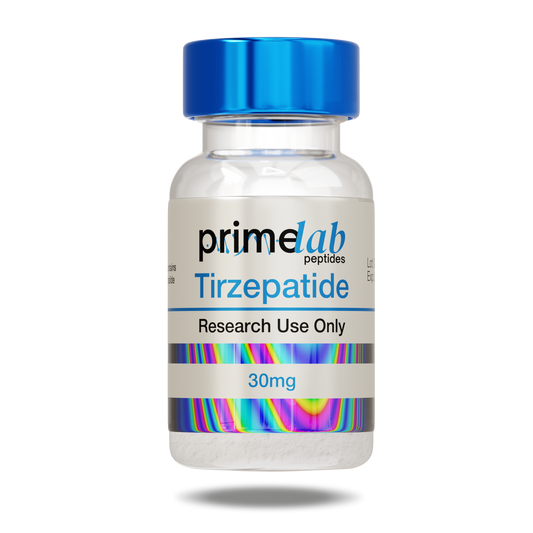
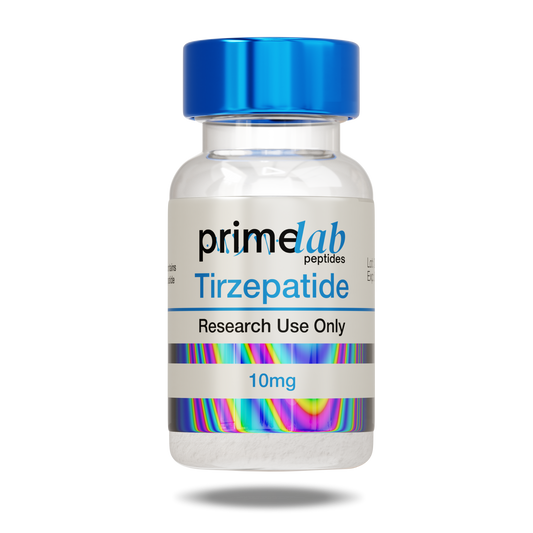
Secure Reliable Tirzepatide Supply with Prime Lab Peptides!
In obesity and metabolic research, one of the biggest challenges is accessing consistent, high-purity peptides that deliver reliable results. Many researchers struggle with products that lack transparency, vary in quality, or fail to meet strict laboratory standards. These setbacks can waste valuable time, disrupt experiments, and compromise the integrity of critical studies.
At Prime Lab Peptides, we eliminate these challenges by offering tirzepatide strictly for research purposes with uncompromising quality control. Every peptide undergoes rigorous testing for purity and consistency, ensuring your work is supported by dependable materials. When precision matters, Prime Lab Peptides is the trusted partner that empowers laboratories to advance obesity and metabolic research with confidence.
FAQs:
How much weight reduction has tirzepatide shown in studies?
Trials like SURMOUNT-1 show up to 22% body weight reduction over 72 weeks, far higher than lifestyle or older drug interventions. These sustained outcomes make tirzepatide a valuable peptide for obesity research, offering insights into long-term metabolic adaptation and weight regulation mechanisms not seen with traditional agents.
Is tirzepatide more effective than semaglutide in research?
Yes. Tirzepatide consistently outperforms semaglutide, with participants showing greater and faster weight loss. Its dual action on GLP-1 and GIP receptors makes it more effective than GLP-1-only drugs. This positions tirzepatide as a superior research tool for studying multi-hormonal obesity treatments and metabolic regulation strategies.
Can tirzepatide be studied in PCOS research?
Yes. Early data suggest tirzepatide can improve insulin sensitivity and weight regulation, two key challenges in PCOS. For researchers, this opens pathways to investigate metabolic-hormonal connections and develop models for studying how dual incretin activity may influence obesity and endocrine imbalances associated with PCOS.
Is tirzepatide safe for long-term research use?
Tirzepatide is generally well-tolerated, with mild gastrointestinal effects such as nausea or diarrhea reported during escalation. Long-term trials are ongoing to assess cardiovascular outcomes and the durability of results. Current evidence supports tirzepatide as a safe, reliable compound for extended obesity and metabolic research.
Do I need a license to purchase tirzepatide?
Yes. Tirzepatide from Prime Lab Peptides is supplied strictly for research use only and is not for human consumption. Researchers must comply with institutional and regulatory standards. Prime Lab Peptides ensures quality, purity, and documentation, making it a trusted source for laboratories conducting advanced obesity studies.
1 comment
Thanks for sharing this content. Obesity research is very important, and new options are always welcome. Tirzepatide Online shows how science is moving forward to give people better choices. Learning more about this treatment can help many who are struggling. Great post, keep it up.