All product descriptions and articles provided on this website are intended strictly for informational and educational purposes. Our products are designed exclusively for in-vitro research (i.e., experiments conducted outside of a living organism, typically in glassware such as test tubes or petri dishes). These compounds are not approved by the FDA for use in humans or animals. They are not medications, nor are they intended to diagnose, treat, prevent, or cure any disease or medical condition. Any bodily administration-human or animal-is strictly prohibited by law. Our products are not for human consumption under any circumstances.

Short answer: about 5 days. Tirzepatide's systemic half-life of roughly five days is what makes once-weekly injection workable — plasma levels stay in range between doses instead of collapsing in a few hours.
The rest of the profile follows from that: peak plasma concentration is reached between 8 and 72 hours after a subcutaneous dose, the steady-state volume of distribution is around 10.3 L, and more than 99% of the circulating peptide is bound to albumin. That albumin binding comes from the lipid side chain attached to the 39-amino-acid backbone, and it is the main reason clearance is measured in days rather than hours.
One distinction worth making up front: half-life describes how long the compound stays in circulation, not how long its metabolic effects last — and plasma levels only plateau after several consecutive weekly doses, not after the first one.
Tirzepatide in Modern Diabetes Pharmacology
Tirzepatide represents a groundbreaking advancement in the treatment of type 2 diabetes and obesity. It secured FDA approval in 2022 following exceptional outcomes in extensive Phase III clinical trials[2] such as SURPASS and SURMOUNT. These trials showcased its superior efficacy in glycemic control and weight management.
Beyond glucose-lowering, tirzepatide achieved remarkable and sustained weight loss, with mean reductions exceeding 20% in non-diabetic adults with obesity after 72 weeks. As the first dual GIP and GLP-1 receptor agonist, often called a twincretin, it offers simultaneous control of blood sugar and body weight, outpacing traditional single-agonist therapies.
Mechanism of Action: Dual Agonism Explained
The innovative mechanism behind tirzepatide lies in its balanced activation of glucose-dependent insulinotropic polypeptide (GIP) and glucagon-like peptide-1 (GLP-1) receptors. Tirzepatide’s 39-amino acid structure, chemically lipidated to enhance stability and half-life, binds with high affinity to the GIP receptor and adequate affinity to the GLP-1 receptor. The dual pathway yields several metabolic effects:
- Increased insulin secretion in a glucose-dependent manner, minimizing hypoglycemia risk.
- Decreased fasting and postprandial glucagon by up to 43% at the highest dose
- Delayed gastric emptying, leading to slowed glucose absorption and lower postprandial glucose peaks
Signal transduction studies[3] reveal that tirzepatide shows GIP-mimetic action while biasing GLP-1 receptor signaling toward cAMP generation rather than β-arrestin recruitment, potentially amplifying its insulinotropic effect without typical side effects seen with pure GLP-1 agonism.

Pharmacokinetic Insights: ADME Characteristics
Tirzepatide’s pharmacokinetics support once-weekly dosing with stable plasma concentrations, delivering consistent glucose control and weight reduction. This balance enhances therapeutic reliability and broad applicability in managing type 2 diabetes and metabolic disorders. The key pharmacokinetic parameters include:
- Time to peak plasma concentration ranging from 8 to 72 hours post-injection.
- Steady-state distribution volume of ~10.3 L, with >99% albumin binding.
- Metabolized by proteolytic cleavage, β-oxidation, and amide hydrolysis to constituent amino acids.
- Systemic half-life of ~5 days, supporting once-weekly dosing while maintaining stable plasma levels.
Clinical Evidence: Key Scientific Studies
Tirzepatide’s efficacy is well established through pivotal trials. In SURPASS-5[4], patients with type 2 diabetes achieved HbA1c reductions of -2.11% to -2.34% and weight loss from 5.4 kg at 5 mg to 10.5 kg at 15 mg over 40 weeks. SURMOUNT-1[5] and SURMOUNT-3 further highlighted its impact, showing up to 26.6 percent weight loss and a 94 percent reduction in diabetes progression among obese adults.
Head-to-head comparisons indicate that tirzepatide outperforms dulaglutide, semaglutide, insulin degludec, and glargine in both glucose lowering and weight reduction. Moreover, meta-analyses and real-world evidence confirm that these benefits extend beyond clinical trials, underscoring their relevance for policymakers and endocrinologists aiming to optimize metabolic disease management.
Metabolic Effects Beyond Glycemic Control
Tirzepatide’s metabolic effects extend well beyond glycemic control, demonstrating significant benefits in weight management, cardiovascular health, and emerging therapeutic areas. These multifaceted impacts position tirzepatide as a versatile agent in managing complex metabolic disorders.
1- Robust Weight Reduction: Demonstrates significant, dose-dependent[6] weight loss, with non-diabetic adults achieving 12.1 kg to 17.9 kg reductions over 72 weeks.
2- Cardiovascular Protection: Improves multiple risk markers, lowers heart failure, related outcomes, and reduces progression[7] to type 2 diabetes in high-risk populations.
3- Hepatic Therapeutic Potential: Early data indicate efficacy in metabolic-associated steatotic liver disease, highlighting an important new application.
4- Neuroprotective Promise: Preclinical studies suggest relevance in neurodegenerative disease models, expanding the therapeutic horizon of twincretin therapy.
Unlock Metabolic Therapy’s Future with Prime Lab Peptides Tirzepatide Research
Unlocking the future of metabolic therapy poses challenges such as managing complex disease pathways, ensuring long-term efficacy, and overcoming variability in patient responses. Researchers face the ongoing need to optimize treatments that effectively address both diabetes and obesity while mitigating adverse effects in diverse populations.
Prime Lab Peptides provides unparalleled expertise in Tirzepatide research, offering cutting-edge data and reliable insights that empower investigators to advance metabolic disease solutions. With a commitment to scientific rigor and innovation, we support researchers in navigating complexities and accelerating breakthroughs in diabetes and obesity therapeutics.
Tirzepatide research materials from Prime Lab Peptides
Compounds referenced in this article, supplied for laboratory research use only — not for human or veterinary use:
- Tirzepatide – 5mg
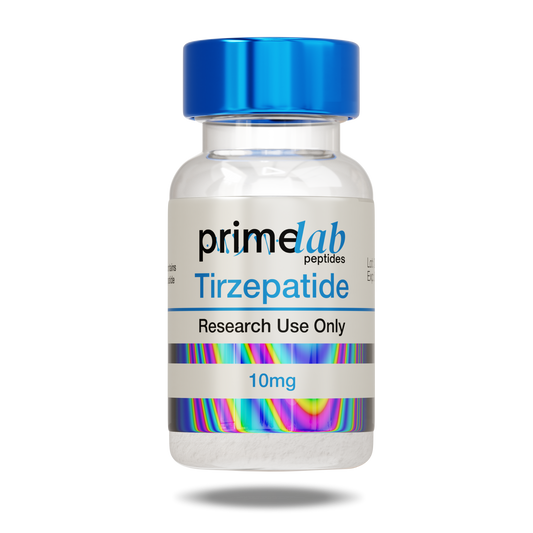
- Tirzepatide – 10mg
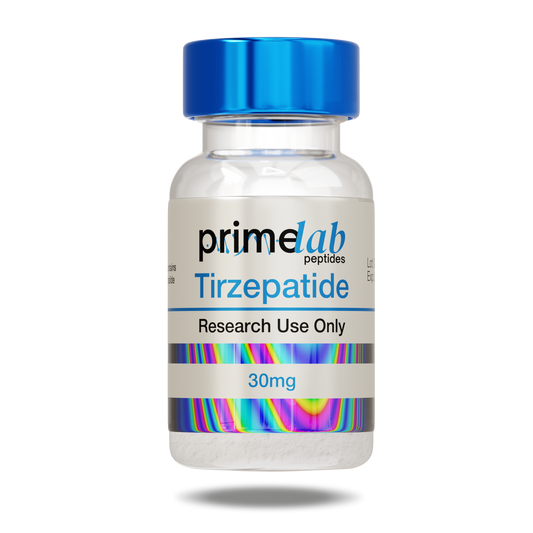
- Tirzepatide – 30mg
- Bac Water – 10ml for reconstitution
Weight Loss by Dose: What the 5 mg, 10 mg and 15 mg Arms Reported
Every dose step added weight loss in the published trials, but the steps are not equal: the largest gain came between the first two arms, not the last two.
In SURMOUNT-1, a 72-week phase 3 trial in 2,539 adults with obesity and without diabetes, mean weight change at week 72 was −15.0% in the 5 mg arm, −19.5% at 10 mg and −20.9% at 15 mg, against −3.1% on placebo, from a mean baseline weight of 104.8 kg. Read as a ladder rather than a headline: moving from the 5 mg arm to the 10 mg arm added about 4.5 percentage points, while moving from 10 mg to 15 mg added about 1.4. The curve rises across the whole range, then flattens near the top.
The same shape in type 2 diabetes, at a smaller scale
In SURPASS-2, a 40-week phase 3 trial in 1,879 adults with type 2 diabetes, HbA1c change was −2.01, −2.24 and −2.30 percentage points at 5, 10 and 15 mg respectively — again a large first step (0.23 points) and a small second one (0.06). Weight change in that trial was published as a difference against semaglutide 1 mg: −1.9 kg, −3.6 kg and −5.5 kg for the three arms.
This is why the same dose can appear to do very different things in two reports. Trials in obesity without diabetes and trials in type 2 diabetes enrol different populations over different durations, and they do not express weight the same way — percentage change from baseline in one case, difference against an active comparator in the other. Figures from the two programs describe separate experiments and should not be read as one continuous series.
Side Effects by Dose: Where Tolerability Degrades, and Where It Doesn't
Gastrointestinal events dominate the published adverse-event tables and broadly track the dose, but the discontinuation figures do not rise in a straight line with it.
Across the three tirzepatide arms of SURPASS-2, nausea was reported in 17–22% of participants, diarrhea in 13–16% and vomiting in 6–10%; the semaglutide 1 mg comparator arm reported 18%, 12% and 8%. Most events were mild to moderate in severity. Serious adverse events were reported in 5–7% of tirzepatide participants versus 3% on semaglutide. Hypoglycemia below 54 mg/dL was uncommon and did not follow the dose either: 0.6% at 5 mg, 0.2% at 10 mg, 1.7% at 15 mg.
Discontinuation did not peak at the top dose
SURMOUNT-1 reported discontinuation due to adverse events in 4.3% (5 mg), 7.1% (10 mg) and 6.2% (15 mg) of participants, against 2.6% on placebo. The highest-dose arm was not the one participants left most often. Summaries that describe tolerability as degrading step by step alongside the dose are smoothing a curve that, on this endpoint, is not monotonic.
A timing detail from the same trial carries more information than the pooled rates: gastrointestinal events occurred primarily during the 20-week dose-escalation period, not evenly across 72 weeks. That places most of the tolerability burden in the ramp rather than at steady state — a distinction a single incidence figure erases.
On cardiovascular and pancreatic endpoints, the trials as published did not report an excess signal against their comparators. That is what the records show, and it is worth stating precisely: absence of a signal in trials of this size and duration is a limit of what was observed, not a conclusion about long-term risk.
Tirzepatide vs Retatrutide: Why the Two Percentages Don't Subtract
No head-to-head trial has compared them. Every side-by-side figure in circulation is assembled from separate trials, run on different people, for different lengths of time.
The molecules differ by one receptor: tirzepatide activates GIP and GLP-1, while retatrutide adds the glucagon receptor. The evidence behind them differs by considerably more. SURMOUNT-1 was a phase 3 trial in 2,539 adults over 72 weeks. Retatrutide's 2023 obesity readout was a phase 2 trial in 338 adults over 48 weeks, with its primary endpoint set at week 24 and week 48 reported as a secondary endpoint.
The published numbers are −20.9% for the 15 mg tirzepatide arm at week 72 and −24.2% for the 12 mg retatrutide arm at week 48. Subtracting one from the other treats two experiments as one. Even the placebo arms disagree — −3.1% in SURMOUNT-1 against −2.1% in the retatrutide trial — which on its own shifts any placebo-adjusted comparison. Trial duration, escalation schedule and sample size all pull in different directions, and a phase 2 result is a hypothesis to be tested at scale rather than a settled one.
Their regulatory positions differ as well: tirzepatide is an approved medicine, while retatrutide remains investigational and has not been approved anywhere. For anyone reading the literature, the workable rule is to compare arms within a trial and to treat cross-trial arithmetic as an estimate at best.
What in This Profile Is Human Data, and What Is Still Preclinical
Not every claim on this page carries the same weight, and the strongest and weakest often sit side by side in secondary coverage. The layers separate cleanly:
- Phase 3 human trials — weight change and HbA1c across the SURPASS and SURMOUNT programs. Thousands of randomized participants, prespecified endpoints, published adverse-event tables. This is the sturdiest layer.
- Human pharmacokinetics — half-life, albumin binding, volume of distribution. Measured in people, but describing exposure rather than outcome.
- Cell-based receptor pharmacology — the cAMP-versus-β-arrestin signaling bias described earlier comes from in vitro assays. It is a mechanistic hypothesis about why a dual agonist behaves the way it does, not a clinical finding in itself.
- Animal models and early-phase signals — the hepatic and neurological observations sit here. Preclinical work generates directions to test; it does not close questions.
The distinction matters most when reading press coverage, which routinely promotes a rodent or dish-level result into the same sentence as a phase 3 endpoint. A quick check on any tirzepatide claim: which layer produced it, in what species, over what duration, and with how many subjects. When a source does not say, the claim cannot be graded — and an ungraded claim is not usable as evidence.
FAQs
What is tirzepatide?
Tirzepatide is a dual GIP and GLP-1 receptor agonist designed to improve blood sugar control and promote weight loss in type 2 diabetes and obesity patients.
How quickly does tirzepatide work?
Patients typically see improvements in blood glucose and weight reduction within 4 weeks, with continued positive effects over several months of consistent use.
Can tirzepatide be combined with other drugs?
Yes, tirzepatide can be used alone or alongside other antidiabetic medications, including insulin, based on individualized treatment plans and physician recommendations.
What side effects should be expected?
Common side effects include mild gastrointestinal symptoms such as nausea, vomiting, and diarrhea, which generally decrease with continued treatment.
References