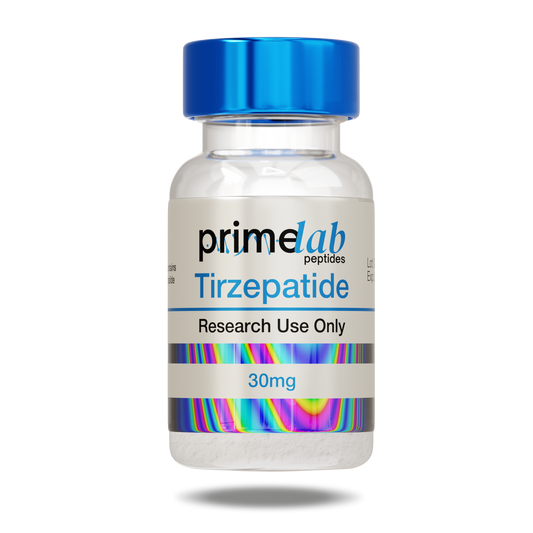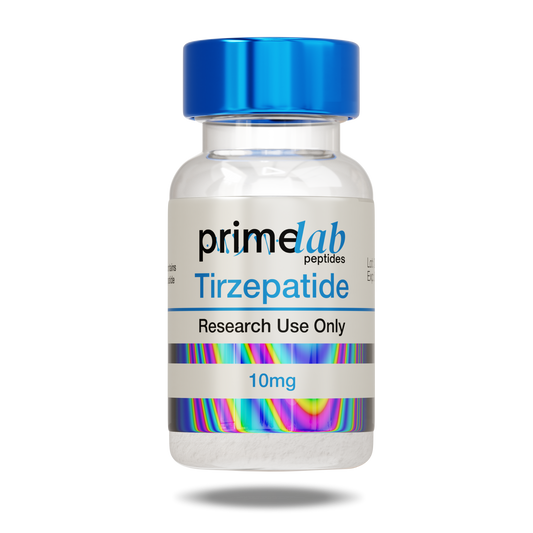
All product descriptions and articles provided on this website are intended strictly for informational and educational purposes. Our products are designed exclusively for in-vitro research (i.e., experiments conducted outside of a living organism, typically in glassware such as test tubes or petri dishes). These compounds are not approved by the FDA for use in humans or animals. They are not medications, nor are they intended to diagnose, treat, prevent, or cure any disease or medical condition. Any bodily administration-human or animal-is strictly prohibited by law. Our products are not for human consumption under any circumstances.

Metabolically-dysfunction-associated steatotic liver disease (MASLD), formerly referred to as NAFLD, is a rapidly growing global health concern, closely linked to obesity, insulin resistance, and type 2 diabetes. Current experimental evidence suggests that tirzepatide may improve key pathological drivers of MASLD by activating both GIP and GLP-1 receptors.
Moreover, this mechanism enhances insulin sensitivity, reduces hepatic lipid accumulation, and improves systemic metabolic balance. Consequently, these coordinated effects support improved liver health in preclinical and early clinical research. Overall, emerging data indicate [1] that tirzepatide may play a meaningful role in MASLD-focused metabolic investigations.
At Prime Lab Peptides, we support researchers by supplying high-quality tirzepatide and other research-grade peptides for laboratory use only. Our focus on purity, batch consistency, and scientific rigor allows investigators to explore complex metabolic and hepatic pathways with confidence. By working with Prime Lab Peptides, researchers can generate reproducible data and advance experimental insights into liver-related metabolic disease.
How Does Tirzepatide Mechanistically Influence Hepatic Fat Accumulation?
Tirzepatide influences hepatic fat accumulation by improving insulin signaling and regulating lipid flux to the liver. According to experimental data [2], dual activation of GIP and GLP-1 receptors reduces de novo lipogenesis while enhancing fatty acid oxidation. As a result, hepatic triglyceride storage decreases in metabolic disease models relevant to MASLD.
Key mechanisms include:
-
Reduced hepatic lipogenesis through improved insulin sensitivity.
-
Decreased free fatty acid influx from adipose tissue.
- Enhanced mitochondrial fat oxidation supports healthier liver metabolism.
Furthermore, preclinical studies demonstrate reductions in liver weight and hepatic steatosis following tirzepatide exposure. Collectively, these findings highlight its potential to modulate liver fat content in controlled experimental settings.
How Does Tirzepatide’s Effect on Insulin Resistance Impact MASLD Progression?
Insulin resistance is a central driver of MASLD development and progression toward MASH (Metabolic dysfunction-associated steatohepatitis). Research in the Journal of Clinical Investigation [3]: Tirzepatide improves hepatic and peripheral insulin sensitivity, thereby directly reducing lipid accumulation in hepatocytes. Improvements in insulin signaling are strongly associated with reduced liver fat and inflammatory stress, independent of alcohol intake.
Several mechanisms explain this relationship:
1. Improved hepatic insulin signaling: Tirzepatide restores insulin responsiveness in liver tissue, suppressing excessive glucose production and limiting lipogenic signaling pathways.
2. Reduced adipose tissue lipolysis: By improving systemic insulin sensitivity, tirzepatide lowers circulating free fatty acids, decreasing lipid delivery to the liver.
3. Lower inflammatory cytokine activity: Reduced insulin resistance is associated with decreased hepatic inflammation, a key factor in preventing progression toward steatohepatitis.
What Experimental Evidence Supports Tirzepatide’s Role in MASLD Models?
Experimental evidence across obesity and diabetes models consistently demonstrates that tirzepatide provides significant secondary benefits to liver health. Central to this is the SYNERGY-NASH trial (2024), which reported MASH resolution without worsening fibrosis in up to 73% of participants at higher doses [5].
These clinical outcomes are supported by imaging data published on ResearchGate [4], which used biomarkers to confirm substantial reductions in hepatic fat content and improved insulin sensitivity [4]. Mechanistically, tirzepatide’s dual incretin activity optimizes hepatic glucose handling and lipid turnover, directly reducing hepatocellular stress and lipid overload. By addressing the underlying metabolic drivers rather than relying solely on weight loss, these findings establish tirzepatide as a foundational tool for investigating the reversal of MASLD/MASH.

Are Tirzepatide’s Hepatic Benefits Independent of Weight Loss?
Tirzepatide demonstrates hepatic benefits that extend beyond weight reduction alone. Mechanistic analyses suggest that tirzepatide improves insulin sensitivity and lipid metabolism through direct receptor-mediated pathways. These effects contribute to reduced hepatic steatosis, even in contexts where weight loss is modest.
Together, these weight-independent effects include:
1. Improved Hepatic Lipid Oxidation: Tirzepatide enhances mitochondrial fatty acid oxidation in liver tissue.
2. Anti-Inflammatory Effects: It suppresses pro-inflammatory signaling pathways involved in disease progression.
3. Regulation of Flux: By coordinating glucose and lipid metabolism, tirzepatide reduces metabolic overload in hepatocytes.
Optimize MASLD Research with Tirzepatide from Prime Lab Peptides
Researchers investigating MAFLD and metabolic liver disease face challenges such as inconsistent peptide quality, variable experimental outcomes, and difficulty isolating weight-independent mechanisms. Moreover, unreliable sourcing can compromise data integrity when studying complex hepatic pathways linked to insulin resistance and lipid metabolism.
At Prime Lab Peptides, we provide research-grade tirzepatide manufactured for purity, consistency, and reproducibility. Each batch undergoes rigorous quality verification to ensure reliable experimental outcomes. This commitment enables researchers to explore mechanisms underlying MAFLD with greater precision and confidence. For collaboration or product inquiries, contact us to support your next research initiative.

FAQs:
How Is MASLD Commonly Modeled in Metabolic Research?
MASLD is modeled using diet-induced obesity and insulin-resistant animal models combined with imaging tools such as MRI-PDFF. These models replicate hepatic fat accumulation, metabolic stress, and inflammatory signaling, enabling controlled evaluation of therapeutic effects on liver steatosis and progression risk.
How Does Tirzepatide Affect Liver Inflammation?
Tirzepatide reduces liver inflammation by improving insulin sensitivity, lowering free fatty acid flux to the liver, and suppressing pro-inflammatory cytokine signaling. These effects reduce hepatocellular stress and apoptosis, thereby limiting progression from simple steatosis to inflammatory MASH phenotypes in experimental studies.
What Biomarkers Are Used to Assess Liver Fat Changes?
Researchers assess liver fat using MRI-PDFF for quantitative steatosis measurement, histological scoring from liver biopsies, and serum biomarkers such as ALT and AST. Additional markers, such as cT1 and CK-18, provide insight into fibroinflammation and hepatocyte injury.
Can Tirzepatide Prevent Disease Progression Experimentally?
Current clinical and experimental evidence indicates that tirzepatide may slow progression from MASLD to MASH by reducing liver fat, improving insulin resistance, and lowering inflammation. Phase 2 data suggest MASH resolution without fibrosis worsening, though long-term disease-modifying effects require further study.