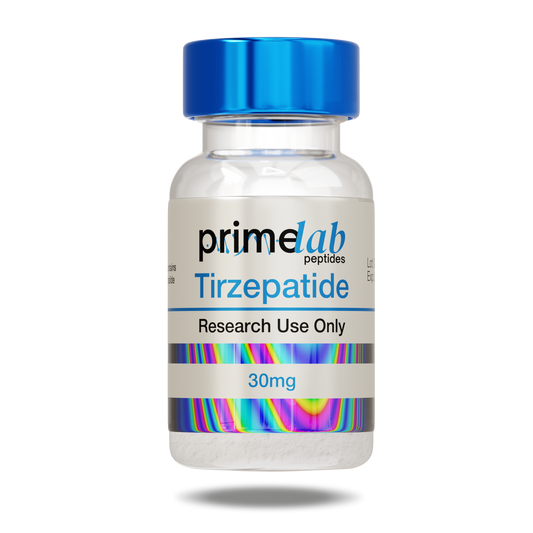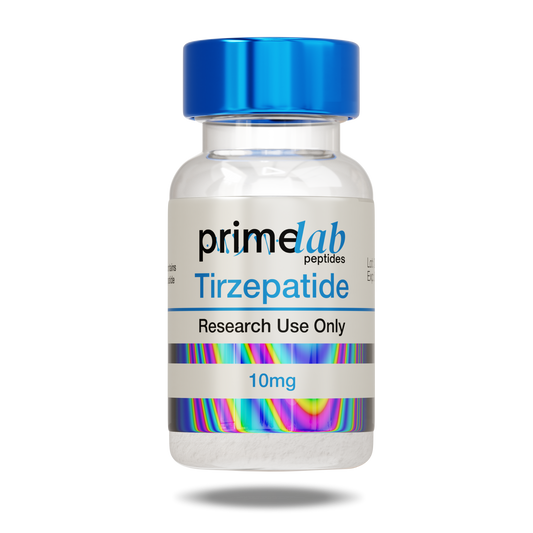
All product descriptions and articles provided on this website are intended strictly for informational and educational purposes. Our products are designed exclusively for in-vitro research (i.e., experiments conducted outside of a living organism, typically in glassware such as test tubes or petri dishes). These compounds are not approved by the FDA for use in humans or animals. They are not medications, nor are they intended to diagnose, treat, prevent, or cure any disease or medical condition. Any bodily administration-human or animal-is strictly prohibited by law. Our products are not for human consumption under any circumstances.

Tirzepatide is a dual agonist of the glucose-dependent insulinotropic polypeptide (GIP) and glucagon-like peptide-1 (GLP-1) receptors, and clinical investigations increasingly explore its influence on the gut–brain axis that regulates appetite, nutrient sensing, and metabolic balance. Beyond its endocrine effects in peripheral tissues, emerging research indicates that tirzepatide interacts with neural and hormonal pathways that link gastrointestinal physiology to central appetite-control centers.
Experimental analyses suggest that dual activation of the incretin receptors affects multiple communication channels within the gut–brain axis, including vagal nerve signaling, gastrointestinal hormone secretion, and hypothalamic neuropeptide activity. These coordinated responses contribute to integrated metabolic regulation by influencing hunger perception, satiety signaling, and energy intake patterns.
At Prime Lab Peptides, we support investigators by supplying research-grade tirzepatide and other high-purity peptides for laboratory research applications. Our focus on analytical verification, batch consistency, and strict manufacturing standards helps research teams conduct controlled investigations into complex neuroendocrine signaling systems. Reliable peptide sourcing enables scientists to generate reproducible experimental data when exploring gut–brain metabolic communication pathways.
What Evidence Demonstrates Gut-Brain Axis Modulation with Tirzepatide?
Research studies investigating incretin biology demonstrate that tirzepatide modulates signaling pathways linking gastrointestinal endocrine cells to neural centers regulating appetite. These pathways play a fundamental role in coordinating food intake, nutrient sensing, and metabolic responses following meals.
Clinical investigations within the SURPASS research program suggest that incretin-based therapies influence central satiety circuits through hormonal and neural mechanisms associated with postprandial signaling [1]. Dual receptor activation may amplify these effects by integrating both GIP-mediated and GLP-1-mediated signaling pathways.
Several physiological mechanisms illustrate how gut–brain signaling may be modified:
Enteroendocrine Hormone Communication
Activation of GLP-1 receptors in intestinal L-cells triggers hormone release, signaling nutrient status to the brain. When nutrients enter, enteroendocrine cells release incretins, which act as biochemical messengers between the gut and brain. These signals inform central metabolic centers about nutrient availability, allowing the body to adjust its responses. This mechanism helps coordinate digestion, insulin signaling, and appetite, maintaining metabolic balance.
Vagal Neural Signaling
Gastrointestinal hormone signaling interacts with vagal afferent pathways, transmitting satiety signals from the gut to brainstem centers. Hormones released after eating activate receptors on vagal nerve endings in the gut. These signals travel along the vagus nerve to the nucleus tractus solitarius in the brainstem, where they integrate visceral sensory information related to digestion and nutrient intake. From this region, signals are relayed to higher brain centers involved in appetite control, reinforcing the perception of fullness and helping regulate feeding in response to nutrients.
Central Appetite Circuit Activation
Hypothalamic neurons responding to incretin signals help suppress appetite and regulate metabolism. Specific neurons interpret hormonal signals from peripheral tissues and the brainstem. Satiety neurons, such as POMC, are activated, while hunger neurons, such as NPY and AgRP, are deactivated. This neural response promotes satiety and reduces hunger, ensuring metabolic signals from the gut influence energy intake and nutrient use.
These coordinated processes show how gut hormones and neural pathways work together to regulate energy and metabolism. By combining endocrine signals from the gut with neural pathways via vagal and hypothalamic circuits, the gut–brain axis forms a responsive system. This system allows the body to adapt its metabolic responses to nutrient intake, supporting energy regulation and stability across varying nutritional states.
How Does Tirzepatide Influence Hypothalamic Appetite-Regulation Pathways?
Tirzepatide influences hypothalamic appetite-regulation pathways by engaging incretin receptors, thereby affecting neuronal populations responsible for hunger and satiety signaling. These neurons integrate peripheral metabolic signals with central neuroendocrine responses that determine feeding behavior. Research in Cell Metabolism examining incretin signaling indicates that GLP-1 receptor activation influences key hypothalamic regions, including the arcuate nucleus, which regulates appetite through neuropeptide networks that control energy intake [2].
Key appetite-regulation responses observed in incretin research include:
- Activation of Satiety-Promoting Neurons: Pro-opiomelanocortin (POMC) neurons promote satiety signaling and reduce food intake by transmitting inhibitory signals within hypothalamic appetite-regulating neural circuits.
- Suppression of Hunger-Promoting Neurons: Neuropeptide Y (NPY) and agouti-related peptide (AgRP) neurons, which are associated with hunger signaling, become less active, reducing stimulatory signals that normally promote food-seeking behavior and appetite.
- Integration with Metabolic Hormones: Interactions with insulin and leptin pathways reinforce central regulation of energy balance by coordinating peripheral metabolic signals with hypothalamic appetite-control networks.
Together, these neural responses highlight the role of incretin-based signaling in regulating appetite-related brain circuits that influence caloric intake, feeding behavior patterns, and overall metabolic control.

How Does Tirzepatide Affect Gastrointestinal Hormone Signaling?
Tirzepatide affects gastrointestinal hormone signaling by interacting with incretin pathways that regulate endocrine responses related to digestion. These hormones act as biochemical messengers linking nutrient detection in the gastrointestinal tract with metabolic and neural responses. Studies examining incretin physiology indicate that GLP-1 and GIP participate in coordinated endocrine signaling after nutrient ingestion, influencing insulin secretion, gastric motility, and satiety communication [3].
Several gastrointestinal hormone responses illustrate these mechanisms:
- Enhanced Incretin Signaling: Dual receptor activation strengthens hormonal signaling involved in postprandial metabolic regulation by amplifying endocrine communication between gastrointestinal tissues and central metabolic regulatory pathways.
- Gastric Motility Modulation: Slower gastric emptying prolongs nutrient exposure within the digestive tract, enhancing satiety signals and allowing more sustained gastrointestinal hormone release during digestion.
- Hormonal Feedback Communication: Gastrointestinal peptides communicate nutrient availability to both pancreatic and neural regulatory systems, coordinating endocrine responses that influence appetite control and metabolic balance.
These endocrine responses illustrate how gastrointestinal hormone networks contribute to coordinated metabolic regulation by communicating between the digestive and neural systems through complex neuroendocrine signaling pathways.
What Role Does the Vagus Nerve Play in Tirzepatide-Related Signaling?
The vagus nerve plays a central role in transmitting metabolic information from the gastrointestinal tract to brain regions involved in appetite and metabolic control. Hormones released from intestinal cells activate vagal afferent fibers that relay satiety signals to the brainstem and hypothalamus. Experimental research indicates that GLP-1 receptor signaling influences vagal afferent pathways, which serve as an important component of gut–brain communication networks [4].
Observed vagal signaling responses include:
- Satiety Signal Transmission: Vagal afferent neurons relay hormonal signals that indicate nutrient intake and fullness, transmitting digestive information from the gastrointestinal tract to central appetite-control centers.
- Brainstem Integration: Neural signals reach the nucleus tractus solitarius, a brainstem region that integrates visceral information and coordinates physiological responses related to digestion and satiety.
- Feedback Regulation of Energy Intake: Neural circuits activated by vagal signaling influence feeding behavior and metabolic balance by adjusting appetite signals according to nutrient intake and digestive activity.
Through these mechanisms, gut-derived signals influence central neural circuits that regulate appetite and energy metabolism, helping maintain physiological balance and coordinated metabolic responses.
How Do Gut–Brain Axis Changes Integrate with Metabolic Regulation?
Gut–brain axis signaling integrates digestive, neural, and endocrine processes to coordinate metabolic responses to food intake. Dual activation of the incretin receptors may enhance this integration by strengthening communication between gastrointestinal endocrine cells and central metabolic regulatory centers. Research suggests that incretin-based therapies influence several interconnected physiological processes related to metabolic control, including appetite regulation, modulation of energy intake, and hormonal signaling pathways.
Key integration mechanisms include:
- Central Satiety Signaling: Enhanced communication between gut hormones and hypothalamic appetite circuits reduces caloric intake by strengthening neural pathways that mediate satiety perception.
- Neuroendocrine Feedback Loops: Signals originating in the gastrointestinal tract influence pancreatic hormone responses and metabolic regulation through coordinated endocrine and neural communication pathways.
- Energy Balance Coordination: Neural and endocrine pathways collectively regulate feeding behavior and metabolic adaptation by integrating signals related to nutrient intake and energy expenditure.
These integrated responses highlight the complexity of gut–brain communication networks and their role in maintaining metabolic homeostasis across changing nutritional and physiological conditions.
Advancing Gut–Brain Axis Research with High-Quality Peptides from Prime Lab Peptides
Investigations examining gut–brain metabolic signaling require well-characterized research compounds to ensure reproducible experimental outcomes. Variability in peptide synthesis quality, analytical verification, or batch consistency may affect the reliability of results in neuroendocrine research models.
Prime Lab Peptides supports metabolic and neuroendocrine research by providing rigorously synthesized peptides, including Tirzepatide, supported by detailed analytical documentation and strict quality control procedures. These standards allow laboratories to conduct controlled experiments examining incretin signaling, gut–brain communication pathways, and metabolic regulatory mechanisms.
For research groups exploring neuroendocrine pathways involved in metabolic regulation, consistent peptide sourcing remains essential for generating reliable scientific insights. Laboratories seeking dependable peptide solutions aligned with gut–brain axis research objectives are encouraged to contact us for additional information.

FAQs
What Is Tirzepatide?
Tirzepatide is a synthetic peptide that functions as a dual agonist of glucose-dependent insulinotropic polypeptide (GIP) and glucagon-like peptide-1 (GLP-1) receptors. In research settings, scientists investigate tirzepatide for its ability to modulate metabolic signaling pathways that regulate glucose metabolism, appetite, and systemic energy balance.
How Does Tirzepatide Influence the Gut–Brain Axis?
Tirzepatide influences the gut–brain axis by activating incretin receptors that regulate gastrointestinal hormone release and neural signaling pathways. These signals communicate nutrient availability to brain regions controlling appetite and metabolism, helping coordinate satiety responses, digestive activity, and broader metabolic adaptations following food intake.
Does Tirzepatide Affect Appetite-Regulation Pathways?
Research suggests that activation of incretin receptors influences hypothalamic neurons involved in appetite regulation. These neural circuits integrate hormonal signals originating in the gastrointestinal tract and relay them to central appetite-control centers, contributing to satiety signaling, reduced hunger perception, and coordinated metabolic responses to nutrient intake.
Which Biological Systems Participate in Gut–Brain Axis Signaling?
Gut–brain axis signaling involves several interconnected biological systems, including enteroendocrine hormone secretion in the digestive tract, vagal neural communication between the gut and the brainstem, hypothalamic appetite-regulation circuits, and pancreatic hormone responses, which collectively coordinate metabolic regulation and feeding behavior.
What Research Models Are Used to Study Gut–Brain Axis Signaling?
Scientists study gut–brain axis signaling through multiple experimental models, including randomized clinical trials, neuroendocrine imaging studies, metabolic clamp experiments, and animal research models that investigate hormonal signaling, neural communication pathways, and physiological mechanisms regulating appetite control and metabolic homeostasis.