

All product descriptions and articles provided on this website are intended strictly for informational and educational purposes. Our products are designed exclusively for in-vitro research (i.e., experiments conducted outside of a living organism, typically in glassware such as test tubes or petri dishes). These compounds are not approved by the FDA for use in humans or animals. They are not medications, nor are they intended to diagnose, treat, prevent, or cure any disease or medical condition. Any bodily administration-human or animal-is strictly prohibited by law. Our products are not for human consumption under any circumstances.

Cardiovascular disease remains the leading global cause of illness, with atherogenic dyslipidemia serving as a major contributing factor. Recent research into peptide-based therapeutics highlights Retatrutide as a novel compound showing potential metabolic benefits. Its multi-receptor agonist properties targeting GLP-1, GIP, and glucagon receptors have demonstrated promising effects on lipid regulation in experimental studies. Collectively, these findings suggest Retatrutide may play a role in improving cardiovascular risk profiles.
At Prime Lab Peptide, we support researchers by providing high-purity, research-grade peptides that ensure consistency and reliability in experimental outcomes. Our focus on scientific integrity and quality control helps overcome common challenges in peptide synthesis and stability. We aim to empower research innovation through precision, transparency, and dependable peptide solutions.
How Does Retatrutide Mechanistically Influence Lipid Metabolism?
Retatrutide mechanistically influences lipid metabolism through simultaneous activation of GLP-1, GIP, and glucagon receptors. This triple-receptor mechanism regulates lipid synthesis, oxidation, and clearance, improving overall metabolic balance. As reported in PMC[1] study this combined receptor action enhances lipid utilization and supports cardiovascular metabolic health outcomes.
The following key mechanisms explain this process:
- GLP-1 receptor activation decreases liver fat and improves insulin sensitivity.
- GIP receptor enhances lipid clearance through better adipose metabolism.
- Glucagon receptor activation increases lipid oxidation and reduces triglyceride levels.
Together, these mechanisms reduce atherogenic lipoproteins, including small dense LDL and VLDL. Moreover, Retatrutide lowers hepatic apolipoprotein B secretion, thereby decreasing non-HDL cholesterol and supporting a healthier lipid profile in experimental research models.
How Does Retatrutide Improve Cardiovascular Risk Profiles in Obesity?
Retatrutide improves cardiovascular risk profiles in obesity by modulating key metabolic and vascular mechanisms. As reported by Sciforum[2], triple-receptor agonism enhances insulin sensitivity through improved β-cell function, reduced glucagon secretion, and greater glucose uptake. Collectively, these effects contribute to improved cardiometabolic balance and reduced cardiovascular risk.
Understanding its cardiometabolic influence requires examining these core effects:
- Improves insulin sensitivity: Retatrutide enhances glucose uptake and reduces insulin resistance, lowering hyperinsulinemia-driven lipid abnormalities often observed in obesity-related dyslipidemia and metabolic disorders.
- Supports blood pressure regulation: It contributes to modest yet consistent reductions in both systolic and diastolic blood pressure by improving endothelial responsiveness and vascular relaxation.
- Reduces inflammatory markers: By decreasing pro-inflammatory cytokines, Retatrutide helps alleviate endothelial dysfunction, which plays a pivotal role in atherogenesis and cardiovascular complications.

What Evidence Supports Retatrutide’s Impact on Atherogenic Lipoproteins?
Clinical evidence strongly supports Retatrutide’s impact on atherogenic lipoproteins. The study of Phase II trial, as reported in the European Heart Journal[3], supports Retatrutide’s strong impact on atherogenic lipoproteins. The study showed dose-dependent reductions in non-HDL-C (up to 26.9%) and apoB (24.2%) at 48 weeks. Triglycerides decreased 40.6%, apoC-III 38.0%, and atherogenic TRL and small LDL particles were substantially reduced, improving overall lipid composition and insulin resistance.
Furthermore, research demonstrates favorable changes in LDL particle size, reducing the proportion of small, dense LDL particles associated with cardiovascular disease. One key study reported a 20% decline in triglyceride-rich lipoproteins, a critical driver of atherogenesis. Importantly, these benefits were maintained over several weeks, reflecting the compound’s sustained metabolic influence and long-term therapeutic potential.
What Research Initiatives Will Define Retatrutide’s Clinical Role Moving Forward?
Retatrutide’s clinical role will be defined by a Phase 3, randomized, double-blind, placebo-controlled study evaluating its cardiovascular and renal outcomes. According to University of California[4] Health this investigation examines its effects in individuals with obesity, atherosclerotic cardiovascular disease, and chronic kidney disease to determine long-term therapeutic relevance.
Here are major investigations guiding Retatrutide’s future role:
1. TRIUMPH Outcomes Trial
This landmark trial focuses on Retatrutide’s long-term cardiovascular outcomes, aiming to assess its influence on major adverse cardiovascular events and validate its clinical relevance beyond lipid modulation.
2. Renal Function and Metabolic Health Studies
Emerging research is exploring Retatrutide’s impact on renal parameters within metabolic syndrome, examining how its multi-receptor activity may improve kidney function and reduce metabolic stress-related damage.
3. Lipoprotein Subfractions and Inflammation Research
Investigations are analyzing how Retatrutide alters lipoprotein particle composition and systemic inflammation, providing deeper insight into its mechanistic effects on atherogenic pathways and endothelial health.
Driving Retatrutide-Based Scientific Discovery Forward Through Prime Lab Peptides
Researchers often face ongoing challenges when investigating innovative peptides like Retatrutide. Inconsistent access to research-grade materials, variations in synthesis quality, and incomplete documentation frequently hinder experimental reproducibility. Additionally, managing the balance between detailed experimental validation and complex data interpretation presents further difficulty when studying multi-receptor mechanisms and lipid metabolism under precise laboratory conditions.
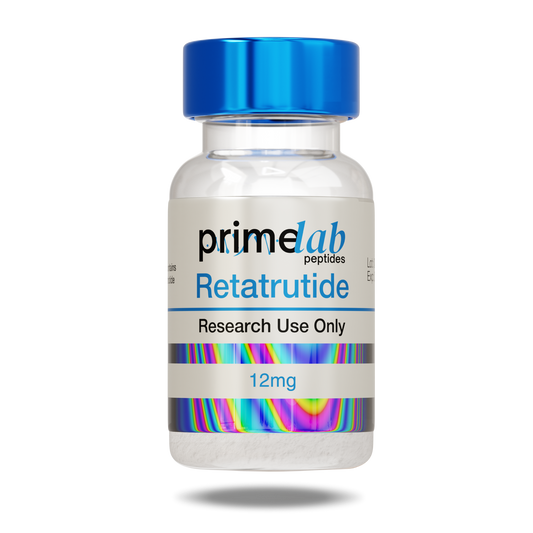
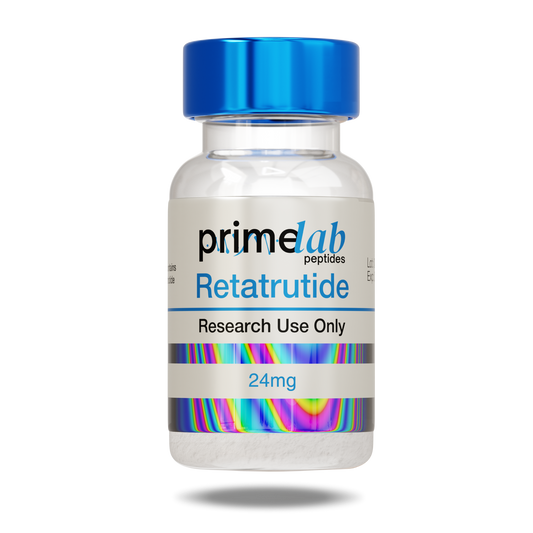
At Prime Lab Peptide, we thoughtfully address these research challenges with precision and scientific integrity. Moreover, our Retatrutide peptide is produced exclusively for laboratory use, ensuring consistent quality and reproducibility in controlled research settings. Additionally, we emphasize reliable sourcing, detailed documentation, and responsive technical support. Therefore, for collaboration or specific research inquiries, researchers can contact us directly.

FAQs
How Is Retatrutide Unique in Research?
Retatrutide is unique because it targets GLP-1, GIP, and glucagon receptors together. This triple mechanism enables precise metabolic investigations. Moreover, it helps researchers study complex lipid regulation within controlled experimental environments.
How Does Retatrutide Affect Lipoproteins?
Retatrutide affects lipoproteins by reducing atherogenic lipid particles. It modifies LDL and VLDL metabolism, improving lipid balance. Furthermore, these changes help scientists understand lipid-lowering processes through receptor-specific pathways.
Why Use Retatrutide in Metabolic Studies?
Retatrutide is used in metabolic studies for its broad physiological influence. It links lipid metabolism, glucose regulation, and inflammation. Therefore, researchers gain a more integrated understanding of cardiometabolic disease mechanisms.
What Challenges Exist in Retatrutide Research?
Challenges in Retatrutide research include ensuring peptide stability and purity. These variables can affect reproducibility and data quality. Hence, maintaining strict synthesis standards is vital for consistent research outcomes.
References
1. Ramsbacher, N. (2024). Retatrutide: A novel triple-receptor agonist for metabolic disease. PMC.