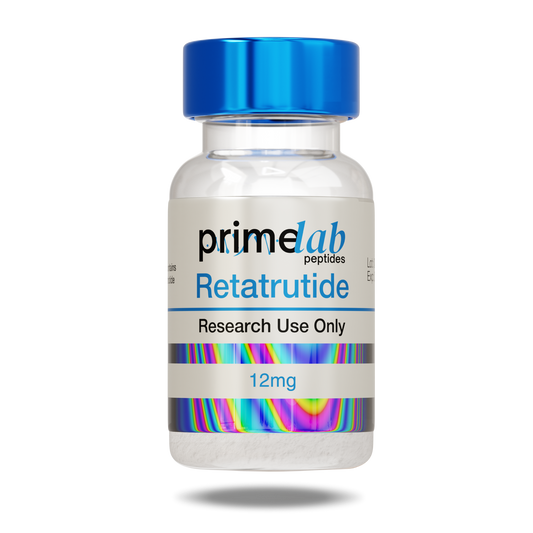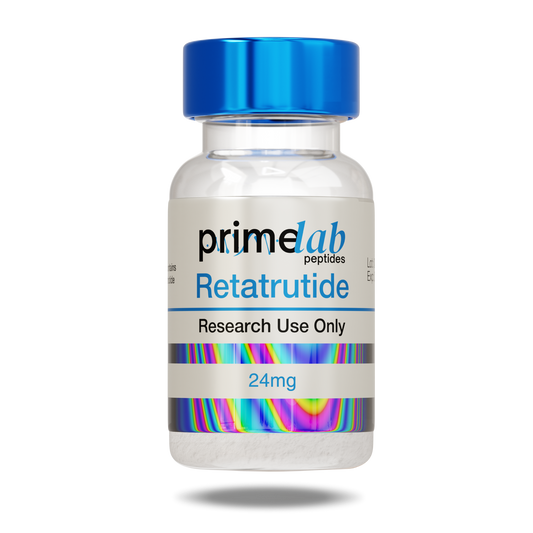


All product descriptions and articles provided on this website are intended strictly for informational and educational purposes. Our products are designed exclusively for in-vitro research (i.e., experiments conducted outside of a living organism, typically in glassware such as test tubes or petri dishes). These compounds are not approved by the FDA for use in humans or animals. They are not medications, nor are they intended to diagnose, treat, prevent, or cure any disease or medical condition. Any bodily administration-human or animal-is strictly prohibited by law. Our products are not for human consumption under any circumstances.

Retatrutide is revolutionizing cardiometabolic research with compelling results. Recent 2024 data show[1] retatrutide reduces non-HDL cholesterol by 26.9% and lowers triglycerides by 40.6% after 48 weeks of treatment. These significant improvements highlight retatrutide’s potential as a potent therapeutic agent for managing cardiovascular risk factors, making it an exciting focus for ongoing clinical research and future cardiometabolic interventions.
Prime Lab Peptides drives innovation by offering pure, research-grade peptides like Retatrutide. With rigorous quality control and expert guidance, we deliver precision and consistency. Shop now to elevate your cardiometabolic research with trusted peptide solutions, empowering scientific breakthroughs and driving success in every discovery.
Retatrutide’s Triple Activation Powers Unmatched Cardiovascular Protection
Retatrutide uniquely engages three vital metabolic pathways[2] involving GLP-1, GIP, and glucagon receptors. This multifunctional agonist offers comprehensive cardiovascular protection from the outset of treatment, targeting multiple risk factors simultaneously.
Core Mechanism Features
- GLP-1 activation elevates insulin sensitivity and lowers vascular inflammation, benefiting arterial function.
- GIP stimulation improves lipid metabolism, reducing circulating cholesterol and triglycerides.
- Glucagon receptor engagement accelerates energy expenditure and boosts lipolysis, targeting excess fat stores.
Together, these actions rapidly enhance blood pressure control, lower systemic inflammation, and improve endothelial health. This triple approach sets retatrutide apart from single-receptor drugs and enables simultaneous targeting of multiple risk factors, resulting in a much broader therapeutic effect.
Breakthrough Clinical Results Show Rapid Cardiorisk Reduction
Multicenter clinical trials strongly support retatrutide’s effectiveness in reducing cardiovascular risk. In the pivotal phase II ESC 2024 study[3], 338 adults with overweight or obesity completed 48 weeks of treatment. Non-HDL cholesterol dropped by 22.2% at 24 weeks and further to 26.9% at 48 weeks, while apolipoprotein B decreased by 24.2%, signaling a significant reduction in atherogenic lipoproteins.
Additionally, triglycerides fell dramatically by 40.6%, and ApoC-III decreased by 38%[4]. LDL particle numbers, including total and small LDL linked to atherosclerosis risk, also showed significant reductions. These lipid improvements were dose-dependent, consistent across diverse patient groups, and occurred faster than with standard therapies, highlighting retatrutide’s potential as a powerful next-generation cardiometabolic treatment.
Stunning Weight Loss Unlocks Powerful Cardiac Protection
Retatrutide demonstrates exceptional promise in reducing cardiovascular risk by driving significant, sustained weight loss and improving obesity-related metabolic factors. These combined effects highlight[5] its potential as a transformative therapy for obesity and cardiometabolic health. The key obesity-focused advantages of retatrutide are outlined below in detail.
1- Unmatched Obesity-Focused Advantages
Retatrutide delivers average weight loss exceeding 20% after 48 weeks[6] of therapy, establishing it as a leading candidate in obesity management.
2- Reduction in Visceral Adiposity
A marked decrease in waist circumference indicates significant loss of visceral fat. This reduction plays a critical role in improving overall cardiometabolic health.
3- Early Metabolic Benefits
Within weeks, patients experienced improvements in blood pressure, fasting glucose, and lipid profiles. These results show that retatrutide initiates metabolic recovery early in therapy.
4- Lower Cardiovascular Burden
These combined improvements led to a measurable reduction in cardiovascular burden. As a result, the risk for heart disease, stroke, and metabolic syndrome was significantly lowered.

Retatrutide Outshines Traditional Peptide Therapies
Retatrutide sets a new standard among incretin-based therapies[7]. While established agents like semaglutide and tirzepatide demonstrate improvements in weight and metabolic risk, retatrutide’s triple agonist profile enables even greater reductions in triglycerides and non-HDL cholesterol.
- Superior triglyceride effect provides a more pronounced drop than competitors
- Lipid particle modulation shifts LDL particle size and number, exceeding typical incretin effects
- Enhanced fat oxidation due to glucagon receptor activation augments cardiovascular risk reduction
- Head-to-head outcomes from early studies suggest retatrutide is dominating multi-risk group profiles
Compared with single or dual agonists, retatrutide brings a comprehensive toolset for multi-factor cardiovascular risk improvement and offers heightened metabolic impact for high-risk populations.
Future Clinical Trials Set Stage for New Cardiometabolic Paradigms
Ongoing and upcoming outcomes trials are poised to determine whether retatrutide can directly reduce critical endpoints such as heart attack, stroke, and cardiovascular mortality. The Phase III Triumph trials[8] are evaluating safety and efficacy across broader patient groups, with key measures including major adverse cardiovascular events (MACE), arrhythmia protection, and sustained metabolic benefits. Encouragingly, safety signals continue to remain favorable, with consistently low rates of serious adverse events observed.
The patient populations under investigation may ultimately reshape the standard of care for individuals with metabolic syndrome, type 2 diabetes, and elevated cardiovascular risk. As more evidence accumulates, retatrutide has the potential to become a cornerstone therapy in cardiometabolic medicine, offering tailored treatment strategies and improved outcomes for high-risk populations.
Accelerate Your Cardiometabolic Discoveries with Trusted Peptide Solutions
Researchers face numerous challenges in cardiometabolic studies, including inconsistent peptide quality, limited availability, and unreliable batch-to-batch reproducibility. These issues can hinder progress, delay findings, and compromise data integrity, making it difficult to achieve precise and trustworthy research outcomes critical for advancing cardiovascular therapies.
Prime Lab Peptides provides pure, research-grade peptides, such as Retatrutide, with rigorous quality control and consistency. Our expert support and comprehensive catalog help researchers achieve accuracy and accelerate discoveries in cardiometabolic science. Contact us today for reliable, high-performance peptide solutions tailored to your research needs.

FAQs
What makes retatrutide unique for heart health?
Retatrutide stands out by activating GLP-1, GIP, and glucagon receptors simultaneously. This triple mechanism drives faster, broader improvements in lipid metabolism, weight reduction, and cardiovascular health compared to single or dual agonist therapies.
Which heart risk factors does retatrutide improve?
Retatrutide lowers non-HDL cholesterol, triglycerides, ApoB, and LDL particle numbers, while improving blood pressure and insulin resistance. By addressing multiple risk factors together provides comprehensive cardiovascular protection for patients with obesity and metabolic syndrome.
Is retatrutide safe for long-term use?
Early studies show retatrutide has a favorable safety profile with very low rates of serious adverse events. Significant Phase III trials are now underway to confirm its safety and tolerability in long-term cardiometabolic treatment.
How soon does retatrutide impact lipid levels?
Retatrutide begins improving lipid levels within weeks of treatment. By 24 weeks, cholesterol and triglycerides show marked reductions, with continued improvements observed through 48 weeks, highlighting its rapid and sustained cardiometabolic benefits in clinical trials.
References