


All product descriptions and articles provided on this website are intended strictly for informational and educational purposes. Our products are designed exclusively for in-vitro research (i.e., experiments conducted outside of a living organism, typically in glassware such as test tubes or petri dishes). These compounds are not approved by the FDA for use in humans or animals. They are not medications, nor are they intended to diagnose, treat, prevent, or cure any disease or medical condition. Any bodily administration-human or animal-is strictly prohibited by law. Our products are not for human consumption under any circumstances.

The World Health Organization states[1] that obesity and metabolic disorders have reached alarming levels, affecting more than 650 million adults worldwide. In response, Retatrutide emerges as a groundbreaking advancement in peptide-based therapeutics. Moreover, its innovative multi-target mechanism is revolutionizing approaches to weight management and metabolic regulation. Consequently, this breakthrough continues to inspire scientific exploration and drive innovation in next-generation peptide therapies.
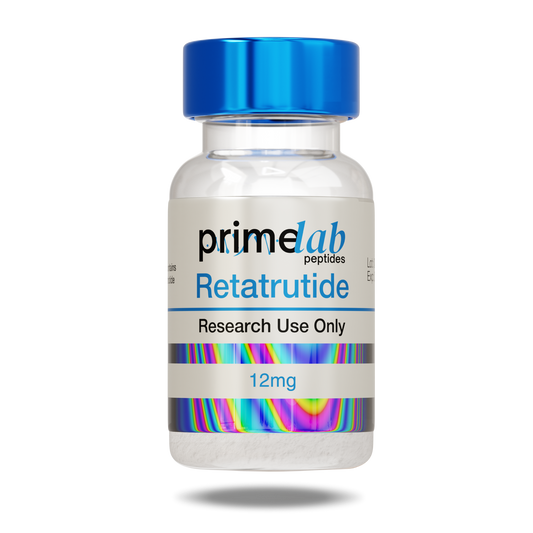
At Prime Lab Peptides, we lead innovation in developing advanced research-grade peptides such as Retatrutide that redefine solutions for metabolic health. Our strong commitment to scientific excellence ensures high-purity, reliable formulations that drive meaningful discoveries. Partner with Prime Lab Peptide to explore trusted and effective solutions for advancing wellness and therapeutic research.
What Makes Retatrutide a Breakthrough in Peptide Therapeutics?
Retatrutide is a breakthrough in peptide therapeutics because it uniquely combines three hormone targets, GLP-1, GIP, and glucagon, within a single molecule. This decisive triple action delivers exceptional metabolic benefits[2], enhancing weight management, glucose control, and energy balance in individuals with obesity and type 2 diabetes.
To highlight its multifaceted effects:
- Stimulates pancreatic insulin secretion, aiding glucose regulation.
- Suppresses appetite to reduce caloric intake effectively.
- Increases energy expenditure by activating the glucagon receptor.
Overall, Retatrutide’s distinctive mechanism redefines therapeutic possibilities, offering a holistic approach to metabolic health and inspiring ongoing innovation in the field of advanced peptide-based treatments.
How Does Retatrutide’s Triple‑Agonist Mechanism Work at the Molecular Level?
Retatrutide’s triple agonist mechanism[3] works by activating three key receptors, GLP1R, GIPR, and GCGR, simultaneously. This coordinated action enhances insulin secretion, boosts fat metabolism, and optimizes energy balance, resulting in improved metabolic health and more effective management of obesity and related disorders.
This multifaceted receptor activation drives diverse but complementary metabolic effects as follows:
GLP1R Activation
It enhances insulin secretion, delays gastric emptying, and increases satiety. These combined effects help regulate appetite and stabilize post-meal glucose levels, improving both metabolic efficiency and energy control.
GIPR Activation
It stimulates glucose-dependent insulin release and optimizes lipid metabolism. This action supports better glucose utilization and reduces fat accumulation, contributing to long-term improvements in body composition and metabolic balance.
GCGR Activation
It increases energy expenditure and promotes lipid breakdown within the liver and adipose tissue. This receptor helps sustain fat loss and enhances energy utilization, supporting ongoing improvements in metabolic health.

What Do Clinical Trials Reveal About Retatrutide’s Efficacy and Safety?
Clinical trials reveal that Retatrutide delivers exceptional efficacy with a strong safety profile. In Phase 2 clinical studies[4], participants achieved an average weight reduction of over 24 percent within 48 weeks, surpassing the results of existing peptide therapies. Moreover, significant improvements in glycemic indicators, including HbA1c, highlight its ability to enhance glucose regulation and support overall metabolic balance.
Furthermore, Retatrutide demonstrated consistent mitigation of cardiovascular risk[5], with only mild gastrointestinal side effects such as nausea, diarrhea, and vomiting, which are common within this peptide class. Its manageable increase in heart rate and favorable tolerability reinforce its therapeutic potential. Overall, these findings underscore Retatrutide’s promise as a transformative and well-balanced solution for managing obesity and metabolic diseases.
What Are the Expanding Research Applications Beyond Metabolic Disease?
Retatrutide’s expanding research[6] applications extend far beyond metabolic diseases like obesity and diabetes, as its multi-pathway mechanism shows promise in treating various interconnected conditions driven by energy imbalance, lipid metabolism[6], and inflammation.
Potential applications include:
- Non-alcoholic steatohepatitis (NASH) with lipid metabolism improvements.
- Cardiovascular disease risk reduction via enhanced lipid profiles.
- Muscle metabolism regulation and inflammation modulation.
By leveraging its effects on insulin sensitivity and energy expenditure, scientists aim to unlock Retatrutide’s potential as a versatile peptide therapy for complex metabolic and systemic disorders.
Transform Metabolic Health with Prime Lab Peptides Retatrutide Innovation
Metabolic diseases like obesity, diabetes, and lipid disorders remain persistent challenges in scientific and clinical research. Despite advancements, many current therapies fall short in addressing complex metabolic pathways, energy regulation, and long-term efficacy, leaving researchers seeking more comprehensive, targeted, and sustainable therapeutic options to combat these multifactorial conditions effectively.
At Prime Lab Peptides, we bridge this gap through cutting-edge peptide innovations, such as Retatrutide. Our precision-engineered, research-grade formulations support advanced studies in metabolic regulation, energy balance, and therapeutic discovery. Contact us today to explore Prime Lab Peptide’s innovative research solutions advancing metabolic health and next-generation peptide-based therapeutics.

FAQs
How Does Retatrutide Differ from Other Peptides?
Retatrutide differs from other peptides by targeting three receptors, GLP1, GIP, and glucagon, simultaneously. This triple action enhances insulin regulation, fat metabolism, and energy balance, offering broader therapeutic benefits than single or dual agonist peptide treatments.
Is Retatrutide Safe for Long-Term Use?
Retatrutide is considered safe when used under controlled conditions. Clinical studies have shown mostly mild gastrointestinal effects, such as nausea or diarrhea, and confirm stable cardiovascular safety with consistent monitoring and dose adjustments throughout treatment.
What Makes Retatrutide Important for Metabolic Research?
Retatrutide is important for metabolic research because it demonstrates superior weight reduction, improved glucose control, and multi-pathway regulation, helping scientists understand complex metabolic interactions and develop more effective treatments for obesity and related disorders.
What Future Potential Does Retatrutide Hold in Medicine?
Retatrutide holds strong potential for expanding beyond obesity and diabetes treatment, with ongoing research exploring its role in managing lipid disorders, liver disease, cardiovascular health, and overall metabolic regulation across multiple therapeutic areas.
References
1 comment
I was diagnosed with Idiopathic Pulmonary Fibrosis (IPF) four years ago. For over two years, I relied on prescription medications and therapies, but unfortunately, the symptoms continued to worsen. My breathing became more labored, and I experienced increasing fatigue and shortness of breath with even minimal activity.Last year, out of desperation and hope, I decided to try an herbal treatment program from NaturePath Herbal Clinic.Honestly, I was skeptical at first, but within a few months of starting the treatment, I began to notice real changes. My breathing became easier, the tightness in my chest eased, and I felt more energetic and capable in my daily life. Incredibly, I also regained much of my stamina and confidence. It’s been a life-changing experience I feel more like myself again, better than I’ve felt in years.If you or a loved one is struggling with IPF, I truly recommend looking into their natural approach. You can visit their website at www.naturepathherbalclinic.com
info@naturepathherbalclinic.com