All product descriptions and articles provided on this website are intended strictly for informational and educational purposes. Our products are designed exclusively for in-vitro research (i.e., experiments conducted outside of a living organism, typically in glassware such as test tubes or petri dishes). These compounds are not approved by the FDA for use in humans or animals. They are not medications, nor are they intended to diagnose, treat, prevent, or cure any disease or medical condition. Any bodily administration-human or animal-is strictly prohibited by law. Our products are not for human consumption under any circumstances.

Short answer: yes — slightly on LDL, more clearly on triglycerides. A 2026 meta-analysis pooling four randomised placebo-controlled trials (over 4,500 adults, up to 72 weeks) found orforglipron lowered LDL-cholesterol by 4.14% (95% CI −6.38 to −1.91), triglycerides by 10.90% (−14.36 to −7.43) and VLDL-cholesterol by 10.81% (−14.10 to −7.51) versus placebo, while HDL-cholesterol rose 3.31% (1.66 to 4.97) — Cardiovascular Diabetology – Endocrinology Reports, 2026.
These are human clinical readouts, not laboratory-model observations: the pooled phase 2 and phase 3 trials enrolled adults with type 2 diabetes and/or obesity. The same analysis reports systolic blood pressure down 4.32 mmHg (−5.61 to −3.03). Its authors describe the size of these lipid and blood-pressure shifts as comparable to what injectable GLP-1 receptor agonists produce. That comparison is about effect size only: orforglipron’s own cardiovascular trial, ACHIEVE-4, was built to establish safety against insulin glargine, not to show that a 4% LDL drop turns into fewer cardiovascular events.
The harm signal in the same pooled data is gastrointestinal and unambiguous: nausea (RR 5.22), eructation (RR 6.80) and vomiting (RR 3.24) were all several times more frequent than on placebo, and discontinuation for adverse events was roughly three times as likely (RR 2.99, 95% CI 2.07–4.33). The lipid movement above was measured in participants living with that tolerability profile.
One point of status, because it changed recently: orforglipron is no longer investigational — the FDA approved it on 1 April 2026 as Foundayo (Eli Lilly) for chronic weight management. The orforglipron supplied here is not that medicine. It is unlicensed reference material for research use only, not for human consumption, and none of the figures on this page were generated with it. Receptor pharmacology and signalling are handled separately in Orforglipron Mechanism of Action Explained (2026); this page stays on what the trials measured in blood.
What makes Orforglipron a breakthrough non-peptide GLP-1 research compound?
Orforglipron represents a structural and pharmacologic breakthrough because it achieves functional GLP-1 receptor activation through a non-peptide small-molecule scaffold. Historically, GLP-1 receptor agonism relied on peptide engineering strategies that required parenteral administration because of enzymatic instability in the gastrointestinal tract. Orforglipron instead binds within a defined transmembrane pocket of the receptor, enabling oral bioavailability in experimental systems.
Early clinical pharmacology data reported in Diabetes, Obesity and Metabolism [2] confirm dose-dependent metabolic activity consistent with GLP-1 receptor engagement. Importantly, this innovation demonstrates that a class B GPCR previously thought to require peptide ligands can be activated through rational small-molecule design.
This shift expands the strategy for incretin research. It allows investigators to explore receptor pharmacodynamics, tissue distribution modeling, and exposure-response relationships without the structural constraints of peptide analogs. As a result, Orforglipron opens a new direction in GLP-1 receptor–targeted metabolic research.
How does Orforglipron engage GLP-1 receptor networks across metabolic tissues?
Orforglipron engages GLP-1 receptor networks by promoting receptor activation across pancreatic, neural, hepatic, and adipose tissues in experimental systems. After receptor binding, intracellular signaling initiates in β-cells to modulate glucose-responsive pathways. Concurrently, activation of central nervous system receptors influences appetite-regulating nuclei and autonomic output. Peripheral tissues demonstrate downstream metabolic adjustments under controlled exposure conditions.
This coordinated receptor engagement produces measurable experimental outcomes:
- Pancreatic modulation of glucose-dependent signaling
- Central appetite circuit activation in hypothalamic models
- Peripheral metabolic responsiveness in liver and adipose systems
Pharmacologic profiling indicates a predominant Gs-protein-coupled pathway with robust cyclic AMP (cAMP) generation. Limited β-arrestin recruitment has been observed in preclinical signaling assays, suggesting distinct receptor conformational dynamics compared with some peptide agonists. These features provide a platform for studying receptor bias and sustained signaling behavior under laboratory conditions.
Which intracellular signaling cascades does Orforglipron reprogram across metabolic systems?
Orforglipron influences several well-characterized intracellular pathways downstream of GLP-1 receptor activation. These cascades regulate cellular metabolism, gene transcription, ion channel activity, and substrate utilization across diverse experimental models.
- cAMP-PKA-EPAC signaling: Activation of adenylate cyclase elevates cAMP levels, stimulating protein kinase A (PKA) and exchange protein directly activated by cAMP (EPAC). This pathway modulates insulin secretion mechanisms, transcriptional regulation, and intracellular ion flux.
- PI3K/Akt signaling: GLP-1 receptor activation can interact with insulin-related signaling networks via the phosphoinositide 3-kinase (PI3K) and Akt pathways. These mechanisms support cellular survival and adaptive metabolic responses in hepatic and adipose research systems.
- AMPK–mTOR energy sensing axis: This signaling balance integrates nutrient availability with anabolic and catabolic processes. Experimental activation influences mitochondrial function, lipid oxidation, and biosynthetic regulation.
Collectively, these intracellular nodes allow mechanistic evaluation of metabolic remodeling in response to receptor stimulation.
How does Orforglipron reshape lipid trafficking and cardiometabolic risk markers?
Orforglipron influences lipid handling and cardiometabolic indicators through receptor-mediated modulation of hepatic, adipose, and vascular pathways. Clinical-stage analyses and translational reviews in Frontiers in Pharmacology [3] describe GLP-1 receptor activation as associated with coordinated changes in glycemic control, body weight indices, and lipid-related parameters.
In hepatic models, receptor activation affects transcriptional regulators involved in lipogenesis and fatty acid metabolism. Adipose systems demonstrate alterations in lipid storage and mobilization dynamics under defined experimental exposure. Vascular studies suggest modulation of inflammatory and endothelial markers within cardiometabolic research contexts.
These effects are examined as integrated metabolic outputs rather than isolated biochemical measurements. Therefore, Orforglipron provides a platform for studying coordinated cardiometabolic regulation under controlled research parameters.
What emerging data connect Orforglipron to multi-organ metabolic adaptations?
Emerging data support the concept that GLP-1 receptor activation produces coordinated adaptations across central and peripheral systems. Orforglipron enables investigators to explore these adaptations within unified experimental designs.
Several research themes clarify this systems-level behavior:
1. Central–Peripheral Signaling Coupling
Neural GLP-1 receptor activation influences hypothalamic energy centers and autonomic output. This signaling modifies hepatic glucose production and adipose lipid mobilization. As a result, central receptor engagement produces measurable downstream metabolic adjustments in peripheral tissues.
2. Organ-Specific Exposure Modeling
Small-molecule pharmacokinetics enable tissue distribution mapping across liver, pancreas, adipose, and brain compartments. Researchers can correlate exposure levels with signaling intensity. This improves the interpretation of receptor occupancy and duration-dependent responses.
3. Convergent Metabolic Output
Parallel changes in glycemic markers, lipid profiles, and weight-related parameters suggest coordinated regulation. These outputs align with intracellular second-messenger activity. Therefore, receptor activation appears to simultaneously recalibrate multiple metabolic axes.
4. Inflammatory and Vascular Signaling
Recent studies examine links between GLP-1 receptor activation and endothelial or inflammatory markers. Modulation of vascular tone and cytokine profiles has been observed in controlled models. This extends the investigation beyond glucose metabolism into cardiometabolic signaling interfaces.

Metabolic chamber data indicate shifts in substrate utilization during receptor activation. Observed changes in oxygen consumption and respiratory exchange ratios reflect adaptive energy redistribution. This supports analysis of metabolic flexibility under defined experimental conditions. Collectively, these findings position Orforglipron as a research tool for evaluating coordinated metabolic adaptation across neural, endocrine, and peripheral systems within integrated laboratory frameworks.
Accelerating Orforglipron Research With Experimental Solutions by Prime Lab Peptides
Investigators working with emerging metabolic modulators require reliable compound sourcing and detailed technical documentation. Variability in material quality can disrupt reproducibility and complicate data interpretation across laboratories.
Prime Lab Peptides supplies carefully characterized experimental compounds, including Orforglipron, with clear analytical specifications and traceable batch documentation. Our quality-focused approach supports reproducibility across in vitro and preclinical research workflows. Additionally, responsive scientific communication helps research teams align materials with defined experimental objectives. Moreover, Researchers may contact us to discuss specific experimental requirements.

The compounds named above, as research reference material — none of them is the approved medicine, and none was the material used in the trials cited:
- Orforglipron – 6mg — the oral non-peptide GLP-1 receptor agonist whose lipid and blood-pressure results are pooled above.
- GLP-1SG – 10mg — semaglutide, the single-agonist reference standard orforglipron has been measured against in head-to-head trials.
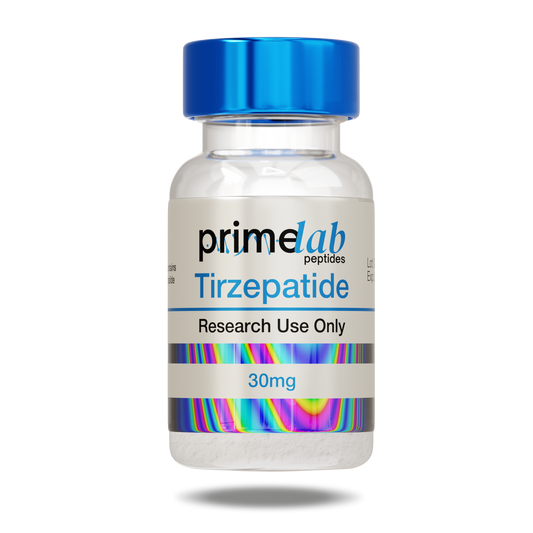
- Tirzepatide – 30mg — the GIP/GLP-1 dual agonist used as the injectable comparator in most cardiometabolic analyses of this class.
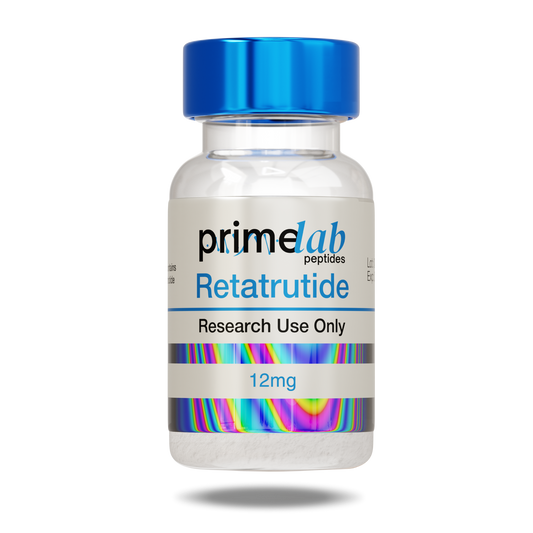
- Retatrutide – 12mg — the GIP/GLP-1/glucagon triple agonist studied in the same obesity literature, but not part of the orforglipron pooled analysis.
How much did orforglipron move HbA1c and fasting glucose?
Short answer: about 1.2 to 1.5 percentage points of HbA1c over 40 weeks in early type 2 diabetes — a bigger move than the lipid shifts above, and the readout the trials were actually built around. The same pooled analysis that produced the lipid figures above reports HbA1c down 0.85% versus placebo across the four trials (95% CI −1.53 to −0.18), reaching −1.36% at the higher doses — Cardiovascular Diabetology – Endocrinology Reports, 2026.
The individual trials are more informative than the pooled number, because they were run in different populations:
- ACHIEVE-1 (phase 3, 559 adults with type 2 diabetes managed by diet and exercise alone, 40 weeks, mean baseline HbA1c 8.0%): HbA1c fell 1.24 to 1.48 percentage points across the three dose arms versus 0.41 with placebo, ending at 6.5–6.7% — New England Journal of Medicine, 2025.
- ACHIEVE-3 (phase 3, 1,698 adults inadequately controlled on metformin, 52 weeks, open-label, baseline 8.3%): orforglipron lowered HbA1c by 1.71% and 1.91% against 1.23% and 1.47% for oral semaglutide. Non-inferiority was met, then superiority on every comparison — The Lancet, 2026.
- Phase 2 (383 adults, 26 weeks): up to −2.10% versus −0.43% with placebo and −1.10% with dulaglutide — The Lancet, 2023.
- Phase 1a, in healthy volunteers without diabetes: fasting glucose fell across the four weeks of repeated dosing, and gastric emptying was delayed by day 28 — Diabetes, Obesity and Metabolism, 2023.
Two caveats belong with those numbers. The head-to-head win in ACHIEVE-3 was on HbA1c, not on cardiovascular or renal events, and it came with more gastrointestinal events (58–59% versus 37–45%), roughly twice the discontinuation rate, and a larger mean pulse-rate rise than oral semaglutide. And all of this is human clinical data, not laboratory-model observation.
Hypoglycaemia: what the glucose-dependent mechanism does and does not cover
Short answer: on its own, orforglipron produced almost no hypoglycaemia in the published trials — but every one of those trials excluded the situation where the risk actually lives.
ACHIEVE-1 reported no episodes of severe hypoglycaemia over 40 weeks in adults whose diabetes was managed by diet and exercise alone (New England Journal of Medicine, 2025). In the phase 2 trial, where participants were on diet and exercise with or without metformin, three orforglipron participants and one dulaglutide participant had clinically significant hypoglycaemia (below 54 mg/dL, or 3 mmol/L) and none had a severe episode (The Lancet, 2023).
The mechanistic reason is the defining property of GLP-1 receptor agonism: the insulinotropic drive is glucose-dependent. As circulating glucose falls, the stimulus to secrete insulin falls with it, so the pathway does not keep pushing insulin into an already-low glucose. Preclinical characterisation of orforglipron is consistent with a clean GLP-1 receptor mechanism — high-affinity binding to the human receptor (inhibition constant around 1 nM), low intrinsic efficacy for effector activation, negligible β-arrestin recruitment, and glucose lowering during a glucose tolerance test in mice engineered to carry the human receptor (Science Translational Medicine, 2024). Those last results are animal and in vitro work, not human measurement.
What the record does not tell you: none of these trials paired orforglipron with insulin or a sulfonylurea, the two partner treatments that generate most hypoglycaemia in type 2 diabetes. The published evidence is silent on that combination, and silence is not reassurance. The harm signal that is unambiguous in this data set remains gastrointestinal, as set out at the top of this page.
Hepatic glucose output and insulin sensitivity: measured, or inferred?
Short answer: inferred, almost entirely. The human orforglipron trials report HbA1c, fasting glucose, body weight, waist circumference, lipids and blood pressure. They do not report clamp studies, tracer-derived hepatic glucose production, or insulin-sensitivity indices as headline endpoints. So when a text says orforglipron suppresses gluconeogenesis, downregulates PEPCK or glucose-6-phosphatase, or improves muscle glucose uptake, that statement is extrapolated from GLP-1 receptor biology as a class — it is not an orforglipron measurement. The distinction matters if you are designing a study around one of those endpoints, because it is still open ground.
What has actually been measured with the molecule itself:
- At the receptor, in vitro: high-affinity, selective binding at the human GLP-1 receptor, low intrinsic efficacy, and negligible β-arrestin recruitment — a signalling profile weighted toward cAMP rather than arrestin-dependent routes.
- In animals: target engagement in pancreas and brain in gene-edited rats sensitised to non-peptide agonists, glucose lowering during a glucose tolerance test in mice carrying the human receptor, and weight loss in diet-induced obese rats compared against injected semaglutide (Science Translational Medicine, 2024). Note what is present in that list and what is not: pancreas and brain, not liver or skeletal muscle.
- In humans: falling fasting glucose and delayed gastric emptying over four weeks of repeated dosing in healthy volunteers (Diabetes, Obesity and Metabolism, 2023).
That gastric-emptying finding is worth holding onto, because it means part of the post-meal glucose effect is a delivery effect — nutrient arriving more slowly — and not purely an insulin-secretion effect. Receptor conformation, binding pocket and signalling bias are handled separately in Orforglipron Mechanism of Action Explained (2026).
FAQs
What is Orforglipron?
Orforglipron is a small-molecule, non-peptide glucagon-like peptide-1 (GLP-1) receptor agonist developed for metabolic research. It activates the class B GLP-1 receptor through a defined transmembrane binding site. This structure enables oral bioavailability and supports mechanistic investigation of systemic metabolic signaling pathways under controlled laboratory conditions.
How is Orforglipron used in metabolic research?
Orforglipron is used in controlled experimental models to evaluate GLP-1 receptor–mediated metabolic regulation. Researchers apply it to study glucose homeostasis, intracellular second-messenger activity, and coordinated organ responses. Its pharmacologic profile allows structured analysis of receptor activation dynamics without involving therapeutic or clinical interpretation.
Which signaling pathways are evaluated with Orforglipron?
Investigations focus primarily on cAMP-dependent signaling cascades following GLP-1 receptor activation. Researchers assess downstream pathways, including PKA, EPAC, PI3K/Akt, and AMPK–mTOR energy-sensing mechanisms. These signaling networks regulate cellular metabolism, transcriptional responses, and substrate utilization across pancreatic, hepatic, adipose, and neural research systems.
What types of models incorporate Orforglipron studies?
Orforglipron is examined in in vitro cell systems and preclinical metabolic research models. These include pancreatic β-cell platforms, hepatocyte cultures, adipocyte models, and neural regulatory frameworks. Such systems allow investigators to evaluate receptor pharmacodynamics, intracellular signaling responses, and coordinated metabolic regulation under defined experimental conditions.
Why is Orforglipron considered innovative in incretin research?
Orforglipron is considered innovative because it demonstrates that a non-peptide small molecule can effectively activate a class B GLP-1 receptor. This structural advancement expands pharmacologic design strategies beyond peptide engineering and enables new approaches for studying incretin-mediated metabolic regulation in experimental research environments.