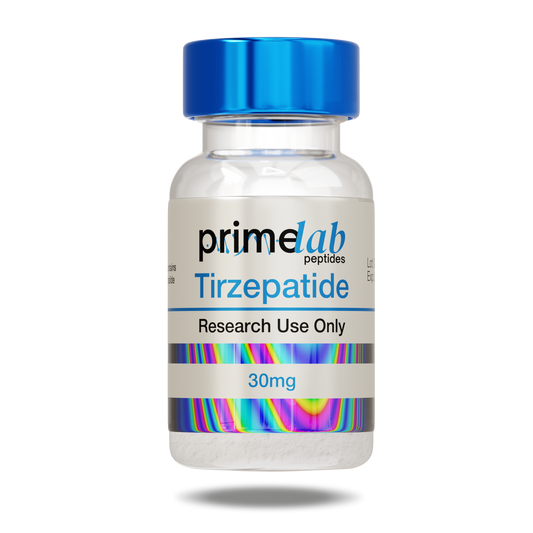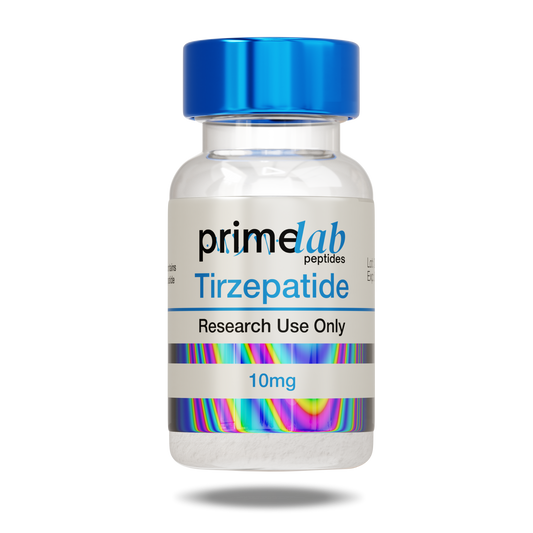
All product descriptions and articles provided on this website are intended strictly for informational and educational purposes. Our products are designed exclusively for in-vitro research (i.e., experiments conducted outside of a living organism, typically in glassware such as test tubes or petri dishes). These compounds are not approved by the FDA for use in humans or animals. They are not medications, nor are they intended to diagnose, treat, prevent, or cure any disease or medical condition. Any bodily administration-human or animal-is strictly prohibited by law. Our products are not for human consumption under any circumstances.

Orforglipron functions as a small-molecule GLP-1 receptor agonist that targets a central regulatory node governing systemic metabolism. According to evidence summarized in a GLP-1 biology study published in PMC[1], GLP-1 signaling modulates glucose regulation, gastric emptying, appetite control, renal function, and neural processes. Building on these established pathways, orforglipron enables experimental interrogation of interactions among pancreatic, hepatic, adipose, and neuroendocrine signaling pathways. Consequently, researchers can examine integrated metabolic circuitry.
Prime Lab Peptides supports researchers by supplying rigorously characterized compounds designed exclusively for experimental investigation. Our team prioritizes data transparency, consistent quality, and responsive scientific support throughout research workflows. Consequently, laboratories gain reliable materials and collaborative guidance to address complex experimental questions efficiently across diverse metabolic and molecular research contexts.
How does orforglipron engage GLP-1 receptor networks across metabolic tissues?
Orforglipron engages GLP-1 receptor networks by activating transmembrane signaling across diverse metabolic tissues in research models. As a non-peptide agonist, it stabilizes active receptor conformations and preferentially drives Gs-coupled cAMP pathways. Consequently, signaling extends beyond pancreatic islets into peripheral systems.
This network-level engagement produces measurable experimental outcomes.
- Coordinated activation across pancreatic, neural, and peripheral metabolic tissues
- Preferential cAMP signaling with limited β-arrestin pathway involvement
- Network-level receptor engagement beyond single-organ experimental focus
Moreover, as reported in a peer-reviewed study published in Diabetes, Obesity and Metabolism[2] (Wiley, December 2022), pharmacological profiling identifies orforglipron as a partial agonist with limited β-arrestin recruitment. This signaling bias enables sustained GLP-1 receptor engagement across experimental systems globally.
Which intracellular signaling cascades does orforglipron reprogram across metabolic systems?
Orforglipron reprograms intracellular signaling cascades across metabolic systems by biasing GLP-1 receptor activation toward cAMP-dominated G protein pathways. According to findings reported in Frontiers in Pharmacology[3], this is associated with robust cAMP generation, leading to downstream activation of PKA and EPAC. Consequently, researchers investigate intracellular signaling remodeling under tightly controlled experimental conditions.
Here are several intracellular signaling nodes that are consistently examined across studies.
- cAMP-PKA-EPAC signaling: This pathway amplifies intracellular second-messenger signals following GLP-1 receptor activation. It regulates ion channel function, secretion-related processes, and transcriptional activity within metabolically active experimental cell systems.
- PI3K/Akt signaling: This cascade interacts with insulin-related signaling networks to support cellular survival mechanisms. Additionally, it contributes to adaptive metabolic responses under experimentally induced metabolic stress conditions.
- AMPK-mTOR signaling balance: This axis coordinates cellular energy sensing and nutrient availability. Consequently, it influences lipid handling and biosynthetic activity in hepatocytes and adipocytes during metabolic remodeling studies.

How does orforglipron reshape lipid trafficking and cardiometabolic risk markers?
Orforglipron reshapes lipid trafficking and cardiometabolic risk markers by modulating GLP-1 receptor-linked pathways across hepatic, adipose, and vascular systems in research models. As reported in a peer-reviewed study published on PubMed Central[4], investigators observe coordinated shifts in circulating lipoprotein profiles, adiposity-related indicators, and hemodynamic measures. Moreover, these patterns appear consistently across experimental designs. Consequently, lipid handling and cardiometabolic signaling can be examined as integrated processes rather than isolated endpoints.
Additionally, mechanistic studies link these observations to GLP-1R–mediated regulation of hepatic lipid synthesis, adipose storage dynamics, and vascular inflammatory signaling. For example, hepatic pathways governing lipogenesis and energy sensing are altered under controlled conditions. In parallel, adipose tissue function and vascular biomarker patterns shift coherently. Therefore, orforglipron serves as a research tool for modeling interconnected pathways of cardiometabolic regulation.
What emerging data connect orforglipron to multi-organ metabolic adaptations?
Emerging data connect orforglipron to multi-organ metabolic adaptations through coordinated GLP-1 receptor signaling across central neural circuits, hepatic metabolism, peripheral tissues, and vascular systems. This integrated activity is observed in controlled research models. Consequently, investigators can examine systemic metabolic integration mechanisms under defined experimental conditions.
Several converging research themes now clarify these multi-organ adaptation mechanisms across models.
1. Neural Metabolic Integration
Central GLP-1 receptor activation coordinates peripheral metabolic regulation through neural signaling pathways. Consequently, researchers can examine hepatic and adipose responses independently of direct nutritional input.
2. Tissue Exposure Differentiation
Small-molecule GLP-1 receptor engagement enables variable tissue penetration across experimental systems. This characteristic supports detailed analysis of organ-specific signaling contributions and pharmacokinetic behavior.
3. Systemic Signal Convergence
Parallel modulation of metabolic, vascular, and inflammatory markers reflects coordinated system-level responses. Therefore, investigators can study integrated cardiometabolic adaptation rather than isolated biochemical changes.
Accelerating Orforglipron Research With Experimental Solutions by Prime Lab Peptides
Researchers studying emerging metabolic modulators face challenges with compound consistency, batch variability, and incomplete characterization data. These issues complicate reproducibility across experimental systems and hinder cross-study comparisons. Moreover, integrating small-molecule tools into complex metabolic models demands dependable sourcing, transparent documentation, and reliable performance under controlled laboratory conditions.
Prime Lab Peptides supports research by supplying carefully characterized experimental compounds, including Orforglipron, with clear specifications. Our approach prioritizes consistency, traceability, and reliable material performance across experimental workflows. Additionally, responsive technical communication helps researchers align materials with defined study objectives. Moreover, Researchers may contact us to discuss specific experimental requirements.

FAQs
How is Orforglipron used in metabolic research?
Orforglipron is used in metabolic research as a small-molecule GLP-1 receptor agonist to investigate intracellular signaling and systemic metabolic regulation. Researchers apply it within controlled experimental models. This enables analysis of glucose handling, lipid dynamics, and energy-related pathways without clinical interpretation.
Which signaling pathways are studied using Orforglipron?
The primary signaling pathways studied using Orforglipron are GLP-1 receptor-mediated cAMP G protein cascades. Researchers further examine downstream pathways involving PKA, EPAC, PI3K/Akt, and energy sensing. These studies enable precise mechanistic analysis under controlled experimental conditions.
What research models commonly incorporate Orforglipron studies?
Orforglipron studies commonly use in vitro cellular systems and preclinical metabolic research models. These include pancreatic, hepatic, adipose, and neural model frameworks. Such systems allow controlled investigation of receptor signaling, metabolic integration, and pathway-specific responses under experimental conditions.
How does Orforglipron support multi-organ metabolic investigations?
Orforglipron supports multi-organ metabolic investigations by enabling coordinated analysis of GLP-1 receptor signaling across multiple tissues. Researchers use it to examine interactions between hepatic, adipose, pancreatic, and neural systems. This approach facilitates integrated assessment of systemic metabolic regulation under controlled experimental conditions.