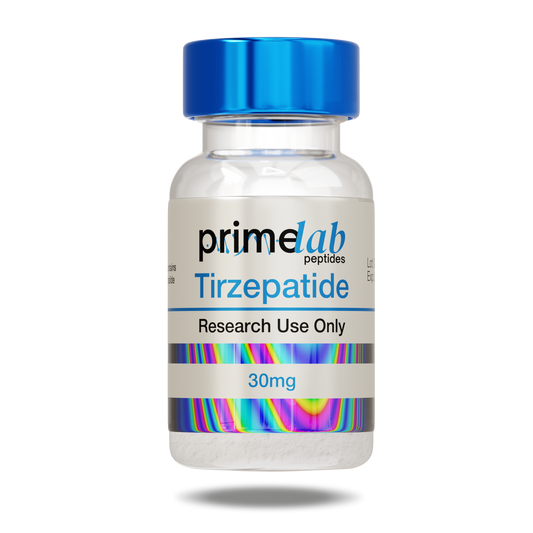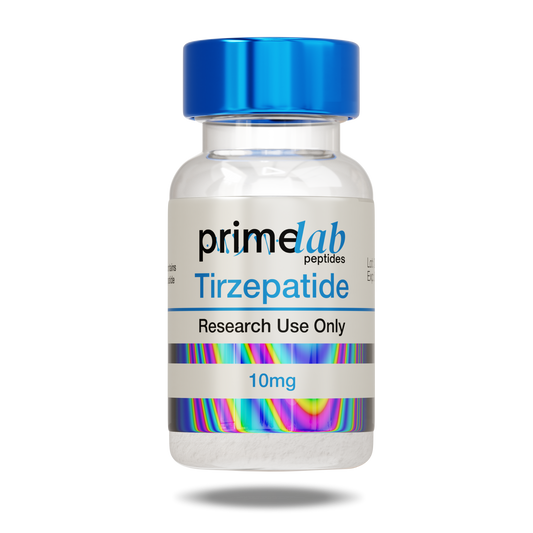


All product descriptions and articles provided on this website are intended strictly for informational and educational purposes. Our products are designed exclusively for in-vitro research (i.e., experiments conducted outside of a living organism, typically in glassware such as test tubes or petri dishes). These compounds are not approved by the FDA for use in humans or animals. They are not medications, nor are they intended to diagnose, treat, prevent, or cure any disease or medical condition. Any bodily administration-human or animal-is strictly prohibited by law. Our products are not for human consumption under any circumstances.

Clinical trials examining Grow-H have evaluated whether this peptide influences biomarkers linked to post-exercise physiological responses. Research from the National Center for Biotechnology Information[1] has similarly documented measurable shifts in recovery-related markers under controlled conditions. Moreover, such outcomes vary across study designs, participant profiles, and testing intervals. Therefore, cross-study comparison remains essential for assessing scientific relevance and reproducibility.
Prime Lab Peptide supports researchers by providing well-characterized compounds designed for consistent, controlled laboratory use. Our standardized production practices help reduce variability, addressing challenges with purity, reproducibility, and material reliability. Moreover, our team offers guidance to help researchers maintain stable conditions and strengthen overall experimental integrity.
Does Grow-H Demonstrate Measurable Muscle Recovery Benefits Clinically?
Grow-H demonstrates measurable changes in muscle-recovery biomarkers under controlled research conditions. These observations come from structured trials comparing peptide analogs with placebo groups. Moreover, researchers reported shifts in post-exercise markers when testing repeated exertion protocols.
Key findings observed across research models include:
- Reduced creatine kinase levels after repeated intense exercise
- Lower subjective soreness scores using validated measurement scales
- Improved countermovement-jump outputs in controlled assessments
These outcomes reflect controlled study designs that consider how inflammation shapes muscle-recovery biomarkers. Research from the Wyss Institute[2] highlights the challenges of prolonged inflammatory responses, reinforcing the need to compare findings across independent studies. Moreover, such context strengthens the accurate interpretation of experimental results.
What Molecular Pathways Explain Grow-H's Ergogenic Effects?
Grow-H’s ergogenic effects are explained by its interaction with oxidative-stress pathways, inflammatory mediators, and cellular regulatory mechanisms in controlled research models. These pathways reflect how peptide analogs may influence physiological responses during repeated exertion. Moreover, they outline the biochemical context observed across experimental designs.
Research indicates three core mechanistic directions worth noting:
- Oxidative-stress modulation: pathway involves selective neutralization of reactive oxygen and nitrogen species, helping maintain cellular stability during exertion and reducing the biochemical strain associated with repeated muscle loading.
- Inflammatory-signaling regulation: this mechanism reflects IL-6–driven shifts in skeletal-muscle metabolism, glycogen storage, and lipid oxidation, as shown in Molecular Endocrinology[3], collectively shaping post-exertion tissue responses and recovery-related biochemical patterns observed in controlled studies.
- Cellular-repair signaling effects: includes modulation of gene-expression pathways linked to tissue turnover, enabling controlled structural adaptations and influencing markers related to membrane stability and muscle-cell integrity in research settings.

What Statistical Constraints Shape Grow-H Evidence Interpretation?
Grow-H evidence interpretation is shaped by statistical constraints that determine how reliably study outcomes can be evaluated. Research from the Harvard Medical School[4] publication on muscle-adaptation mechanisms reinforces the need for cautious interpretation when dealing with complex physiological data. Studies often require adjusted p-values, effect-size evaluation, and variability control to avoid misleading signals. Moreover, these metrics help distinguish meaningful changes from measurement noise, ensuring stronger scientific relevance across endpoints.
Additional analytical considerations further refine how results are viewed. Technical error is compared against clinically important thresholds to confirm that detected differences hold practical relevance. Furthermore, violations of sphericity assumptions lead researchers to apply paired t-tests at each time point. Small sample sizes limit generalization, while non-significant correlations reduce interpretive overlap between markers. Therefore, future meta-analyses may help strengthen statistical power and clarify broader trends.
Which Future Trial Designs Will Advance Grow-H Research?
Future trial designs that will advance Grow-H research will require larger cohorts, controlled conditions, and deeper molecular analyses. These approaches can strengthen reliability, improve external validity, and clarify mechanistic pathways across diverse athletic and physiological contexts.
The following focused directions can significantly refine upcoming investigations:
1. Larger and More Diverse Participant Groups
Expanding sample sizes and including athletes from multiple sports can improve generalizability. This approach also enhances statistical power and reduces the influence of individual variability on biomarker outcomes.
2. Extended and Structured Recovery Monitoring
Tracking responses beyond 24 hours and adjusting dosing relative to body composition may reveal new temporal patterns. Such designs can capture delayed biochemical changes that short protocols may miss.
3. Deeper Molecular and Mechanistic Assessments
Integrating assays for oxidative stress, cytokine activity, and gene-expression shifts provides a more complete picture of physiological responses. This allows researchers to move beyond markers like CK and soreness scales.
Advance Experimental Outcomes With High-Quality Peptides From Prime Lab Peptides
Researchers often face major challenges when working with peptides, including inconsistent purity levels, material variability across batches, and limited access to compounds suitable for controlled experimental settings. These issues can disrupt data reliability and slow scientific progress. Moreover, maintaining reproducibility becomes difficult when study materials lack precise characterization and standardized quality measures.
Prime Lab Peptide offers researchers well-characterized compounds, including Grow-H, formulated specifically for controlled laboratory workflows. These materials help maintain consistent study conditions without overstated claims. Moreover, standardized production practices reduce variability across experiments. Contact us for guidance, and our team will support your research needs with clear, reliable information.

FAQs
What Evidence Supports Grow-H Biomarker Changes?
Grow-H demonstrates measurable biomarker shifts in controlled research settings. These findings emerge from structured comparative trials using peptide analogs and placebo groups. Moreover, each outcome must be evaluated within the specific methodology and controls of the individual study.
Which Variables Limit the Grow-H Study Generalisability?
Grow-H generalisability is limited by small samples and narrow cohorts. These constraints restrict the broader application of findings across athlete populations. Furthermore, methodological variability requires cautious comparison between independent studies.
What Statistical Methods Strengthen Grow-H Evidence?
Grow-H evidence is strengthened through adjusted p-values and effect-size metrics. These tools reduce false positives and help quantify change significance. Consequently, they support a more reliable interpretation of experimental outcomes.
How Can Future Trials Improve Grow-H Data?
Future trials can improve Grow-H data by expanding cohorts and extending monitoring. These refinements allow clearer observation of time-dependent shifts. Moreover, integrating deeper molecular assays can enhance mechanistic understanding across research models.
References